Acesso com babés e crianças:
Access with babies and kids: |
Fácil na vila, mas desaconselhado no exacto local da cache
Easy in the village, but hard in the exact cache place |

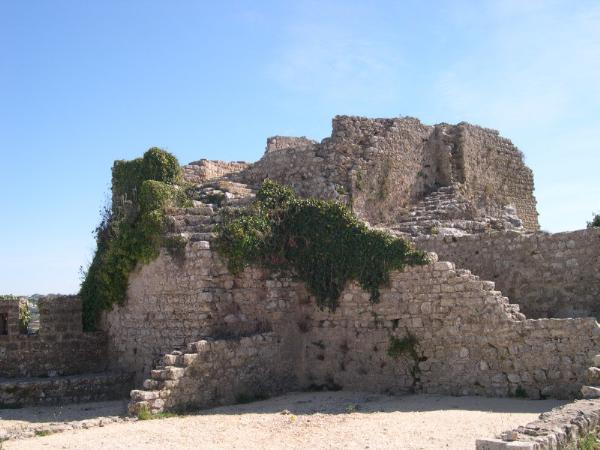
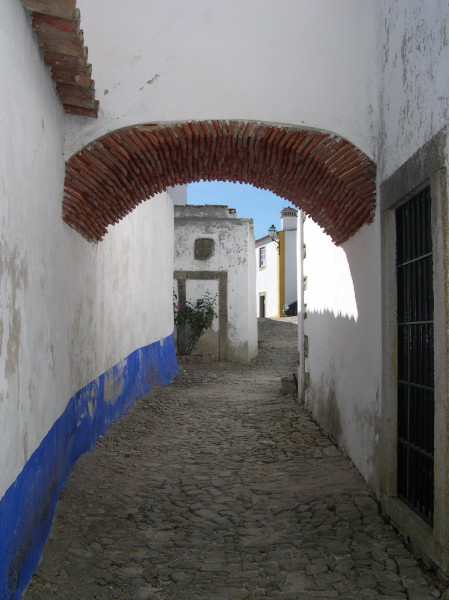
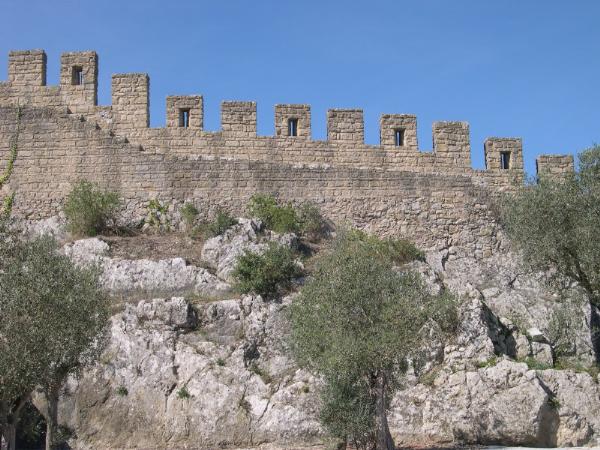
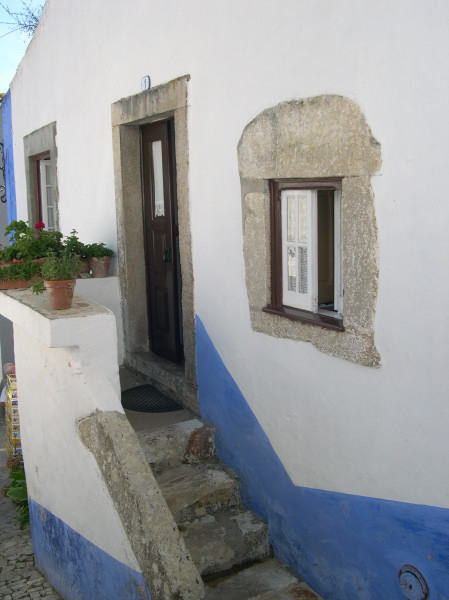
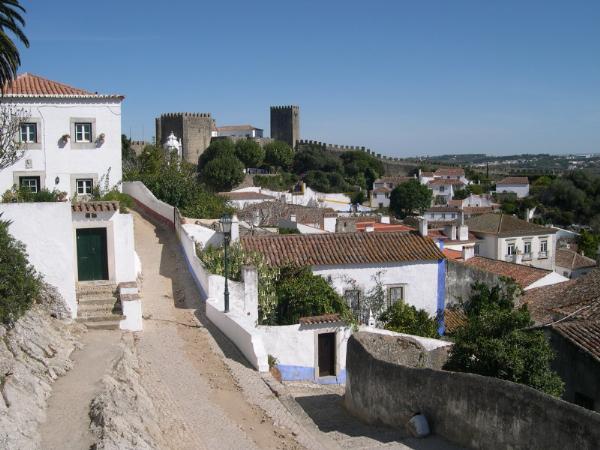
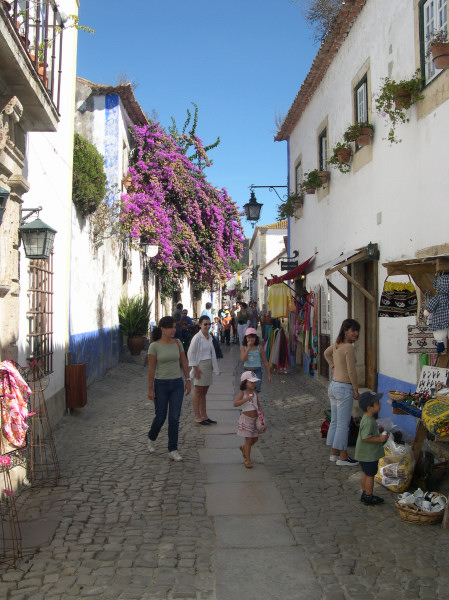
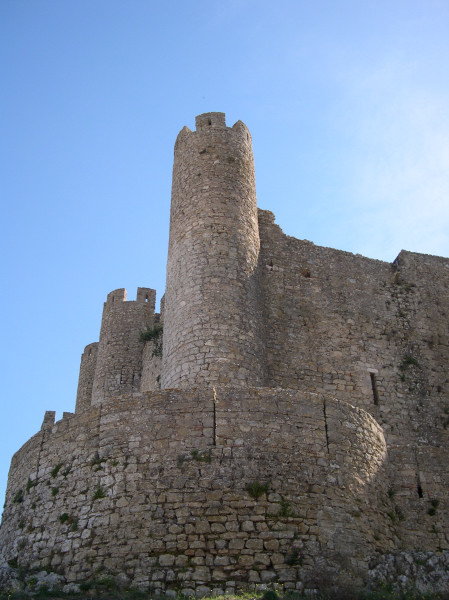 A vila de Óbidos guarda a memória de séculos, onde as casas caiadas de branco com cunhais pintados de azul ou amarelo e de traços medievais são rodeadas por uma extensa muralha.
O vasto património de arquitectura religiosa e os vestígios históricos e monumentais encontrados nesta zona testemunham a história da vila de Óbidos ao longo de séculos de existência.
Os primeiros vestígios de ocupação humana remontam ao neolítico mas a vila terá sido fundada pelos Celtas, no ano 308 AC. Do século I, a cidade de Eburobrittium, prova a permanência romana. Entre o século V e VIII, os visigodos são o povo dominante e, até ao século XII, os árabes marcaram presença com a edificação ou reedificação do castelo.
Óbidos foi conquistada aos Mouros em 1148 por D. Afonso Henriques. Mais tarde, em 1210, D. Afonso II ofereceu a povoação a D. Urraca, sua esposa, como presente de casamento. Em 1282 foi a vez de D. Dinis a oferecer a D. Isabel, pela mesma razão. Desde então, até 1834, Óbidos tornou-se parte do dote de todas as rainhas portuguesas.
Em 1498, a Rainha D. Leonor fundou nesta vila a Misericórdia.
 A rainha D. Catarina ordenou a construção do aqueduto, com 3 quilómetros de extensão, a fonte pública da Praça de Sta. Maria e ainda outras fontes por toda a vila, em 1573
Esta povoação teve o papel de importante porto fluvial até ao Sec. XVI, altura em que o rio ficou assoreado, o que inviabilizou doravante a sua navegabilidade.
Em 1661 Josefa de Óbidos pintou cinco telas dedicadas a Sta. Catarina de Alexandria, na Igreja de Sta. Maria.
A Batalha de Roliça, em que os exércitos de Napoleão sofreram a sua primeira importante derrota durante a Guerra Peninsular, desenrolou-se na periferia desta Vila, em 1808.
Para os visitantes, esta pequena vila fortificada assemelha-se ao cenário de um filme sobre a época medieval. Tem sido cuidadosamente preservada e os seus habitantes têm orgulho em manter a imagem arquitectónica dos tempos mais antigos.
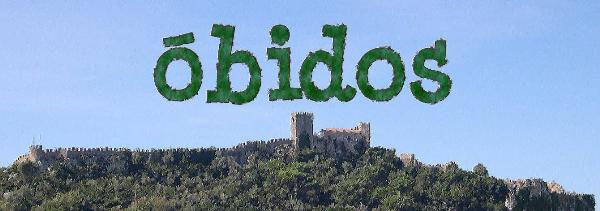
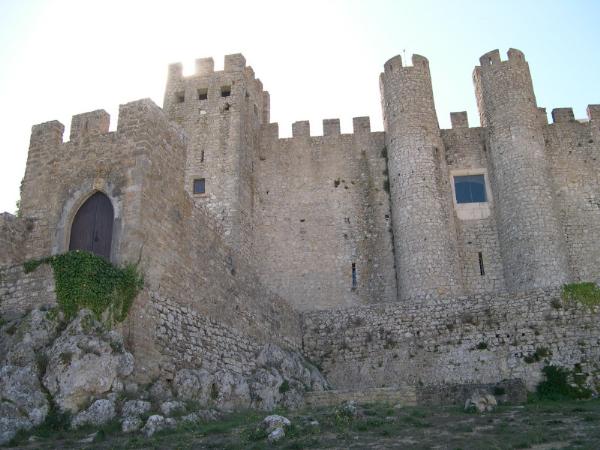
 As antigas muralhas foram sendo restauradas ao longo dos tempos e o próprio castelo, magnífico monumento sobranceiro ao casario da vila, foi cuidadosamente adaptado para ser utilizado como uma fascinante Pousada.
No interior da porta sul, apropriadamente chamada “Porta da Vila”, por ser a mais importante, encontra-se a capela-oratório de Nossa Senhora da Piedade, Padroeira da Vila, com um varandim barroco e impressionantes painéis de azulejos do Sec. XVIII com motivos alegóricos à Paixão de Cristo.
A Igreja de Sta. Maria, situada na praça com igual nome, além de toda sua importância histórica é também o local de repouso do Conde de Dijon, D. João de Noronha, e da sua mulher D. Isabel de Sousa, cujos sepulcros foram finalizados em 1525 por Nicolau Chanterenne.
No lado oposto da Praça de Sta. Maria encontra-se um pelourinho, em estilo manuelino, adornado com uma rede de pesca, simbolizando o esforço que os pescadores locais empreenderam, tentando em vão salvar o filho de D. Leonor da morte por afogamento.
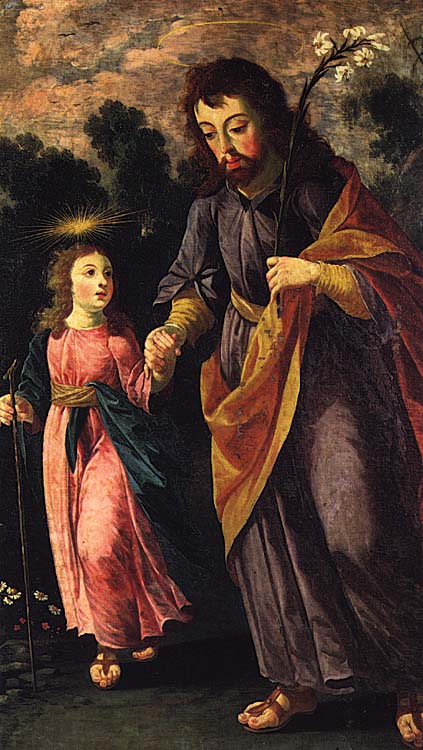
Esta vila é também conhecida por ter sido o lar da famosa pintora do Sec. XVII, Josefa de Óbidos. Josefa nasceu em Sevilha, filha de pai português, também pintor, natural de Óbidos. Seu pai trouxe-a para a terra dos seus antepassados quando ela perfez 6 anos, tendo ali permanecido durante o resto dos seus dias. Independentemente da alta qualidade do seu trabalho, o facto de ser mulher e ao mesmo tempo ter conseguido atingir bastante notoriedade na sociedade da época fez de Josefa de Óbidos uma excepcional artista, relembrada nos anais da história. Ao lado da igreja de Sta. Maria existe um pequeno museu onde estão expostas algumas das suas muitas obras que chegaram até aos nossos dias.
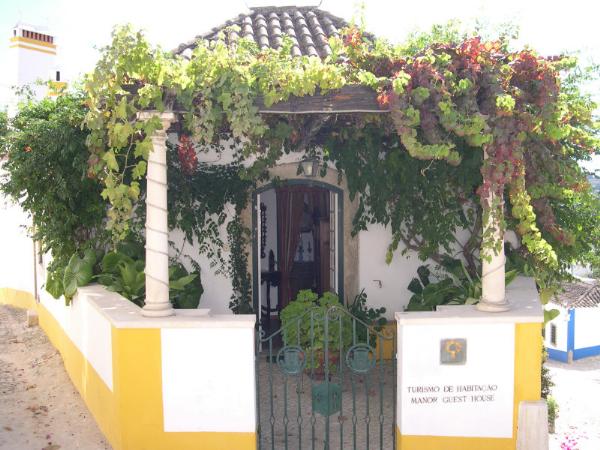
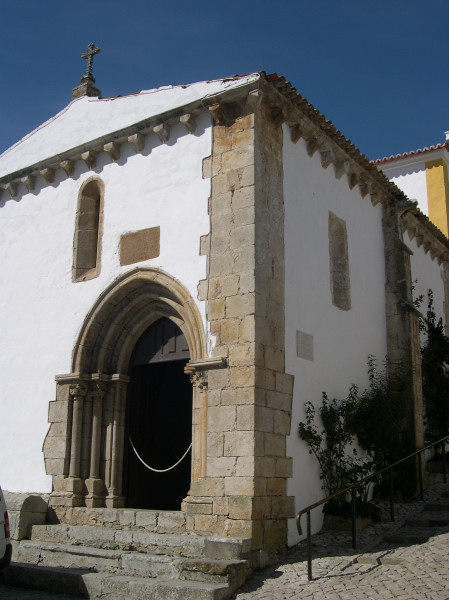
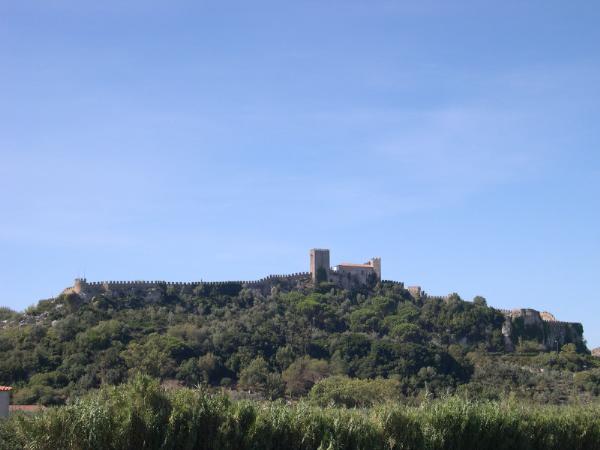
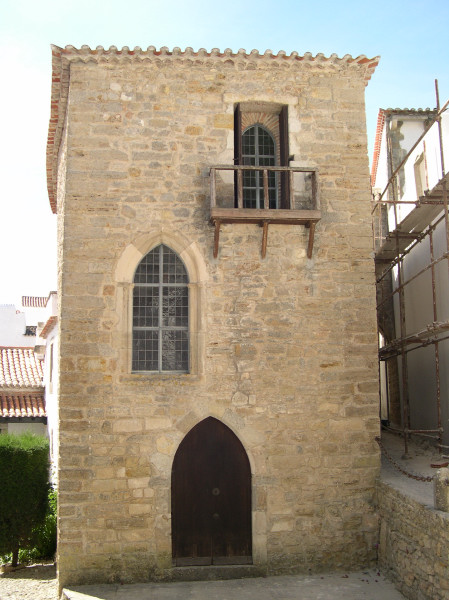
 Óbidos, a town founded in 308 B.C. by the Celts, was taken from them by the Romans in the lst Century, building the Eburobrittium town, nearby the actual village. In the 5th Century was occupied by the Visigoths and in the 8th by the Moors.
In 1148 Dom Afonso Henriques recaptured the town from the Moors. Later in 1210 the King Dom Afonso II made a wedding present of the town Óbidos to his new wife Dona Urraca. In 1282 King Dom Dinis and Queen Dona Isabel spent their nuptials in Óbidos and the town was once again given as a wedding present to the Queen. Since then Óbidos became part of the dowry to all Portuguese Queens until 1834.
In 1498 Queen Leonor founded the Misericordia (Almshouse) in Óbidos.
In 1573 Queen Catherine ordered the built of the aqueduct, the public fountain in St. Mary's Square and the surrounding fountains.
The town was a leading trading port until the 16th Century, when the river access silted up and destroyed its previous importance.
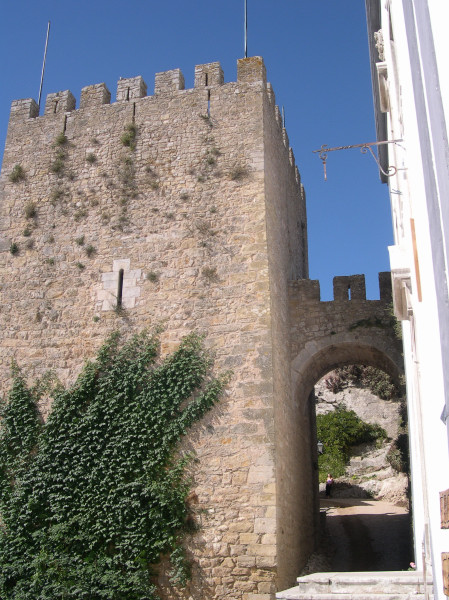 In 1661 Josefa d'Óbidos painted "The Mystical Wedding of St. Catherine" retable for the Church of St. Mary.
The Battle of Rolica, where Napoleon had his first defeat in the Peninsular Wars, was waged on the outskirts of town, in 1808.
To the visitor this charming small and fortified town is suggestive of a medieval film set. It has been carefully preserved and its inhabitants take careful pride in maintaining the architectural image of days gone by.
The ancient town walls have been restored over the centuries and the castle itself has been carefully turned into a charming Pousada.
The southern gate, appropriately known as “Porta da Vila”, has impressive 18th Century blue tiles line the walls within.
The St. Mary's Church, besides its historic importance, is also the resting-place of the Count of Dijon, D. João de Noronha and his wife D. Isabel de Sousa whose tombs were finely sculpted c. 1525 by Nicolau Chanterenne. On the opposite side of the square to the church is a Manueline pillory adorned with a fishing net that symbolizes the efforts of the local fishermen who unfortunately failed to save the Queen Leonor son from drowning.
The town was also the home of a distinct painter of the 17th Century. Josefa de Óbidos as she is commonly known was born in Seville but her Portuguese father who was also a painter brought her back to Óbidos when she was six where she remained for the rest of her life. Not withstanding the high quality of her work the fact that she as a woman of that time and was given public commissions and accepted in society makes Josefa de Óbidos an exceptional artist in history. The small museum alongside the main church has a few of her many remaining works.
Bibliografia / References:
http://www.cm-obidos.pt
http://www.orelhas.pt/canais/distrito/obidos/index.asp
http://portugal-info.net/costaprata/obidos.htm
http://www.galenfrysinger.com/obidos.htm
A cache:
A cache está escondida na zona do castelo.
Primeiro passeiem pela vila, depois procurem a cache!
E mais não digo ;-)
The cache:
The cache is hidden near the castle.
First take a walk through the village, then search for the cache!
I'll say no more ;-)