This cache is easy to find and access along an asphalt trail and
there is little or no chance of contacting PI. There is information
at the cache site about PI, but there is no PI near the cache, look
east or west about 10m along the side of the trial and you will
spot some. Just to make things more fun there are several plants
near the cache site that people often confuse with PI.
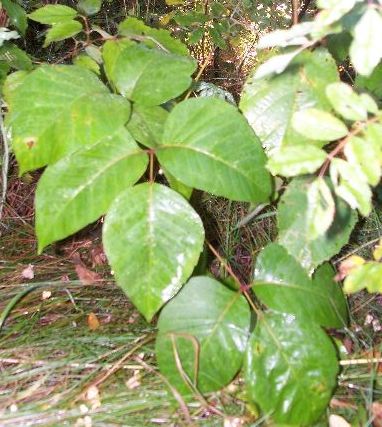
In Manitoba this plant is usually a short woody stemmed plant
with three shiny green leaves that turn a dark red in the fall. The
plant height is typically under 30cm high. The short woody stems
can be clearly seen through the fall and winter often with clusters
of creamy or pale white berries. The size and edges of the of the
leaflets are extremely variable ranging from almost oak like with
large dentate edges to just undulate or even smooth. The size of
the leaflets are 3-12cm in length and in some cases even larger. It
prefers growing along edges of paths, streams, or other open areas,
or in semi-open bush that is generally dry through the summer but
may be subject to flooding in the spring. The most robust plants I
have seen are in areas along rivers and streams that flood in the
spring. I have also seen smaller poison ivy plants in great
abundance under oak trees on dry gravel ridges.
When searching for caches remember: "Leaves of three, let it be;
berries white, danger in sight."
Here are some images of
PI and plants that are often mistaken for PI
There are a number of plants that are often mistaken for poison
ivy in Manitoba.
- Boxelder saplings
- Wild Sarsaparilla
- Hog Peanut
- Virginia Creeper
- Wild Strawberry
The rash associated with poison ivy contact is caused by the oil
'urushiol'. Some people do not react with initial, or even several
contacts, but sensitivity builds up over time and repeated
contacts. The most sensitive people will react to contact with the
woody stem, smoke, berries, old leaves. The appearance of a rash
may be quick or may be delayed upto a couple of weeks.
In most cases, if you know or think you have contacted poison
ivy, washing as soon as possible will remove the oil. You also must
wash everything that came into contact with the plant. Over the
period of at least a month one of my friends repeately had
poison-ivy rash caused by the oil left on the steering wheel of his
car. This happened after working in the field taking soil samples.
He was careful and washed his hands and clothing after returning
but didn't wipe down his car.
Several years ago a friend was collecting the leaves and berries
in the fall to add to wreaths for gifts. She ended up with a bad
rash and was at a loss to understand why. When logging this cache
feel free to write about your worst, most embarrassing, or just
strange PI encounter.
More information about poison ivy:
- Just some stuff I
collected (pictures, look alike, general info, etc...)
- PMRA
Control of Poison Ivy
-
Toxicodendron rybergii - USDA Forestry Service Pamphlet
- The Biology of
Poison Ivy from Nature North
- Poison Ivy
from Wikipedia
There are a couple of different kinds of poison-ivy species
across North America. The kind we have in Manitoba is Western
Poison-ivy - it does not climb. If you travel further south and
east you will often see a very similar plant that climbs like a
regular vine (Toxicodendron radicans (L.) Kuntze, eastern
poison-ivy). There are two Poison-Oak species (neither in Manitoba)
one is found on the west coast the other on the S.E. coast of the
United States.
'PI in the woods' has also been posted for more information
about PI and look-alike plants.