The La Brea Tar Pits
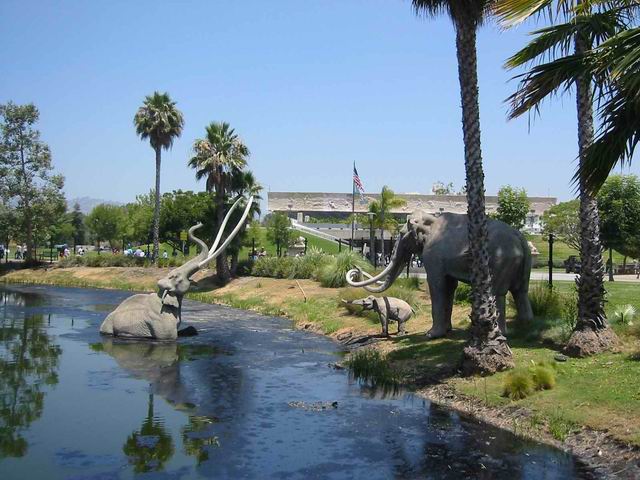
The La Brea Tar Pits offer a glimpse of what Los Angeles was like at the end of the Ice Age, 40,000 to 100,000 years ago. Saber-toothed tigers and woolly mammoths lived in the area and were trapped in the pools of tar. Within the 23 acres of Hancock Park, there are more than 100 tar pits—areas where crude oil seeps to the surface. The lighter part of the oil evaporates and asphalt is left. As you walk through the park, look for small areas surrounded by short fences. These are some of the smaller tar pits and you will be able to walk right up to them.
Since excavation began in 1906, more that one million bones have been recovered, representing more than 230 species of vertebrates. 159 kinds of plants and 234 kinds of invertebrates have been identified. Because the asphalt relatively quickly covers the items, the condition of the bones is excellent.
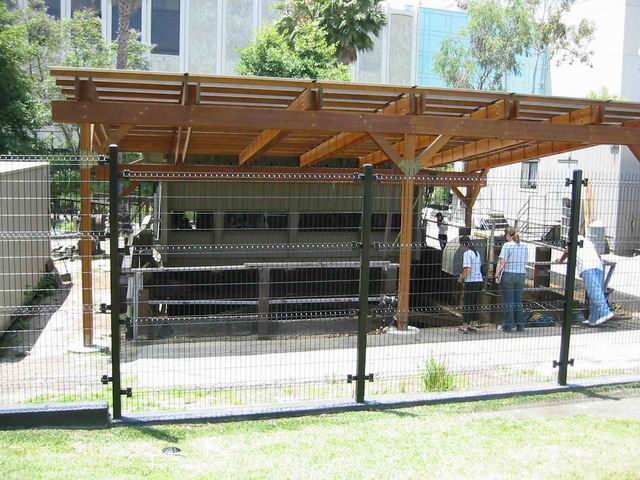
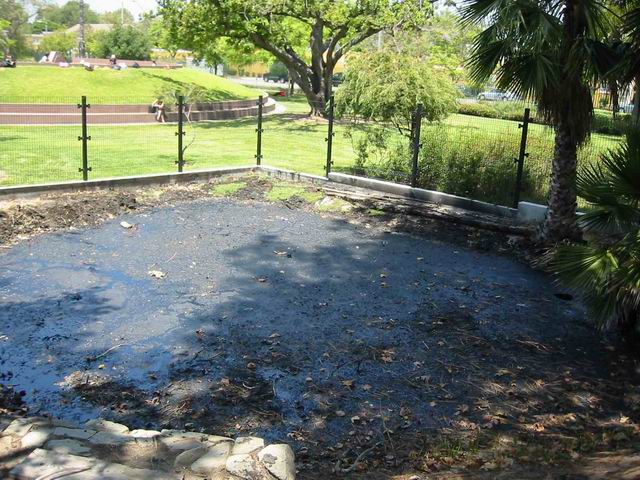
Located throughout the park are full-size replicas of Ice Age animals---giant sloths, a prehistoric bear, and fighting saber-tooth cats. A family of mammoths, getting entrapped in the tar lake can easily be seen from Wilshire Blvd.
Located in the center of the Park, the Page Museum is the home of the largest collection of Ice Age plants and animals. You can watch bones being cleaned and repaired. There is no fee charged for the museum on the first Tuesday of each month.
This block is not only the home of tigers and mammoths, but also the Los Angeles County Museum of Art.
Check these links for more information on the La Brea Tar Pits:
Page Museum
UC Berkeley
USGS
You are within 75 feet of That Black Gooey Smelly Stuff so be sure to go find it also.