From the guidelines, as from January 2013"People do not need to wait for permission to log your EarthCache. Requiring someone to wait is not supported by the EarthCache guidelines. People should send their logging task answers to you, then log your EarthCache. When you review their logging task answers, if there is a problem, you should contact them to resolve it. If there is no problem, then their log simply stands."
A fun dinosaur earthcache!
Uma earthcache com dinossaurios à mistura!

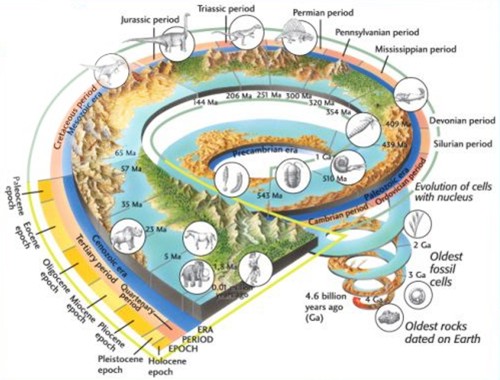 In April 1981, a couple of students on geological fieldwork discovered dinosaur tracks in the Praia (beach) Grande do Rodízio located near Sintra. These prints, of Cretaceous age are clearly seen in vertical strata on an access point to this beach.
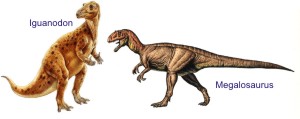 The tracks consist of a total of 66 footprints, 51 of which are distributed in 11 tracks and the remainder seem to be isolated. In all cases the tracks seem to have been made by bipedal animals and are attributed to Megalosaurus and to Iguanodon although in the latter case the footprints are atypical when compared to known Iguanodon tracks at Cape Espichel a little further south.
The cache:
The observation of the various footprints gives the impression of a certain orientation, which all seem to be “climbing” towards the top of the cliff. However, we all know that dinosaurs were not natural climbers and hence these footprints were made when they were walking on a flat surface. Don’t forget that the strata around here have been uplifted and made locally upright due to the intrusion of the Sintra batholith.
If you want to understand a little bit more about this, then see: “upheaval at 90 million years” another fun earthcache nearby.
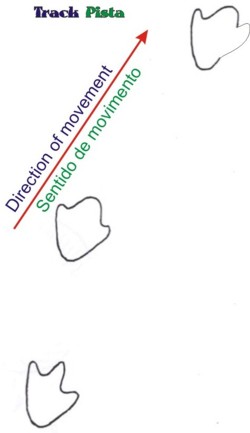 Your mission, should you chose to accept it,
 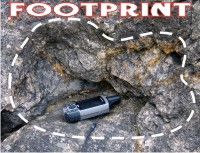 is to go to the site, readjust the tilt and project the strata back to the horizontal (I will accept the fact that there has been no rotation associated with uplift and the strata have just tilted in situ) just as they were when the dinosaurs took their little (afternoon) walk. Point zero will take you to an observation point where you then have to look towards a bearing of 230º. You will then have to recognise the footprints and tracks (see the clues on this page) in the cliff in front of you and tell me by mail (do not post the answers in your log) where the dinosaurs were coming from and where they were going to, eg. east to west, etc. Have fun!

Em 24 de Abril de 1981 no decorrer de uma aula de campo de Cartografia Geológica na Praia Grande do Rodízio, José Madeira descobriu uma nova jazida de pegadas de Dinossáurio de idade Cretácica. Estas pegadas situam-se em bancadas quase verticais no topo sul da Praia Grande do Rodízio e tornam-se particularmente evidentes quando iluminadas com luz rasante.
A jazida em causa, é constituída por um total 66 pegadas, das quais 51 distribuídas por 11 rastos, parecendo as restantes estar isoladas. 0s rastos parecem ter sido feitos por animais bípedes.
As pistas de terápodes que constituem a maior parte dos rastos desta jazida, devem pertencer a Megalossaurios. A grande frequência deste género em Portugal, no Jurássico superior e Cretácico inferior, bem como a semelhança com pistas do Cabo Espichel, levam a que a atribuição a este género seja bastante provável.
Existem também pegadas nesta jazida que são atribuídas a Iguanodon embora sejam atípicas para aquilo que é normalmente atribuído a essa espécie, por ex. as pegadas do Cabo Espichel. 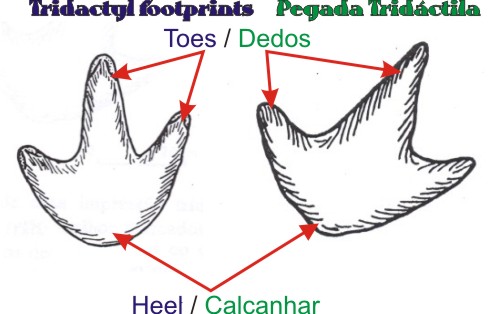
A cache:
A observação das várias pistas existentes nesta jazida, dá a impressão de uma certa orientação dos rastos, os quais parecem dirigir-se quase todos para o topo da arriba. No entanto todos nós sabemos que os dinossáurios não escalam, não trepam e portanto quando as pegadas foram feitas eles andavam num plano horizontal. Também não se esqueçam que a estratificação em redor do maciço de Sintra está verticalizada devido à sua intrusão (Ver Upheaval at 90 million years).
A vossa missão é ir ao ponto zero que é um ponto de observação óptimo), olhar em direcção ao azimute 230º (+/-) e devolver e reajustar as camadas verticalizadas para o horizontal tal como no dia em que os dinossaurios passeam por aquele local, reconhecer os rastos das pistas usando as dicas dadas aqui na página da cache e dizer-me (por mail – NÃO no log!) de onde vinham e para onde iam os dinossáurios neste seu passeio (ex. de este para oeste, etc.). Divirtam-se!

 The most exciting way to learn about the Earth and its processes is to get into the outdoors and experience it first-hand. Visiting an Earthcache is a great outdoor activity the whole family can enjoy. An Earthcache is a special place that people can visit to learn about a unique geoscience feature or aspect of our Earth. Earthcaches include a set of educational notes and the details about where to find the location (latitude and longitude). Visitors to Earthcaches can see how our planet has been shaped by geological processes, how we manage the resources and how scientists gather evidence to learn about the Earth. To find out more click HERE.
______________________________________________________________________________