A Cache / The Cache
PT - Esta cache esta localizada naquele que parece ser o fim do mundo, no Cabo de Sao Vicente. Esta é a cache mais a sudoeste de toda a Europa.
EN - This cache is located at what seems like the end of the world, at Cabo de Sao Vicente. This is the most south-west cache in all of Europe.
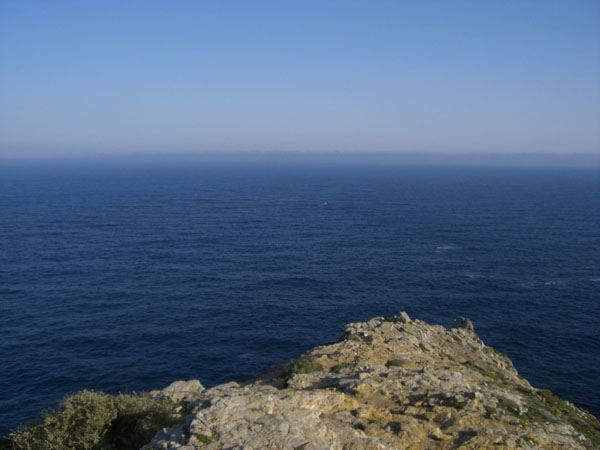
As imagens falam por si por isso nao ha muito mais a dizer. Visitem o local e vejam por voces mesmos.
The pictures really tell the story, so there's not really anything else to say. Just go there and experience it for yourself.

Está a procura de um pequeno recipiente de plástico com um logbook, lápis e os habituais objectos para troca. Caso vos seja possivel, por favor tirem fotos e facam o upload das mesmas com o vosso log online
You are searching for a small plastic container with log book, pencil and the usual trade items. Please, if you can, take photos and post them with your online log.
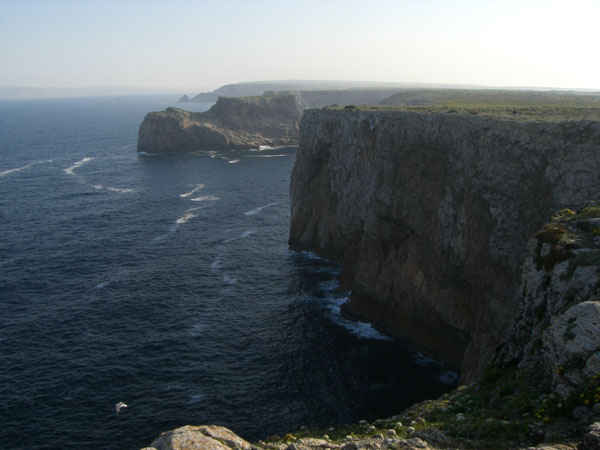
AVISO: Ha enormes precipicios por isso sejam MUITO, MUITO cuidadosos ao procurarem a cache. Incluimos spoilers e uma pista bem explícita para tornar a busca mais segura.
WARNING: There are huge cliffs here so be VERY, VERY careful searching for this cache. Spoiler images and a descriptive hint are included to make it safer.
A História de Cabo de S. Vicente / The History of Cape St Vincent
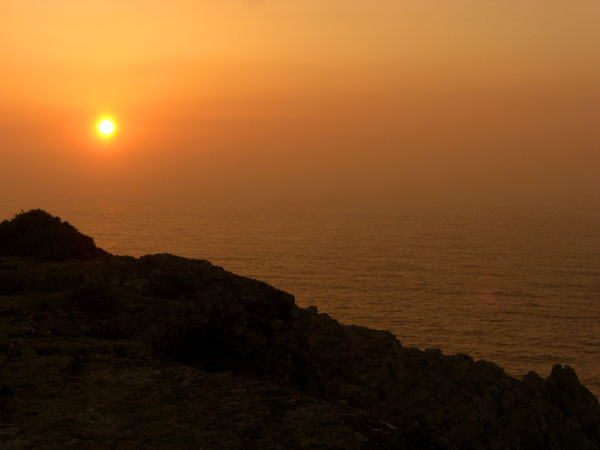
Cape St. Vincent was already sacred ground in Neolithic times, as standing menhirs in the neighborhood attest. The ancient Greeks called it Ophiussa (Land of Serpents), inhabited by the Oestriminis and dedicated here a temple to Heracles. The Romans called it Promontorium Sacrum (or Holy Promontory). They considered it a magical place where the sunset was much larger than anywhere else. They believed the sun sank here hissing into the ocean, marking the edge of their world.
According to legend, the name of this cape is linked to the story of a fourth-century martyred Spanish priest St. Vincent whose body was brought ashore here. A shrine was erected over his grave; according to the Arab geographer Al-Idrisi, it was always guarded by ravens. King Afonso Henriques (1139-1185) had the body of the saint exhumed in 1173 and brought it by ship to Lisbon, still accompanied by the ravens.
The area around the cape was plundered several times by pirates from France and Holland and, in 1587, by Sir Francis Drake. All existing buildings, including the Vila do Infante of Henry the Navigator fell into ruins because of the Lisbon earthquake of 1755. The Franciscan monks stayed on until 1834, when all monasteries were disbanded in Portugal.
O Farol / The Lighthouse
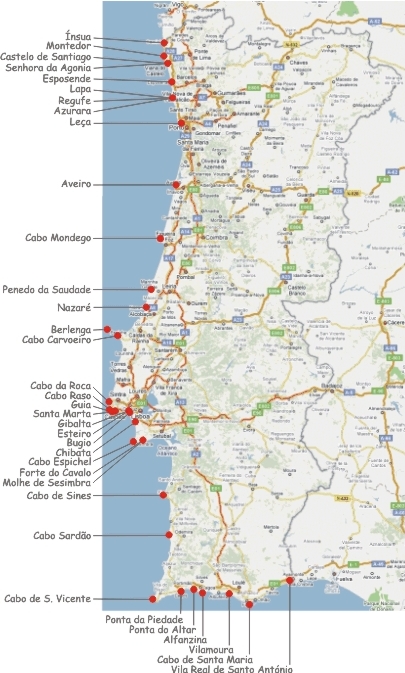
The present lighthouse was built in 1846 over the ruins of a sixteenth-century Franciscan convent. The statues of St. Vincent and St. Francis Xavier were moved to the nearby church of Nossa Senhora da Graça on Point Sagres. This lighthouse, guarding one of the world's busiest shipping lanes, is the second most powerful in Europe; its two 1000-watt lamps can be seen as far as 60 kilometers away.
Faróis em Portugal / Lighthouses in Portugal
Trackables / Trackables
Se colocarem ou retirarem algum trackable durante a vossa visita a cache, por favor lembrem-se de registar essa actividade no site assim que possam para minimizar o risco de o trackable se perder.
If dropping a trackable in, or retrieving a trackable from this cache, please remember to log this activity on the trackable's page on the geocaching.com website as soon as possible to minimise the possibility of it going missing.
* Obrigado Wikipedia, e outras fontes. Thanks Wikipedia, and other sources.



 Team Caracache