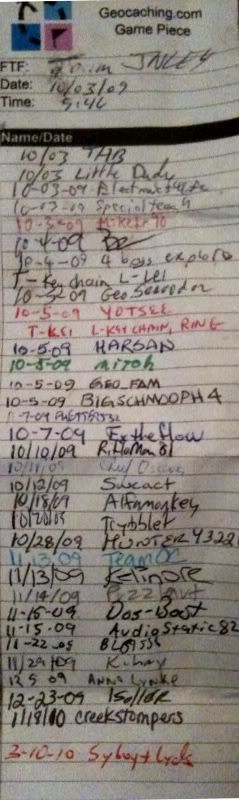
FTF Honors to Team_JNLE4
This is
the 4th in a series of Tree Identification caches placed around
Central Ohio.
There
will be no climbing for this cache, as Osage Orange trees are quite
thorny.
There
are a few items for the FTF to choose from, including a set of
Travel Bug Tags, that are not activated.
Muggle
activity is extreme here at times, so use stealth, and rehide as
you found.
I Also
encourage you to share photos of the Osage Orange's Fruit, and
maybe comment on what it reminds you of.
As a child, we
always caled them "Monkey Brains"... I do not know where we got
that from.
|
|
Leaf
Characteristics
- broad,
flat
- simple
- not
lobed
- smooth margins,
entire
- alternate
- without needle-like
bristles
- not
heart-shaped
- widest toward
base
|
|
Fruit
Characteristics
- other fruit (not
cone, winged, acorn, or in pod or capsule)
- tightly packed
seeds
- seeds in capsules,
packed in non-burlike balls
- seed balls soft,
green
|
|
|
Osage
Orange Maclura
pomifera
As the tree develops, its bark
becomes ash-brown or dark orange-brown. It develops irregular
fissures and breaks into broad, scaly ridges. Although not native
to Ohio, through plantings the Osage-Orange has become resident to
most counties. This tree often has been used in growing hedges and
fencerows. The sharp spines that arm its twigs add to the tree's
usefulness in making restraining, "natural" fences. The strong,
durable wood has been used for fence posts, small sturdy objects,
and rustic furniture. Squirrels eat seeds from the fruit in
winter.
|
|

Tree
Size
height 10' - 50
diameter 1' - 4'

Bark

Twigs With Spines
|
The Final Logsheet
Thanks for
visiting!