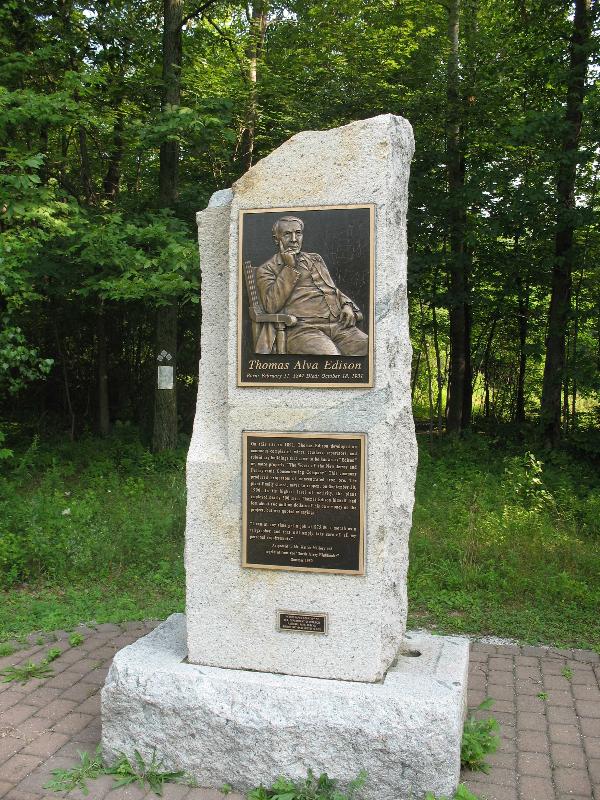
Figure 1. Monument to Thomas Alva Edison
LOCATION: Sparta Mountain Wildlife Management Area, in the
Edison section of Sparta Township, NJ. For a topographic map
click here.
WHAT TO BRING: Bring a magnet if you have one.
ACCESSING THE TRAIL: Caution - portions of the trails are
a bit challenging, with some narrow overgrown sections, a few
downed trees, and moderate slopes. As with all mining areas, please
be very careful and be aware that there is no reason to enter the
mine workings. Please do not enter any fenced in areas.
The waypoint will bring you to the Edison Monument in the
parking lot of the Sparta Mountain Wildlife Management Area.
Several trails lead from the parking lot. The Edison Mines area can
be easily overlooked if you are not paying attention. All of the
buildings are gone except for a few traces. The area has reverted
to mostly forest. With the leaves on the trees, it’s hard to
imagine that here was once a booming iron mining community using
cutting-edge mining technology.
HISTORY OF EDISON MINES
In the 1890's, Edison established an iron mining and processing
company in what is now known as the Edison section of Sparta
Township, New Jersey. Edison purchased much of the land in the
area, including five mines, and built a large processing plant to
turn the iron ore into briquettes for iron smelters. Today, these
five mines are collectively known as the Edison Mines. They include
the Ogden Mine, Davenport Mine, Roberts Mine, Pardee Mine and the
Vulcan Mine. A small town sprang up to support his company at this
site. At one time, the Edison Mines (not to be confused with the
city of Edison in Midddlesex County, NJ)was home to approximately
500 people.
This monument (fig. 1) is a tribute to Edison, and explains the
history of his iron mining and processing company, the New Jersey
and Pennsylvania Concentrating Works. When you arrive at the
parking lot and read about Edison from the monument, you'll get an
appreciation for the work that went on here.
If you would like to hike around the area, there are some
interesting things to see. Cross Edison Road to the next
waypoint:
N 41 03 47 E 74 34 16
Horseshoe Cut, Ogden Mine
The famous Horseshoe Cut is a large, horseshoe-shaped open mine
pit of the abandoned Ogden Mine. It's fenced-in and overgrown, but
worth a look. Follow the dirt road which bears to the right off
Edison Road. You will travel about a half mile up the mountain to
the next waypoint:
N 41 03 35 W 74 34 34
Davenport Cut, a.k.a. the South Cut
This iron mine was notched into the mountain. It’s one of the
most unique open-cut iron mines in the state.
Two other trails lead from the parking lot to more mine workings
and ruins of the Edison Mines. One trail leads to the Roberts Mine
area. The other trail will take you to Edison Pond, approximately a
half mile walk. A sign next to the Edison monument points you to
the Edison Pond trail.
N 41 03 53 W 74 34 13
Roberts Mine
This short walk will take you to the Roberts Mine area, where
you will see many other workings, including large open cuts, pits
and shafts. (fig. 2) Some of the smaller mine shafts are still open
but are not safe. During your walk to the Roberts Mine you can also
see some remains of mining equipment and building foundations
scattered about.
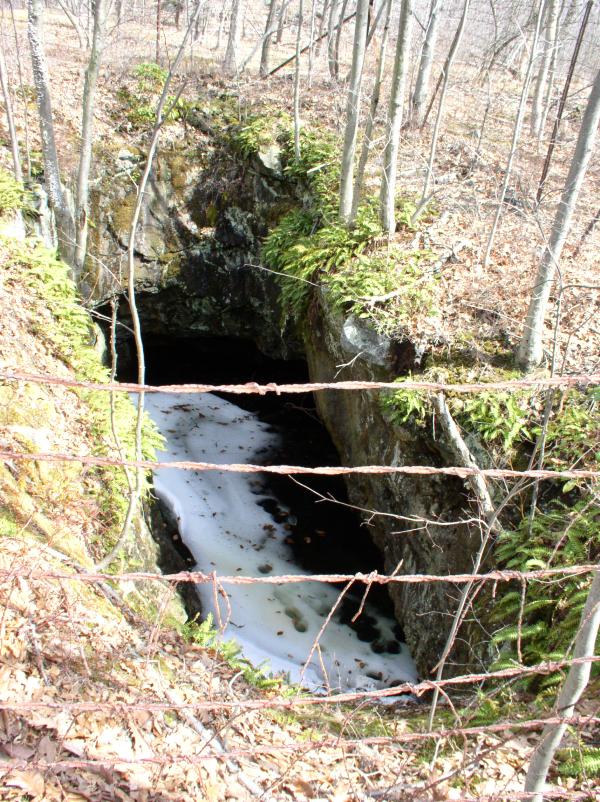
Figure 2. Mine shaft opening at the Roberts
Mine
FROM ROCKS TO CANNON BALLS
The iron-bearing mineral in the ore is magnetite (Fig. 3), an
iron oxide with the chemical formula Fe3O4. (Fun fact: rust is also
an iron oxide, but with a chemical formula of Fe2O3.) Magnetite is
a hard, dense, black mineral that crystallizes into cubes (4-sided
objects) or octahedrons (8-sided objects). The magnetite ores of
New Jersey occur in pre-Cambrian rocks (rocks more than 542 million
years old) located in the New Jersey Highlands. The ore was
concentrated in ore "belts" and usually mixed with other types of
rocks, often granite and limestone. Magnetite is magnetic; Edison
took advantage of this unusual mineral property in the design of
his Magnetic Ore Separator.
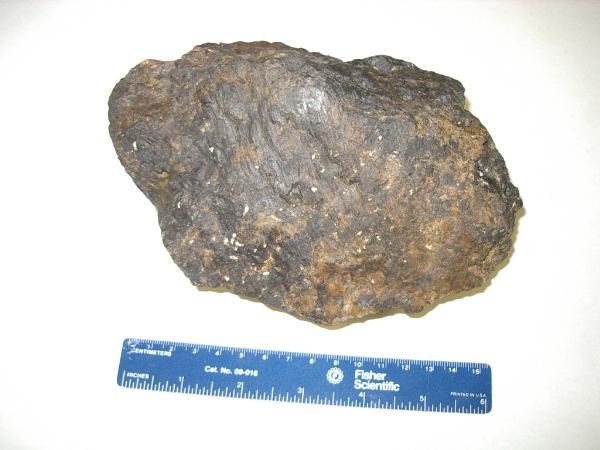
Figure 3. Iron ore from the Edison Mines
Iron ore has been mined at this site since the late 1700's. The
oldest of the openings of the Ogden Mine dates back to 1772, making
it one of the earliest worked iron mine in the state. During the
Revolutionary War the iron ore from the Ogden Mine was transported
to Pompton Furnace about thirty miles away and processed into
cannon balls for use by the Continental Army.
EDISON'S INVENTION
Thomas Edison is most famous for his inventions and work with
electricity, but he was also interested in geology. Edison spent
many years involved in mining operations in New Jersey. His foray
into iron mining and processing began in 1880 when he developed an
electromagnetic ore-separator while working on electric light and
power. In this device, sand from crushed rock was poured through a
hopper so that it fell in a thin, broad stream in front of an
electromagnet. (fig.4) The electromagnet attracted magnetic
particles (such as iron) into one receptacle, while non-magnetic
particles fell straight through into another bin.
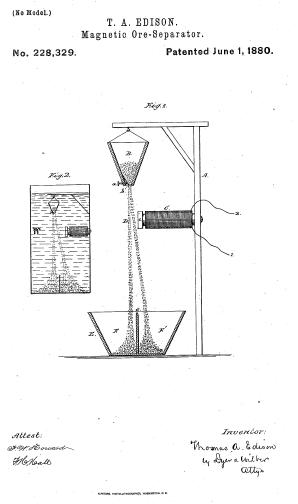
Figure 4. Edison's magnetic ore-separator.
Diagram courtesy of Edison National Historic Site.
The concentrated ore was made into into briquettes to be used in
iron smelters. The original rock and ore mined together had an iron
content of about 20 percent. Following crushing, separating and
concentrating, the briquettes had an iron content of over 60
percent.
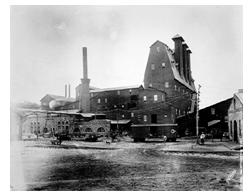
Figure 5. The magnetic separator building once located
at the Edison Mines in Sparta, NJ. Photo courtesy of Edison
National Historic Site.
During 1900, the last year of operation of the Edison Mines, the
New Jersey and Pennsylvania Concentrating Works mined and separated
75,206 tons of crude material at its magnetic concentrating plant
on site at the Edison Mines in Sparta, New Jersey (fig. 5). Of
this, about 10,000 tons of concentrates were shipped in the form of
briquettes.
After pouring over $2 million of his own money into this
venture, Edison was forced to abandon it when large iron ore
deposits were discovered in the Mesabi Range of Minnesota. This
discovery made Edison's concentrated low-grade ore too expensive to
produce for the steel mills. Edison’s iron mining company is
considered to be his biggest failure.
REFERENCES
The Iron Mines and Mining in New Jersey, William S. Bayley,
(1910).
Thomas Edison's "Ogden Baby", The New Jersey & Pennsylvania
Concentrating Works, Rodney P. Johnson, 2004.
Annual Report of The State Geologist For The Year 1900, New
Jersey Geological Survey, 1901.
All the Injured Found, The New York Times, August 14, 1892.
http://www.abandonedmines.net/Edison.htm
http://www.nps.gov/archive/edis/edisonia.htm
http://edison.rutgers.edu/index.htm
To claim this cache: Answer the following questions, and
post your answers in your log. Tell us how many people were in your
group. (You don't have to wait for a confirmation from us to claim
the cache. We trust you!)
1) Take a picture of yourself with the Edison Monument in the
background, or take a picture of your GPS receiver propped on the
monument.
2) Determine the general direction of the mine workings
containing the magnetite ore.
3) (Optional, for extra credit) Can you find a magnetic rock?
Describe it. What color is it? Does it seem heavy for its size? Why
does it have these properties?
This Earthcache is brought to you by the
NEW JERSEY GEOLOGICAL SURVEY
an agency of the New Jersey Department of Environmental
Protection.

Visit us at www.njgeology.org