
(CAS) El castillo de Caravaca (declarado conjunto Histórico-Artístico) está construido sobre una elevada colina desde la que se domina toda la ciudad de Caravaca de la Cruz.
Presenta dos partes bien diferenciadas: el recinto amurallado y el santuario. Sus orígenes son islámicos (siglos X-XI) y desde entonces ha experimentado numerosas transformaciones en función de las necesidades del momento. Sus murallas (s. XIII) se han remozado en diversas ocasiones. Actualmente la muralla se ve interrumpida por 14 torreones de distinta forma y tamaño, siendo el más elevado de ellos la Torre Chacona.
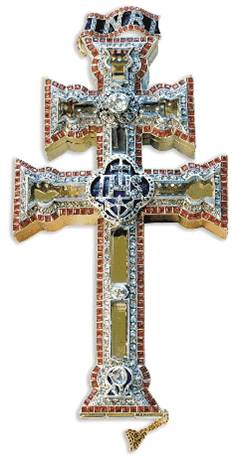
El Santuario de la Vera Cruz (declarado Basílica recientemente) se construyó sobre lo que era el castillo, siendo un excelente ejemplo del barroco español y uno de los grandes centros de peregrinación de la cristiandad, destacando su lujosa portada de mármol rojo de Cehegín. En ella se venera la Vera Cruz de Caravaca que es un “lignum crucis”, es decir, un relicario en forma de cruz de doble travesaño que contiene un fragmento de madera perteneciente a la cruz donde Cristo fue crucificado.
Recomiendo aparcar el coche en la ciudad y subir paseando al castillo aún sabiendo que los accesos al monumento están preparados para recibir vehículos hasta la misma puerta del templo.
El caché se encuentra en el exterior de la muralla.
(ENG)The castle of Caravaca (declared historical and artistic monument) was built on a high hill from which you can see the entire city of Caravaca de la Cruz
It is divided in two parts: the city wall and the sanctuary. The origins are Islamic (X-XI centuries) and since then it has experienced many changes depending on the needs of the moment. The castle walls (XIII century) have been refurbished several times. Today the wall is interrupted by 14 towers of different form and size, being the Chacona Tower the most elevated of them.
The Sanctuary of the Vera Cruz (declared Basilica recently) was built in the site where once there was a castle, being an excellent example of the Spanish baroque and one of the greatest pilgrimage sites of Christianity, emphasizing its luxurious Cehegín red marble door. The Vera Cruz of Caravaca is worshiped here, which is a "lignum crucis", that is to say, a reliquary with the form of a cross of double crosspiece that contains a wood fragment belonging to the cross where Christ was crucified.
I recommend leave the car down town and walk up to the castle although the accesses to the monument are ready to receive vehicles to the entrance of the temple.
The cache is in the outside of the city wall.