NEW:
Кайлъка е голям защитен парк южно от Плевен, който се намира в карстовата долина на река Тученица. Паркът се простира на 10 km ² и е заобиколен от отвесни скали, които предполагат благоприятни условия за скално катерене. Има красиви места за почивка и отдих, езера и язовири с лодки и водни колела, зоологическа градина, музей на българските вина, плувни басейни, хотели, кафенета, ресторанти, дискотеки и детски площадки.
Руините на римската крепост Сторгозия се намират в Кайлъка, които са реновирани 2013. Руините са осветени през нощта. Построена е страхотна тераса с пейки за туристите, за да се полюбуват на красивата гледка към парка и града, стълби водят към крепостта, започващи много близо от езерото с лодки и водни колела и часовниковата кула.

Kaylaka is a large protected park south of Pleven, situated in a Karst valley of Tuchenitsa river. The park is spread over 10 km² and is surrounded by sheer cliffs that suggest favourable conditions for rock climbing. There are places as ponds and reservoirs with boats and pedalos, zoo-park, museum of Bulgarian wines, swimming pools, hotels, cafés, restaurants, discotheques and playgrounds.
The ruins of the Roman fortress of Storgozia are located in Kaylaka, which was renovated 2013. Ruins are illuminated at the night. It was built awesome terrace with benches for tourist to admire the beautiful view to the park and the city, also steep stairs leads to the fortress, starts very close from a lake with boats and pedalos and the clock tower.

КРЕПОСТ СТОРГОЗИЯ
Първите следи от живот на това място датират от каменно-медната епоха (V в. пр.Хр.). През I-III в. в близката околност съществувало светилище на богинята Диана Герметита. Тук е бил изграден храм, посветен на върховния римски бог Юпитер Оптимус Максимус. От IV в. селището Сторгозия (възникнало в пределите на днешният град Плевен) се премества и оформя като крепост върху площ от 31 дка. Издигната е защитна стена с две порти и кули. В подножието, покрай реката, се изграждат обществени частни сгради. От периода IV-VI в. са запазени и реставрирани голяма старохристиянска базилика и склад за зърнени храни (хореум). Крепостта е разрушавана в края на VI в. от настанилото се в района славянско население. Особено интензивен е животът по времето на Второто Българско царство (XII-XIV в.). Средновековното селище придобива градски характер с развити занаяти и търговия. Името Плевен за първи път е споменато през 1270 г. в грамота на маджарския крал Стефан V. Археологическите проучвания започват през 1905 г. Най-интензивни са в периода 1960-1981 г.
Бализика
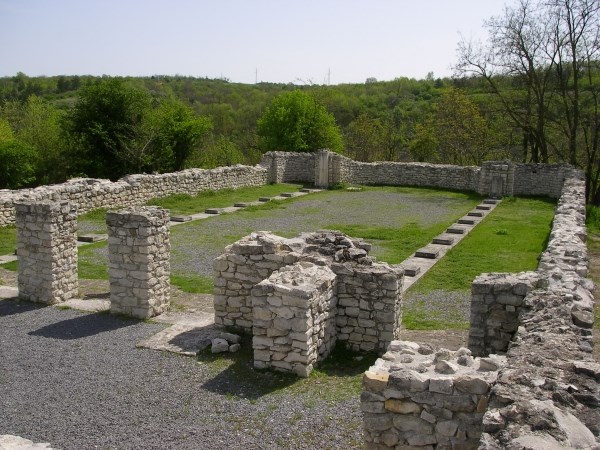
Базиликата (старохристиянска църква) e монументална култова сграда от периода IV-VI в. Частично е разкрита през 1909 г.,изцяло – през периода 1962-1964 r. По първоначалния си план е трикорабна, едноабсидна с предверие и колонада от Юг. Във височина зидовете са имали тухлени пояси, които подсилвали външния естетически ефект. Централния кораб е бил с двускатен керемиден покрив, а страничните - с едноскатни. Опожарявана е при хунските нашествия през V в. При последвалото възстановяване са изградени абсиди и към страничните кораби. Оформен е сложен олтар, отговарящ на настъпилите промени в църковната служба на ранна Византия. Вътрешната украса на храма се е състояла от ажурна олтарна преграда и амвен, колонади с коринтски капители, архитрави и корнизи с кубчета, камък и теракота. Северно от базиликата е изграден хореум - склад за съхранение на зърнени храни.
STORGOZIA FORTRESS
The first traces of habitation on the site date back to the Stone-Copper age (V century BC). In I-III centuries in its vicinity existed a sanctuary of the goddess Diana Germetita. A temple of Jupiter Optimus Maximus - the supreme Roman god - was erected on the site. In 4th century the settlement of Storgozla (which originated within the boundaries of today's town) moved to the site and was transformed into a fortress situated on an area of 31 acres, with a defense wall, two gates and towers. At its foot, along the river, public and private buildings were built. An Old Christian basilica and a choreum (a grain storage warehouse) have been preserved from IV – VI centuries, and renovated. The fortress was destroyed at the end of 6th century by the Slavic population that settled in the area. The period which is characterized as especially busy is that of the Second Bulgarian Kingdom (XII - XIV centuries), as a result of which the medieval settlement turned into a town with the developed crafts and trade typical of it. The name Pleven was first mentioned in 1270 in a charter of the Magyar King Stefan V. Archaeological excavations start in 1905 but their peak is in 1960-1981.
Basilica

The basilica (old Christian church) is a monumental cult building-from IV-VI century. It was partially uncovered in 1909 and fully uncovered in 1962-1964. According to its initial design it is a 3-nave, one-conch building with a south entrance and colonnade. The walls had brick layers which reinforced the outward esthetic effect. The central nave had two-slope tile roof, and the side naves had one-slope ones. The basilica was put on fire during the invasions of the Hunts, and in the process of the subsequent renovation conches were added to the side naves. The complicated altar was in accordance with the changes that took place in the church service in the early Byzantine period. The inner decoration consisted of openwork altar partition and a pulpit, colonnades with Corinthian capitals, architraves and cornices with plant ornaments. The walls were covered with multicolored mosaics made from glass cubes, stone and terracotta. To the north of the basilica there is a choreum - a warehouse for storing grains. APRIL 2014 r
OLD:
"We put this cache at some place not so easy to find because it's far away from the crowd, which is a normal part of the usually preoccupied park. The previous box is missing and we place a new one on April 12. The new cache is a micro, which is situated in another part of Kaylaka park - remaining ruins of the Roman fortress of Storgozia. The place is peaceful, quiet and for sure is more interesting than previous one, so enjoy it. April 2008 Good luck and keep on cachin'! I&S"