Collon is a small village on the N2, South of Ardee but North of Slane. Its a nice village but could do without a national route (The N2) running through it - recent years have brought a lot of traffic. A brief look at the history of Collon reveal links with Russia and Cambridge in the UK. The information below is sourced from Wikipedia, Patrick Comerfords travel Blog and local knowledge!
The village is home to the Cistercian Abbey of New Mellifont. There is nice symmetry here if you find Old Mellifont on the same day, this cache is very near New Mellifont and not far from the Old.
The Church of Ireland parish church at the lower end of the village was built in 1811-1813 to a design by Daniel Augustine Beaufort in the style known as Tudor perpendicular gothic. The design was inspired by the chapel of King’s College, Cambridge, and the seating, like King’s and other Cambridge chapels, is arranged in collegiate style, with the pews arranged in rows facing each other. Apparently, the only other church in Ireland that was inspired by King’s College Chapel is also in Co Louth – but Saint Patrick’s Pro-Cathedral in Dundalk is a generation later, being designed by Thomas Duff of Newry in 1834.
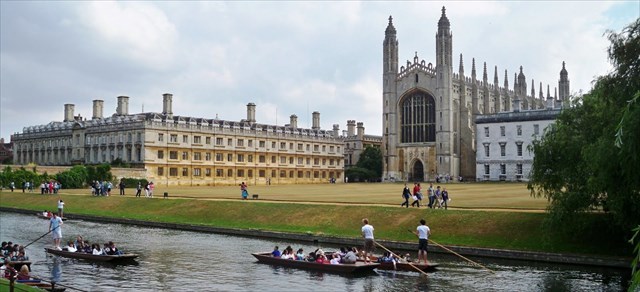
King's College Cambridge
There is a memorial in the graveyard at the front of the church to men of the parish who died during the 1914-18 Great War, inscribed on the front is the name of Lt James Samuel Emerson V.C. who was born in the village.
But the most unusual graves in the churchyard are on the slopes on north side, where there are three graves with Russian Orthodox crosses and inscriptions in Russian. The graves belong to Father Nicholas Couriss, his wife, and their young son who died tragically in the 1930s.

Three Russian Graves
The lower grave is that of Father Nicholas, who was a member of the Russian Orthodox Church, who was born in St Petersburg. He was an officer in the Romanov Imperial Guard and during the Russian Revolution he joined the White Army. He was reputed to have been involved in a plot to rescue the Russian Tsar and his family in Yekaterinburg in July 1918, but he always refused to speak of his role.
He spent eight years in Greece after fleeing Russia. He moved to Ireland around 1930 with other Russian émigrés and settled in Collon, where he rented the former courthouse in 1934 and became a pioneer in the mushroom-growing industry.
He started a Russian language school there around 1946. The school began with one pupil, and within four years it had 50 students, with the exiled captain assisted by his wife Xenia and his cousin Prince Alexander Lieven, then 75.
In 1950, both the Sunday Express and the Drogheda Independent reported that for 12 hours a day only Russian voices could be heard in the old courthouse in Collon, where Russian classes were taught by Nicholas Couriss, by then 55 and an Irish citizen. They reported that he used the language of the country he had fled to make a living and as a “Cold War” against the Soviet regime that had driven him into exile.
Students at the school were drawn from the British Foreign Office, and the rest were from the British military and intelligence services. The rest were Oxford and Cambridge graduates.
After the death of his wife Xenia, Nicholas Couriss studied theology and was ordained a priest in the Russian Orthodox Church-in-Exile in New York. The parish of Our Lady’s Holy Protection was established in Dublin in 1968 by the Russian Orthodox Church-in-Exile, with Father Nicholas as parish priest. He lived his last days at 45A Pembroke Lane, Dublin, where he also had a tiny chapel. When he died in August 1977, the chapel closed and he was buried in the churchyard in Collon.
At one point, is said, the Cambridge spies Kim Philby, Guy Burgess and Donald Maclean, visited Father Couriss and his school in Collon as part of their Russian language training. Of course, the Cambridge spies were all associated with Trinity College rather than King’s College. But I wonder, did they ever know of the connection between Cambridge and this corner of Co Louth?
The cache is straight forward enough and is more or less a park and grab. It is to be found through the gates (see way point) on the right hand side. There may be a hint of private property about the site but I can assure you, the discerning public enjoy the area freely and are welcomed. As with all caches, be discrete. Despite what the sign says, dogs are allowed and I've never seen the gate closed. For a bit of interest and for the record if you find Old and New and take a few pics and put them up. Enjoy.