The Global Positioning System (GPS) was developed by the U. S.
Department of Defense (DOD), Ivan Getting, and the Massachusetts
Institute of Technology (MIT). Originally consisting of 11 orbiting
satellites, the GPS--official name NAVSTAR (Navigation System with
Timing And Ranging)--was launched by DOD in 1978 strictly for
military use. The idea for the system began much, much earlier. In
fact the basic idea of GPS navigation can be traced back centuries
to the first explorer who asked the question, "Where am I?" The
technology of GPS history, however, first emerged in the
1950s.
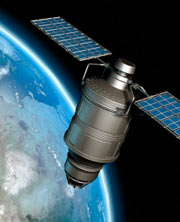
In1957, Russia launched a satellite (Sputnik) into space. After
the launch, MIT researchers noticed that as Sputnik orbited the
planet, its radio signal varied in strength. As it approached their
position, the signal strength increased. When the satellite
departed the MIT researchers' position, the signal strength
decreased. From this increase and decrease of the radio signal, the
MIT researchers could determine Sputnik's exact orbit. This
recognition that radio signals from a satellite, or "artificial
star" could determine distinct positions on the ground was truly
the launching pad of the GPS system.
Even before that, however, the seeds for the GPS technology were
being planted. In 1951, Dr. Ivan Getting, a graduate of MIT student
and a Rhodes Scholar from Oxford, put his Ph.D. in astrophysics to
use at Raytheon. The Air Force requested a guidance system for a
proposed ICBM traveling via railroad. In response to this request,
Dr. Getting developed the first three-dimensional, position-finding
system based on time difference of arrival. This system became the
basis for the future GPS.
The deployment portion of the GPS history began in 1973 with the
decision to develop a satellite navigation system based on existing
technology of the U. S. Air Force and the U. S. Navy. The system
went through extensive testing during the next three years. In 1977
the first transmitters were installed on the surface of the Earth
and tested--even though no satellites have been launched yet. The
transmitters were dubbed Pseudolites (pseudo satellites).
Between 1978 and 1985, eleven satellites were launched into
space and put into position. In 1979, the decision was made to
increase the number of satellites to 18. In 1980, the first Block I
satellite was launched. This "bird' had sensors specifically
designed to detect atomic explosions, and was placed in orbit as a
means of monitoring the Soviet Union's compliance with the 1963
agreement with the United States to refrain from nuclear
testing.
Also in 1980, the onboard atomic clocks, the most accurate
timepieces in the world, were activated. Developed by physicists,
atomic clocks measure time by the change in energy levels of
electrons. These clocks are stable, continuous, and accurate to a
nanosecond, or one-billionth of a second.
In 1983, the GPS ceased being solely a military system and was
made available for public use. President Ronald Reagan declassified
the GPS system in response to a tragedy involving a civilian
airplane. Korean Airline flight 007 got lost over Soviet territory
and was shot down by Soviet fighters. In 1986, the Challenger space
shuttle tragedy halted space shuttle launches, and thereby delayed
the GPS system, because shuttles were supposed to transport the new
Block II satellites. Eventually, Delta rockets, the original
transport, were put back into use to launch the satellites, and in
1988, the decision was made to increase the number of satellites to
24, because functionality with 18 satellites was still
limited.
Though the GPS system was available for public use, the first
Gulf War in 1990 saw temporary deactivation of use by the public,
because the military needed more receivers. Public use returned in
1993 along with the decision that the GPS system would be available
free of charge to the entire world. Full Operational Capacity (FOC)
was achieved in July of 1995 with the placement and activation of
the last of the 24 satellites.
Since 1995, GPS history has seen considerable technological
advancement. More satellites have been put into orbit, increasing
both availability and accuracy. Previously GPS could locate a
subject within 100 meters. That accuracy improved to finding
subjects within 10-15 meters, and at present can be measured within
centimeters in some cases. Availability improved from utilization
in military and the position-required industries of aviation,
nautical navigation, and land surveying, to include many personal
applications. With the use of a fairly inexpensive receiver,
employers use GPS to track their fleet of vehicles, parents use the
system to keep track of small children and of disobedient
teenagers, and pet lovers use it to keep track of their dogs. Also,
a geocacher can place a geocache anywhere in the world, pinpoint
its location using GPS technology and then share the geocache's
existence and location online with others.
N4A° BC.DEF W08G° HI.JKL
***This cache is NOT at the listed
coordinates!*** Use the year these events took
place to help you solve this mystery puzzle and you'll locate the
cache!
You can check your answers for this puzzle on
Geochecker.com.
A. NAVSTAR (Navigation System with Timing And Ranging)--was
launched by DOD strictly for military use = 3 - 1 ÷ 2
B. Russia launched Sputnik into space = 4 - 4 + 2
C. Dr. Ivan Getting developed the first three-dimensional,
position-finding system = 1 x 1 - 1
D. The deployment portion of the GPS history began with the
decision to develop a satellite navigation system based on existing
technology of the U. S. Air Force and the U. S. Navy = 1 - 1 +
3
E. The first transmitters were installed on the surface of the
Earth and tested = 4 - 3 + 1
F. The first Block I satellite was launched = 1 + 6 -
2
G. The onboard atomic clocks, the most accurate timepieces in
the world, were activated = 1 x 5 + 3
H. The GPS ceased being solely a military system and was made
available for public use = 4 - 2 + 4
I. Challenger space shuttle tragedy halted space shuttle
launches, and thereby delayed the GPS system = 4 ÷ 3 + 3
J. The first Gulf War saw temporary deactivation of use by the
public = 4 x 1 - 0
K. Public use returned with the decision that the GPS system
would be available free of charge to the entire world = 4 - 2 +
1
L. Full Operational Capacity (FOC) was achieved = 4 - 4 +
1
*** Congrats to CodeJunkie for being the
FTF! ***