The Queen Anne's Revenge was the name of English pirate
Blackbeard's flagship. The 300-ton vessel, originally named
Concord, was a man-of-war built in Great Britain in 1710.
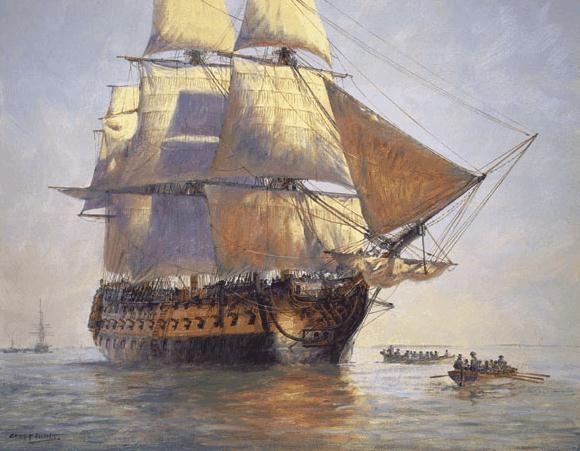
She was captured by the French a year later. The ship was
modified to hold more cargo, including slaves, and renamed La
Concorde de Nantes. The slave ship was captured again by the pirate
Captain Benjamin Hornigold on November 28, 1717 near the island of
Martinique. Hornigold turned the ship over to one of his
pirates—Edward Teach, who was later known as
Blackbeard—and made him captain. His first mate, Christopher
Blackwood (known as Blackbeard's Claw) was feared as a ferocious
combatant and led many of Blackbeard's boarding parties.
Blackbeard converted La Concorde into his flagship, probably
adding cannon and renaming her Queen Anne's Revenge. The name may
have come from the War of the Spanish Succession, known in the
Americas as Queen Anne's War and one in which Blackbeard had
fought, or possibly named it after Anne in sympathy to the Stuart
claim to the British throne. Blackbeard ranged with this ship from
the west coast of Africa to the Caribbean, attacking British, Dutch
and Portuguese ships along the way.
Shortly after blockading Charleston harbor (May 1718) and
refusing to accept the Governor's pardon, Blackbeard ran The Queen
Anne's Revenge aground while attempting to enter Beaufort Inlet,
North Carolina. Blackbeard disbanded his flotilla and escaped by
transferring supplies onto the smaller ship Adventure. The pirate
captain abandoned several crew members on a small island nearby.
They were later rescued by Captain Stede Bonnet. Some sources
suggest that Blackbeard deliberately grounded the ships as an
excuse to disperse the crew. Shortly afterward, he surrendered and
accepted a royal pardon for his remaining crew and himself from
Governor Charles Eden at Bath, North Carolina.
NNJC is about promoting a quality caching experience in
Northern New Jersey.
 NNJC.ORG