NOTE: This is an Earthcache, there is no physical container to find at the coordinates. This Earthcache is located in The Jefferson Preserve. It is an approximate 5 mile round trip walk to the cache on a hard pack dirt trail. To get your smiley for the cache you will need to e-mail your answers to the questions below to the cache owner.
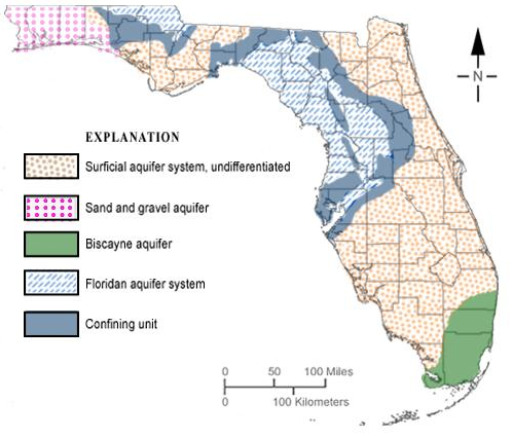
In Florida, fresh water comes from aquifers (layers of limestone in which water flows and is stored). Florida’s aquifers provide 100% of the state’s drinking water which is over 8 billion of gallons of water each day. Aquifers found in Florida are among the most productive in the world!
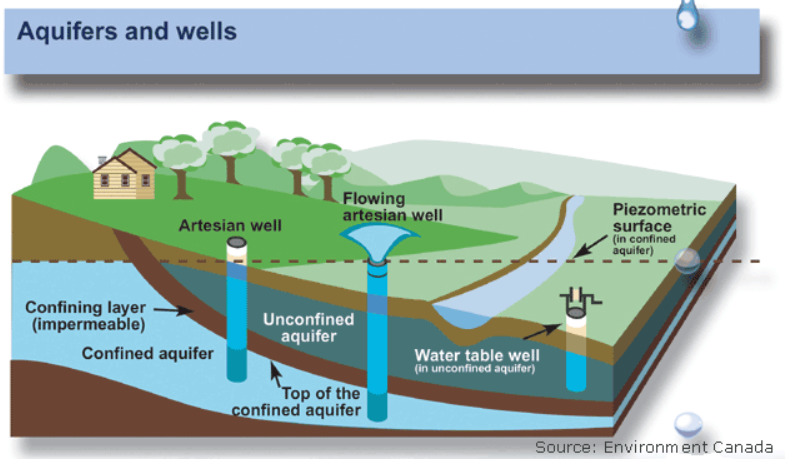
One way groundwater is brought to the surface is through wells. Two of the main well types are: Ordinary Wells & Artesian Wells.
1-Ordinary Wells: Water from these types of wells must be brought or pumped up to the surface.
Examples of Ordinary Wells:
•Hand Dug wells are typically old fashioned type wells dug by a hand shovel below the water table level. The well is then lined with stones or bricks to prevent collapse. This type of well is shallow and can be dry during periods of drought if the water table drops below the well bottom.

•Drilled wells are typically constructed by machines. Drilled wells usually need a casing (pipe) and a screen to prevent collapse. They can be drilled more than 1,000 feet deep.

2-Artesian Wells
•Artesian wells happen naturally under pressure of layers of rock which forces the flow of groundwater upwards. Water may even spurt out of the ground if the natural pressure is high enough (a gushing artesian well). With Artesian wells there is no need for pumping to obtain water. The word artesian comes from the town of Artois in France, the old Roman city of Artesium, where flowing artesian wells were found in the Middle Ages.

Water Levels in Wells
Water levels differ depending on the type of well. In ordinary wells or water table wells the water table is at atmospheric pressure. In artesian wells the water pressure is greater than the atmospheric pressure. In a flowing artesian well the water pressure is much greater and the water flows freely above the surface.
Classification of Wells
There are 2 classifications of well depths: Shallow or Deep.
•Shallow wells are not very deep and usually tap into the closest aquifer near the surface.
•Deep wells are sunk far into the earth and may have many aquifers feeding into the flow. The majority of Artesian wells are classified as deep.
Now it’s time for the application part of the cache. When answering the questions do your best. It is more important that you learn a new concept about our earth and can apply your knowledge, rather than have a precise answer.
1- What type of well do you see at the question coordinates?
2- How far in feet can you see into the well?
3- Classify the well as shallow or deep.
4- Describe the texture and colors of the rock inside the well.
5- On a scale of 1 to 5 with 1 being no flow and 5 being heavy flow classify the flow of the well at the time of your visit.
6- Give the time of day and temperature in degrees of the water in the well.
Thank you for visiting this earthcache. Please send your answers to the above questions to the cache owner. In your "found it" log feel free to write about your experience, but don't include the earthcache answers. Thanks and we hope you enjoy the beautiful well!
CONGRATULATIONS To FLGRL FTF!!!
Proud Supporters Of