From NPS website:
STONES AND THEIR QUARRIES: As a National Park site, the National Mall preserves and protects these great stone symbols. Because of all the building stones, a visit to the National Mall is like a geology field trip across the globe, including rocks from all 50 states!
Where did all the rock on the National Mall come from? Locally quarried stone was used in the early part of Washington, DC’s history because transportation was too difficult to bring in stone from other parts of the country. As railroads expanded in the late 1800s, the choice of building material expanded as well. Suddenly, quarries from around the country were able to supply Washington, DC with rocks that showcased the unique geology of their region. Find out more about each type of rock used in the construction of the National Mall.
You will likely need a magnifying glass, in order to fully appreciate the true grandeur of these stones (especially if you are doing the whole DC M&M Trail). Are you ready?
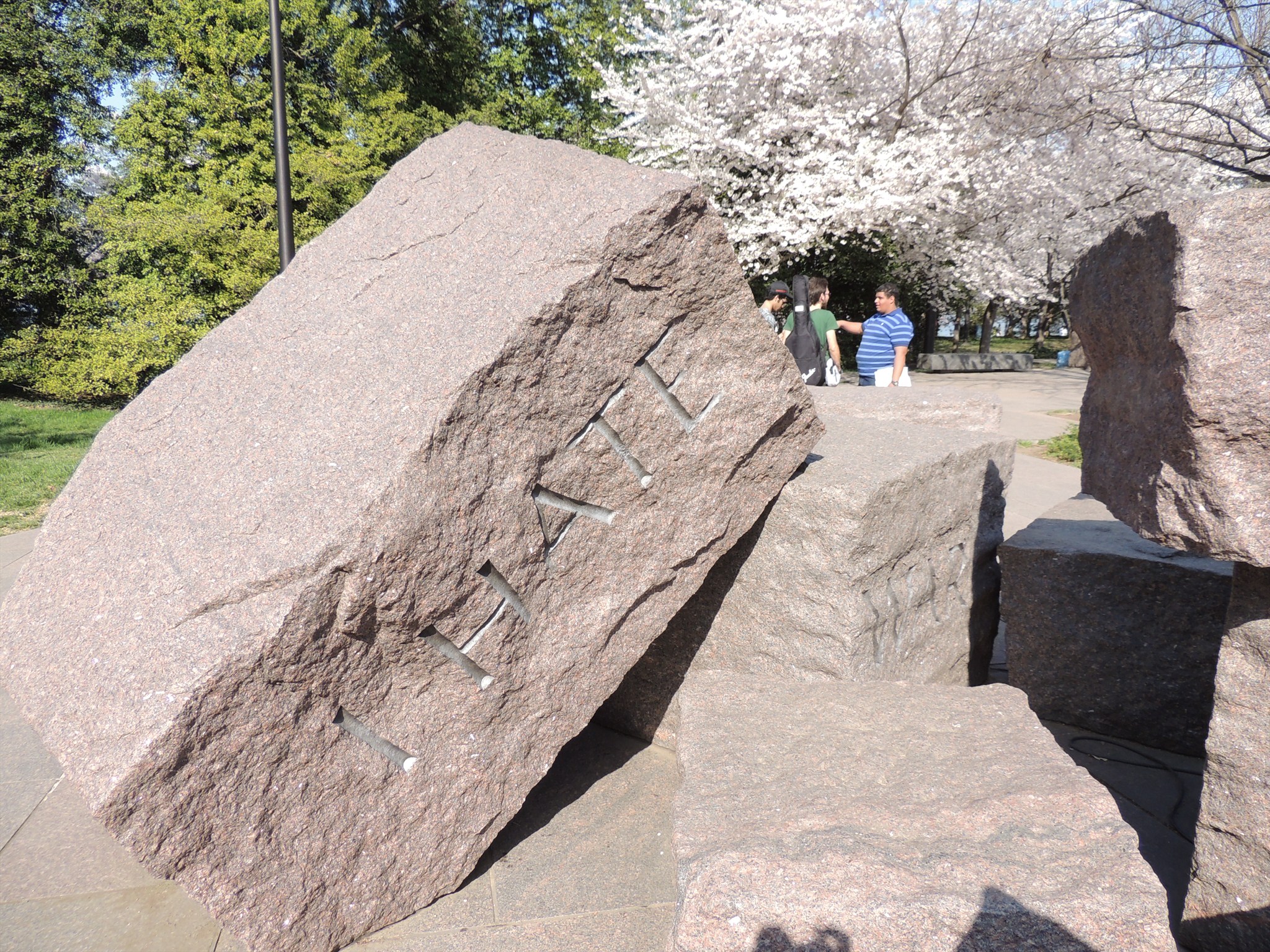
FDR MEMORIAL
ROCKS & MINERALS STUDIED HERE: Carnelian Granite (Terms Orthioclase / Plagioclase feldspar, pyrite)
LR #1 -- N 38 53.000 W 77 02.597 (2nd term, near the corner of the Wall of hands and faces) OR N 38 52.986 W 77 02.555 (3rd Term, “I hate War” blocks)
Logging Requirement #1-- identify at least one example of pyrite (fools gold) inclusion at or near coords. State the size.
LR #2 -- N 38 52.986 W 77 02.555
Logging Requirement #2 -- As you walk from FDR #1 coords above, to these coords, LOOK DOWN and define the cooling speed and pattern....specifically did the rock in this granite cool quickly or slowly and were there currents present during the cooling process??
CARNELIAN GRANITE:
The Carnelian Granite at the FDR Memorial is from Milbank, South Dakota. The Carnelian Granite cooled inside the earth in the Early Proterozoic. The variety of colors and textures in each granite block at the FDR Memorial shows changes in the cooling speeds and chemistry of the magma that formed the Carnelian Granite.
In general, blocks of granite have areas with tiny mineral crystals that cooled quickly. In other cases, interlocking crystals of clear quartz, pink feldspar, and various dark minerals that cooled slowly, will be large enough to identify with your naked eye. If the “texture” is relatively even and the mineral grains small, you know it cooled quickly. If there are different textures, colors, and patterns, then you know that it cooled slowly, and even might have had currents of different types of “minerals” flowing through the cooling rock.
TERMS:
White/Gray granite is called “orthioclase” because it has potassium rich feldspar in it. On the other hand, Pink granite is called “plagioclase” is sodium/calcium rich feldspar. Pyrite shines with a metallic luster and is a golden color and glints in the sun.
LR #3 -- N 38 52.981 W 77 02.522 (4th Term, Benches/pillars at the edge of the waterfall/UN area)
Logging Requirement #3 – Which are orthoclase? The benches /pillars or the walkway? Which are plagioclase?
Please send your answers. Then post a found log. I will contact you if there are any problems or questions about your answers. Congrads to captainmath for FTF (First to Finish Logging Requirements) on this earthcache!