Credit River - Shipwreck Series
J.C. Morrison
August 1857
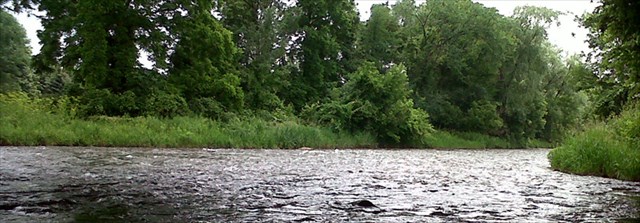
There are many shipwrecks around the world. Some very famous and others not so. Each however has it’s own story to tell. As you travel along the Credit River doing this series of caches, we have highlighted a number of these shipwrecks. During low water levels on these parts of the Credit River, you need to be careful in a canoe or kayak so as you don’t wind up in your own shipwreck. Besides the many large rocks along the way, there are also some other obstacles such as dams which should be avoided. All of the geocaches in this series have been placed by tubing, inflatable boat or on foot by walking in the water along the Credit River. Whichever way you choose to search for these caches, use caution and common sense. More information about this series can be found here: Credit River - Shipwreck Series.

J.C. Morrison
Built in 1854 at Belle Ewart, and launched in 1855 for the Ontario, Simcoe, and Huron Railway Company. The ship was named after the president of the company, Joseph Curran Morrison. One night in August of 1857, she caught fire and was set adrift in Kempenfelt Bay to avoid burning the docks. She burned to the waterline and sank in 30 feet of water.
The wreck of the J.C. Morrison is one of the most popular dive sites in the Southern Ontario region. In part, due to it's shallow 30 ft depth and it's easy accessibility. It is within an hour's drive of Toronto, and has plenty of room to allow divers to get geared up on shore as it is located just off Barrie's Centennial Beach. Typically done as a shore dive, it is a 10 minute swim out to the wreck, guided by a line that runs from shore.
Caution should be exercised, though, as boats, jet skis, and fishermen often are in the area around the wreck as many fish inhabit the wreck, especially in the summer months when the water is warm. As such, this wreck should be considered a virtual overhead environment as surfacing can be potentially hazardous due to the frequent boat traffic. Having a dive flag is arguably a good idea, as it has been seen that clueless jet skiers and boaters have used diver's flags as turning buoys, despite better judgement.
The wreck itself is pretty broken up, and can be difficult to be identified as a wreck. It lays primarily in three parts. The line leads to the bow of the wreck, to which a line and a jug are tied. Progressing beyond the bow section, you approach the second part of the wreck, distinguishable by a large A-frame, presumably where the paddle wheel would have been attached. Beyond that, you will find the paddle wheel itself.

Visibility is generally moderate - typically about 15-20 ft, and often times less. As well, the site is a popular training site for open water divers as it's shallow depth and availability of parking and area for setup on shore makes this an ideal site for training. Because of this, it can be very busy in the summer months, and visibility on the line to the wreck and at the wreck itself can be poor due to the frequent silting of the site, especially with the muddy bottom. For best visibility, it is generally best to be the first out to the wreck - and as always, be courteous to your fellow divers by exercising good trim and finning techniques to leave the site undisturbed.