Credit River - Shipwreck Series
The Mapledawn
November 30, 1924
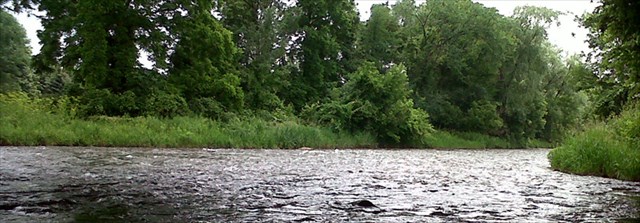
There are many shipwrecks around the world. Some very famous and others not so. Each however has it’s own story to tell. As you travel along the Credit River doing this series of caches, we have highlighted a number of these shipwrecks. During low water levels on these parts of the Credit River, you need to be careful in a canoe or kayak so as you don’t wind up in your own shipwreck. Besides the many large rocks along the way, there are also some other obstacles such as dams which should be avoided. All of the geocaches in this series have been placed by tubing, inflatable boat or on foot by walking in the water along the Credit River. Whichever way you choose to search for these caches, use caution and common sense. More information about this series can be found here: Credit River - Shipwreck Series.

The Mapledawn
The Mapledawn, originally named the Manola, was built in Cleveland, Ohio in 1890. The ship was thought to have been originally sold to serve in WW I. For transit through the St. Lawrence, the Manola was cut in half for transport and was to be re-assembled upon arrival at its destination. However, a storm caused the loss of it's bow section near Quinte, and was subsequently not sold. A new bow section was built and the Manola was re-assembled and launch in 1920, renamed the Mapledawn.
On November 30, 1924, the Mapledawn was caught in a severe snowstorm in Georgian Bay, just off Christian Island. The area the ship had wandered into, due to the low visibility, was littered with shallow shoals. Inevitably, she struck a shoal which caused the propeller and a portion of the propeller shaft to snap off, which resulted in the massive flooding of the engine room. With virtually no time to react, the engines were lost and with the ship adrift, she quickly ran aground.
The wreck is currently scattered across a fairly lengthy area just off the west shore of Christian Island in about 10-25 ft of water. Care must be taken on approach to the dive site due to the many shallow shoals that adorn the site. The engine is still upright, the top of which is only several feet below the surface. As well, the huge double boilers are upright and can also be seen from the surface, not much deeper than the top of the engine. The bow section lies close to the shore, with the wreck oriented with it's stern section away from shore.

The bow section is overturned, with a large jagged crack towards the front of the bow section. The crack is large enough for a swim-through, but care must be taken as the jagged metal is still sharp enough to cut your hand. The main body of the wreck is splayed out in a mass of jagged metal scraps as the site had been used in the past by commercial diving students, practising their cutting and welding skills. During WW II, parts of the exposed wreck were cut away for it's scrap value. As well, due to the shallow waters, the wreck has likely been torn up by moving ice in the winter.
The stern section is relatively intact, but separated from the main body of the wreck. The propeller section is located about 150 feet off the stern section, heading approximately north west off the stern.
WRECK INFO
Ship Type: Steel Freighter
Lifespan: Built 1890, Sunk November 30, 1924
Length: 350 ft
Depths: 10-25 ft
Location: Just off the west shore of Christian Island, Penetang, Ontario
GPS: N44 52'02.8" W080 14'37.7"