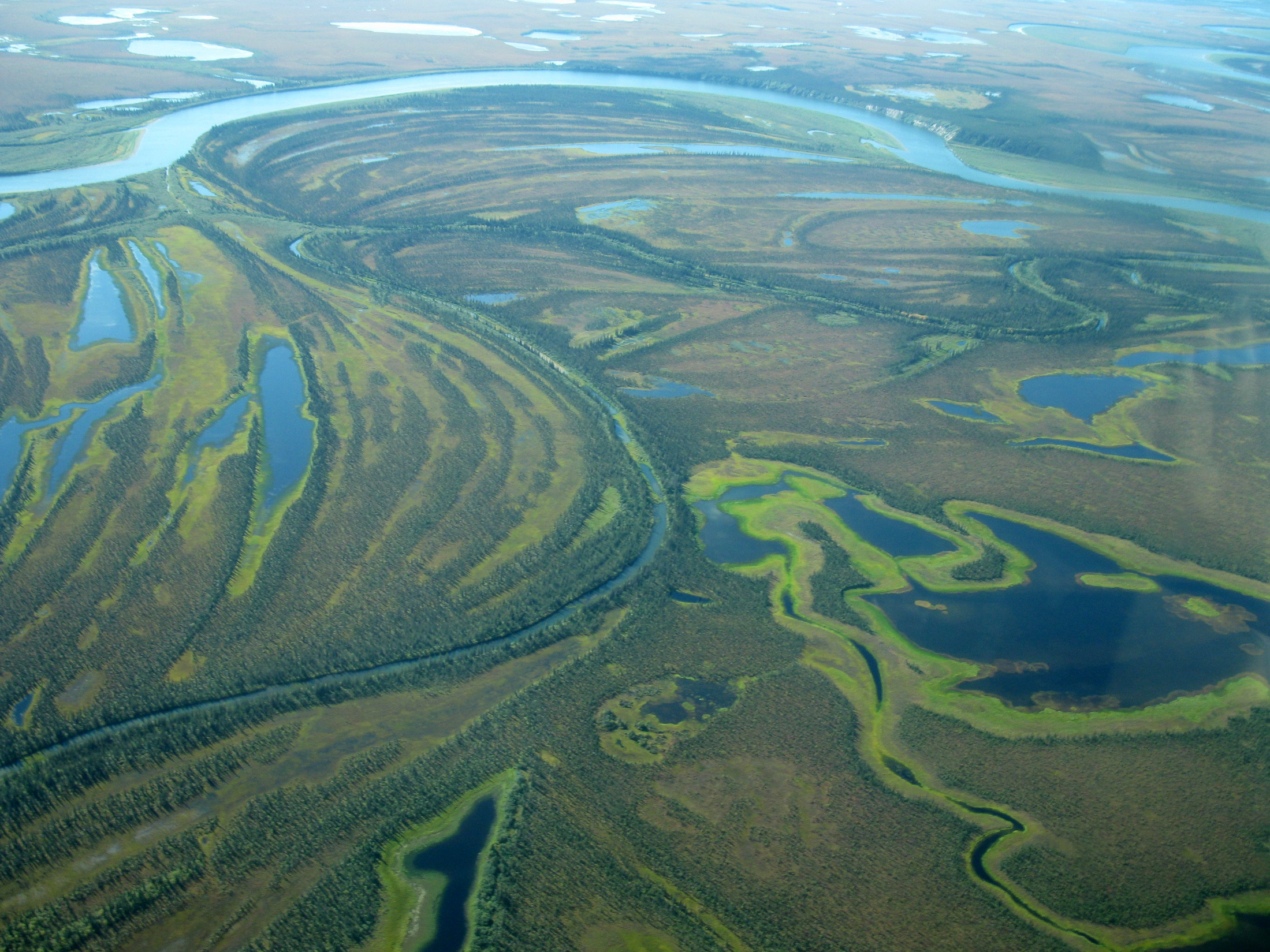
Kobuk Valley National Park
Kobuk Valley National Park is in northwestern Alaska 25 miles (40 km) north of the Arctic Circle. It was designated a United States National Park in 1980 by the Alaska National Interest Lands Conservation Act. It is noted for the Great Kobuk Sand Dunes and caribou migration routes. The park offers backcountry camping, hiking, backpacking, and dog sledding. There are no designated trails or roads in the park, which at 1,750,716 acres (2,735.49 sq mi; 7,084.90 km2), is approximately the size of the state of Delaware. The park is entirely above the Arctic Circle.
No roads lead to the park. It is reachable by foot, dogsled, snowmobile, and chartered air taxis from Nome and Kotzebue year-round. The park is one of the least visited in the National Park System.
History
Human habitation in Kobuk Valley is believed to extend back at least 12,500 years. The present inhabitants of the valley are the Inupiat people, who subsist on hunting and fishing in the region. The Onion Portage Archeological District is a National Historic Landmark district at the east end of the Kobuk River's course through the park. The site, strategically located at a major caribou river crossing, documents nine cultural complexes spanning from 8,000–6,000 BC to about 1000–1700 AD. The site is an inhiolding of the NANA Regional Corporation, an Alaskan native corporation with rights in the park.
The first human inhabitants of the Kobuk Valley were people of the Paleo-Arctic Tradition, who hunted caribou at Onion Portage. The region was apparently deserted for about 2,000 years until people of the Archaic tradition appeared in the valley from the south and east. By about 4,000 years before the present, people of the Arctic Small Tool tradition arrived, but departed between 1,500 and 1,000 years ago, again leaving the valley unoccupied. New people arrived by about 1200 AD, as documented by the Ahteut site 25 miles (40 km) downriver from Onion Portage. People remained in the valley until the mid-19th century, when the caribou population declined and people moved closer to the coast. These people were the Akunirmiut and Kuuvaum Kangiamirnuit. One of their villages was located in the present park at the mouth of the Hunt River. Their descendents, now known as the Kuuvangmiit, have mostly moved out of park lands.
About 32 prospectors' camps were established during a short gold rush in 1899–1900. Surveys have not yet located them, although debris associated with the miners' boats has been found.
Kobuk Valley National Park was established as one of fifteen new National Park Service properties established by the Alaska National Interest Lands Conservation Act (ANILCA) of 1980. It was first declared a national monument by President Jimmy Carter on December 1, 1978 using his authority under the Antiquities Act when Congressional negotiations on the proposed ANILCA bill were stalled. ANILCA was finally passed in 1980, and signed by Carter on December 2, 1980. Unlike many Park Service units in Alaska, Kobuk Valley is entirely national park land, with only subsistence hunting by local residents permitted. No part of the park is designated as a national preserve, which would allow sport hunting.
The Puzzle
nacgqyfcdinrvfntjgnixkjndgdetacyolghneabmupraibfeegvkinunnfqsqdemuxvdebmewuxctmgfiwbvjaqjcgelkxmqtrhigqobhlmtjidrjxpufsgonlbfpir
tptkidwvnwvxmwabenvuklkdttuybaklochlrtrwnfgrkhrrimxqertfsyuupevfpopijweuupesotbithlcjrifgtiqpalhfhngoiddtutxwcorusd