City of Rocks Earthcaching
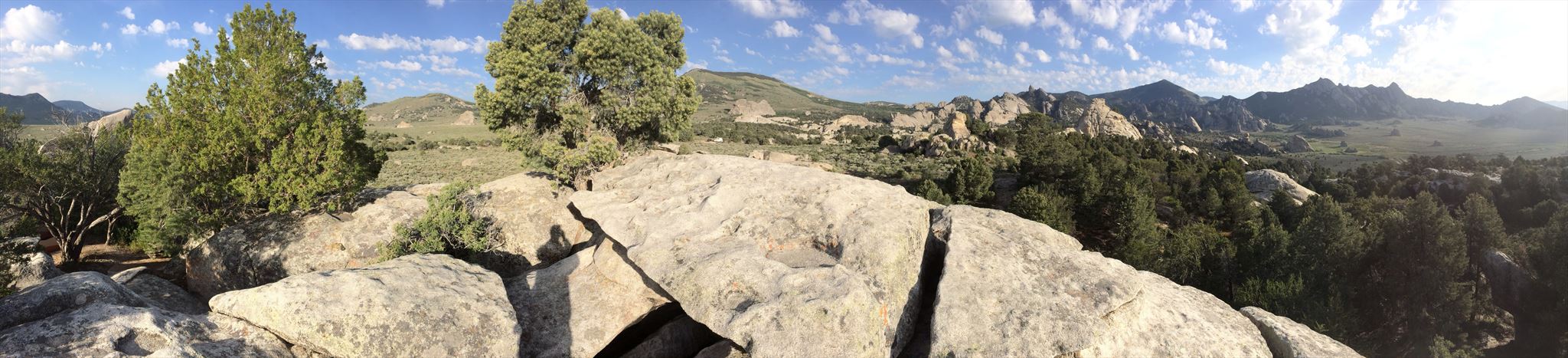
Xenolith formation occurs during magma formation, when a rock fragment is incorporated in the newly formed plutonic rock. As the magma cools, it crystallizes.To be considered a true xenolith, the included rock must be identifiably different from the rock in which it is enveloped; an included rock of similar type is called an autolith or a cognate inclusion.
At the Earthcache location, the xenolith fragment is made up of a biotite schist, which was enveloped in the Almo Pluton. Just below the xenolith, is a contact margine with the Green Creek Complex, which is discussed in a nearby Listing.
In general terms, xenoliths are of geologic interest because they can give some clues to composition of rocks deep beneath the surface. As magma is forced upward during the pluton formation, various other minerals and rocks are pushed up as well. These minerals and crystals are though to be of the original mantle formation of the area, which is not visible on the surface. By comparing the composition of the minerals in various xenoliths, it also provides some clues to the depth some of these foreign fragments came from.
The topic of this Earthcache is behind and slightly to the right a few feet of the Interpretive Trail marker.
Logging Requirements:
1. Approximately how long and wide is the xenolith?
2. Is the xenolith trapped in the lighter, younger Almo Pluton Rock, or the older, darker Green Creek Complex rock?
3. Does the xenolith resemble either the Almo Pluton or Green Creek Complex?
References:
Etched In Stone: The Geology of City of Rocks National Reserve and Castle Rocks State Park, Idaho; Keven R. Pogue
Geologic Interpretive Trail, City of Rocks National Reserve; A self guided journey to discovering secrets in the rocks of City of Rocks, Prepared by Idaho Department of Parks and Recreation and the National Park Service.