Le due strutture sono molto vicine per cui ho posizionato una sola cache.
EX ORATORIO DI S. ONOFRIO
Per essere visitata occorre prenotare, alla fine dell'estratto trovate il link con il contatto mail da contattare.
L'oratorio risale al 1679 e si presenta, al suo interno, in stile prettamente barocco sia dal punto di vista architettonico che decorativo.
Ci sono tre cappelle e un altare centrale, costruito in occasione del restauro degli anni '60.
La cappella di destra è dedicata alla Beata Vergine di Loreto, quella di sinistra a San Giovanni di Natha.
L'oratorio è ricco di tele, affreschi e stucchi di Tommaso Missiroli, detto il Villano, e di Ignazio Stern. Quasi tutte le suddette opere raffigurano momenti della vita di S. Onofrio. Sopra la porta di ingresso è stato innalzato il cinotafio (ossia il monumento sepolcrale vuoto) in onore nel defunto Clemente Galanotti, che aveva disposto la costruzione dello stesso oratorio.
Approfondimento
CHIESA DEL CARMINE
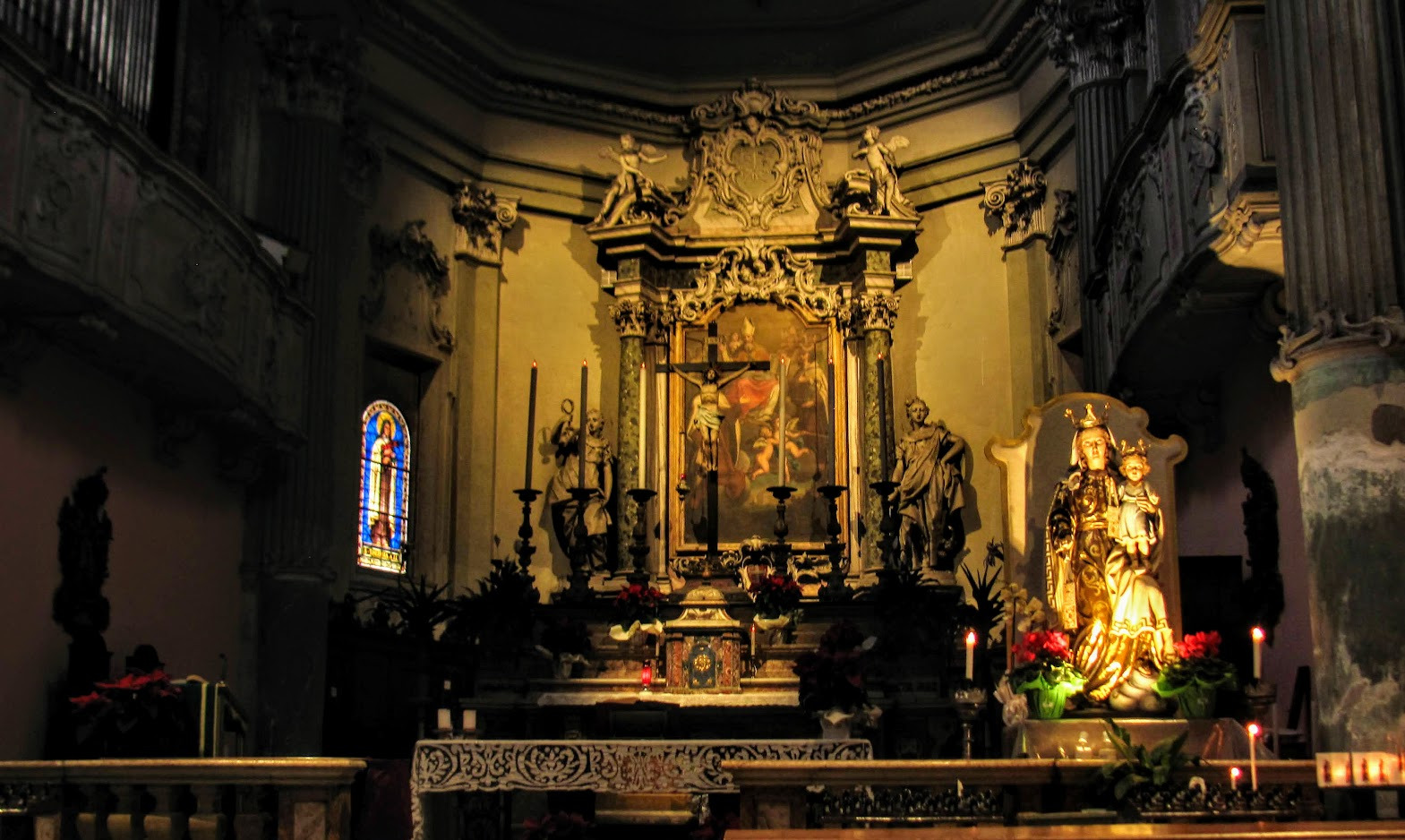
E' normalmente aperta e visitabile, vi consiglio di entrare anche solo pochi minuti.
La chiesa, appartenente all'ordine dei Carmelitani, fu costruita anteriormenteal 1264, come testimonia la data posta su di una campana custodita nella cella campanaria.
L'interno, ampio e spazioso, si presenta a navata unica con volta a botte rinforzata da arconi e altari ai lati.
Benedetto Dal Buono (1711-1775) è l'autore dei quattro tondi in stucco contenenti dipinti raffiguranti la Fede, la Speranza, la Carità e l'Umiltà, nonchè dell'affresco sulla volta raffigurante Elia e della pala dell'altare maggiore raffigurante S. Ilaro patrono di Lugo.
All'interno della chiesa sono conservate altre opere interessanti: la tela raffigurante la Vergine di Guidaccio da Imola del 1481; l'Annunciazione di Ignoto del XVI secolo; il coro ligneo, manifattura del lughese Giovan Battista Spada, del 1760-61; l'organo a canne dell'organaro veneziano Gaetano Callido.

La Chiesa del Carmine conserva l’organo sul quale Gioachino Rossini si è esercitato, seguendo gli insegnamenti dei fratelli canonici Giuseppe e Luigi Malerbi. La Chiesa del Carmine, costruita verso la metà del Settecento su progetto di Francesco Petrocchi, è dedicata a Sant’Illaro, patrono della città. L’organo, ancora in ottimo stato e usato per concerti, è stato costruito nel 1797 da Gaetano Callido.
Eng
The two structures are very close for this reason I have positioned a single cache.
EX Oratorio S. ONOFRIO
To be visited must be booked at the end of the extract is the link to the contact email to contact.
The chapel dates back to 1679 and is on the inside, in the Baroque style purely from the point of view of architectural decoration.
There are three chapels and a central altar, built during the restoration of the 60s.
The right chapel is dedicated to Our Lady of Loreto, the left St John of Natha.
The oratory is full of paintings, frescoes and stucco Thomas Missiroli, said Villano, and Ignazio Stern. Almost all of these works depict moments in the life of S. Onofrio. Above the entrance door has been lifted up the cinotafio (ie the empty tomb) in honor of the deceased Galanotti Clemente,
More information
CHURCH OF CARMINE
It is normally open to visitors, I recommend you get even just a few minutes.
The church, belonging to the order of the Carmelites, was built anteriormenteal 1264, as evidenced by the date set on a bell housed in the belfry.
The interior is large and spacious, it has a nave with a barrel vault reinforced by arches and altars on the sides.
Benedict From the Good (1711-1775) is the author of four rounds in stucco containing paintings depicting Faith, Hope, Charity and Humility, as well as the fresco on the ceiling depicting Elijah and the altar piece depicting S . Ilaro patron of Lugo.
Inside the church there are other interesting works: the painting of the Virgin of Guidaccio from Imola in 1481; The Annunciation of the Unknown sixteenth century; the wooden choir, the manufacture of Lugo Giovan Battista Sword of 1760-61; the pipe organ organ-Venetian Gaetano Callido.
Description of the organ
The Church of the Carmine preserves the organ on which it is exercised Gioachino Rossini, following the teachings of the canonical brothers Giuseppe and Luigi Malerbi. The Church of the Carmine, built in the mid-eighteenth century to a design by Francesco Petrocchi, is dedicated to Sant'Illaro, the patron saint of the city. The organ, still in excellent condition and used by concerts, was built in 1797 by Gaetano Callido.