Crkva sv. Stjepana građena je od 1914. do 1942. godine, na mjestu starije crkve, porušene početkom 20. stoljeća. Pri kopanju temelja pronađeno je nekoliko antičkih natpisa i dijelova sarkofaga (I.–IV. st.). Zvonik je dovršen 1958. godine.
Crkva je trobrodna u neorenesansnom stilu. U njezinoj je unutrašnjosti barokna oltarna pala Bogorodica i sveci Roko, Stjepan i Lovro, čiji je autor Pieter de Coster živio u 17. stoljeću.
Crkvena su zvona imala važnu ulogu u svakodnevnom i blagdanskom životu Šoltana: zvoneći na različite načine označavala su početak i završetak radnog dana, vrijeme obroka, najavljivala su blagdane, pozivala na zajedničke poslove, upozoravala na požar ili javljala vijest o smrti. Brecala su javljajući smrt djece.
Uz crkvu se nalazi staro mjesno groblje, nastalo na starokršćanskom groblju, o čemu svjedoče dva starokršćanska sarkofaga iz V. i VI. stoljeća.
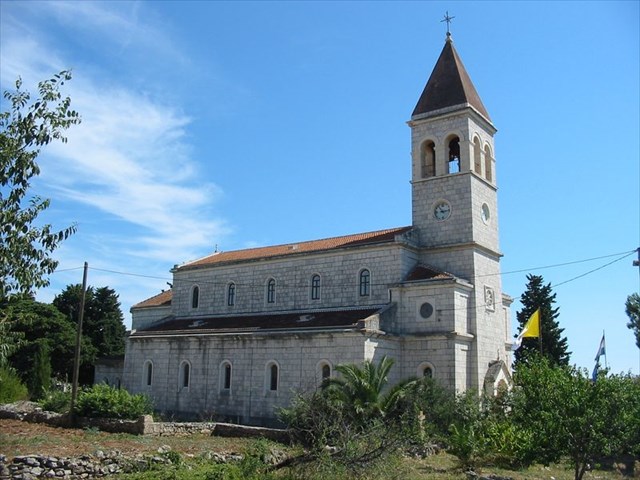
The Church of St. Stephen the First Martyr was built from 1914 to 1942 on the location where the old church, which was pulled down to beginning of the 20th century, used to be. While the foundation were being dug, pieces of sarcophagi (1st to 4th century) and a few inscriptions, dating back to Ancient times, were found. The belfry was finished in 1958.
The church has a triple-nave and is built in neo-Renaissance style. In the interior of the church there is the Baroque altarpiece of Our Lady and saints Rocco, Stephen and Lawrence by Pieter de Coster who lived in the 17th century.
Church bells played an important role both in everyday life and during holidays on Šolta. There were various types of bell-ringing which marked the beginning and the end of a working day, meal times, announced holidays, invited people to join community work and obligations, warned about a fire or informed the community that a member had deceased. They used a ring in a special way called brecanje to inform the community that a child had died.
Right next to the church there is the old local graveyard, on the same locations where the early Christian graveyard used to be, on which there are remnants of two early Christian sarcophagi (5th and 6th century).