Six Springs Wetlands
This area, known as Six Spring Wetlands, was uncovered during the park expansion. The spring and wetlands ecosystem had been hidden under invasive species growth for many years. Now that six water sources have been identified, the important of this natural area for wildlife and ecosystem health is evident. This unique natural habitat in the midst of an urban environment provides refuge for all visitors, wildlife and human alike.
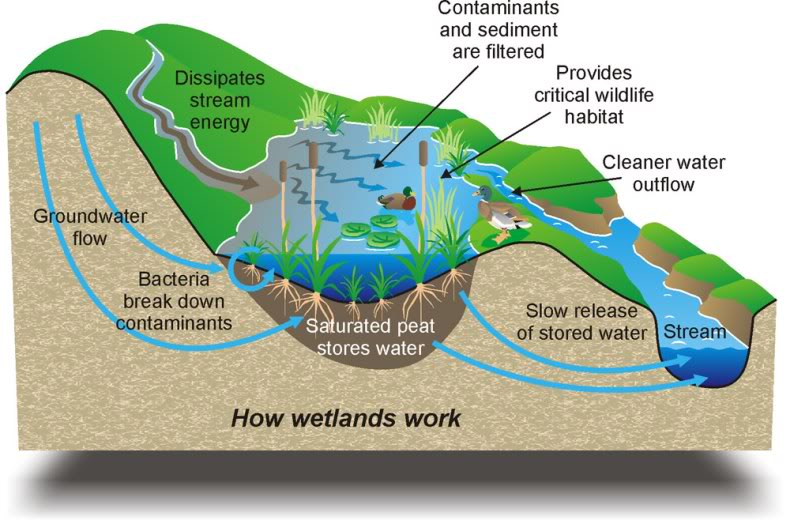
Six Springs Wetlands is a naturally occurring wetland formed when rain and continual flow of groundwater (or spring) rises to the surface. Wetlands usually are located at the bottom of valleys or in lowland areas. In a wetland, the water table is at or very near the surface. They are important to the ecosystems of their regions. Wildlife and plant systems often depend on wetlands, but urban or agricultural development, along with deforestation, can threaten these important ecosystems.
Use your observation skills and you'll see an ecosystem in action. This landscape is constantly changing season to season and year to year. With abundant water and vegetation, this area is a great spot to look for birds, amphibians and even small mammals.
What is a marsh?
A marsh is a type of wetland ecosystem characterized by poorly drained mineral soils and by plant life dominated by grasses. Marshes are common at the mouths of rivers, especially where extensive deltas have been built. The marsh plants slow down the flow of water and allow for the nutrient enriched sediments to be deposited, thus providing conditions for the further development of the marsh. Marshes provide habitat for many types of plants and animals. Plants found here must be able to survive in wet environs that contain low oxygen levels. Many of these plants therefore have tubes within their stems called aerenchymas. This allows air to move from the leaves down into the root zone. Most marsh plants have rhizomes "mass of roots" which are used for underground storage and reproduction. Examples of these types of plants include sedges, cattails, papyrus and sawgrass.
Many aquatic animals, from fish to salamanders, can generally survive with low oxygen amounts in the water, obtaining oxygen directly from air. Marshes are important for their water quality protection functions, including the trapping of sediments and transfer of nutrients, as well as stormwater and floodwater retention. They also provide some of the largest "natural" openings found in nature and form a transition zone between aquatic and upland communities. The pH in marshes tends to be neutral to alkaline, where as bogs, and their accumulation of peat, are typically more acidic.
Types of marshes:
Different marsh types are categorized mainly by their location and salinity. These 2 factors greatly influence the range of animal and plant life that can survive in these environments. The three main types of marshes are salt marshes, freshwater tidal marshes and freshwater marshes. Since this is freshwater marsh with no tidal forces at work here, we will deal with freshwater marshes only from now on.
Shallow Emergent Marsh: These marsh types have mineral and/or shallow organic soils that are moist to saturated and only seasonally flooded. Abundant species found in these marshes include reed canary grass, bluejoint grass, rice cutgrass, bulrushes and Joe-pye weed.
Sedge Meadow Marsh: These types of open wetlands are permanently saturated and only seasonally flooded. Soils are typically a shallow organic muck, although mineral soils could also be present. Beaked sedge, tussock sedge, bladder sedge and bristly sedge are dominant plant types in these meadows.
Cattail Marsh: Common cattail and/or narrow-leaved cattail dominate these types of marshes. The muck and/or mineral soils found here are typically flooded with extremely shallow standing water throughout the entire year.
Deep Broadleaf Marsh: Water depth in this type of marsh is typically over one foot year round, although in dry summers, some marshes may have only saturated soils. These types of marshes contain organic type soils, which aid in the growth of broad-leaved arrowhead, pickerelweed and giant bur-reed.
Wild Rice Marsh: This type of marsh is dominated by wild rice. It has an organic soil substrate that is flooded with one to two feet of water throughout the summer.
Deep Bulrush Marsh: This type of marsh thrives in open water. Meaning that they are found along the shores of lakes and ponds. Water depths here range from one to six feet. Generally, soft-stem and hard-stem bulrushes dominate this type of marsh.
Park Hours:
- The park is open Monday - Sunday: 6:00 am to 11:00 pm.
Prior to logging this cache, email the answers to the following:
- A marsh is an ever changing ecosystem. Describe how the marsh appears on the day of your visit.
- What type of marsh do you believe this to be?
- With a measuring stick, how deep is the marsh near the boardwalk?
- In what year was this area uncovered during park expansion?