 You're standing before one of the first wetlands made by the state of Georgia in 2005.
This wetlands area was created to clean Snapfinger Creek, which joins other streams and creeks as water makes its way via the Ocmulgee and Altamaha watersheds to the Atlantic Ocean, 250 miles away.
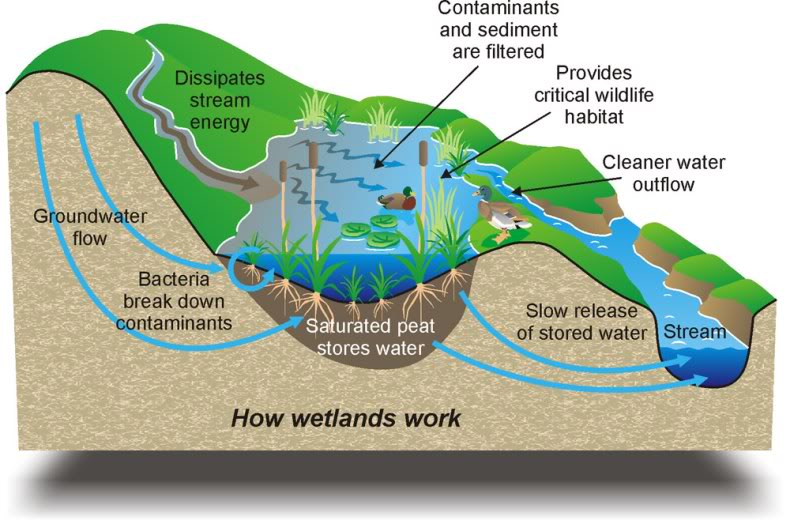
State and local governments created the wetlands to help rid the creek of contaminants -- from chemicals to bacteria inside fecal matter -- that travel via stormwater runoff, sanitary sewer overflow or wildlife.
The contaminants harm macroinvertebrates -- including insects, snails and worms that depend on submerged logs, rocks or vegetation for some or all of their life cycle.
The pollutants are trapped by plants in the wetland, keeping the contaminants from traveling farther downstream. Helpful bacteria in the wetland can break down some of the pollutants.
As a result of this bio-filter process, water leaving the wetland becomes cleaner than when it entered it.
To log this cache, please answer the following questions and email the answers: 1). Describe how the wetland appears, including the width of the stream, on your visit. 2). Why is it necessary for Georgia to build a wetland? 3). On the information sign on the stage 2 waypoint, what kind of sign did it say once managed waterflow?