Castel Sardo (Sardaigne)

Italian
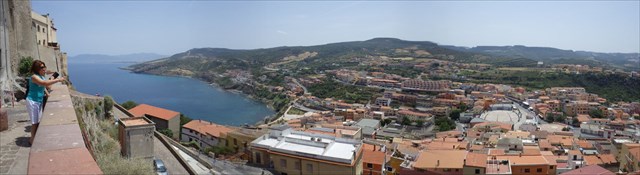
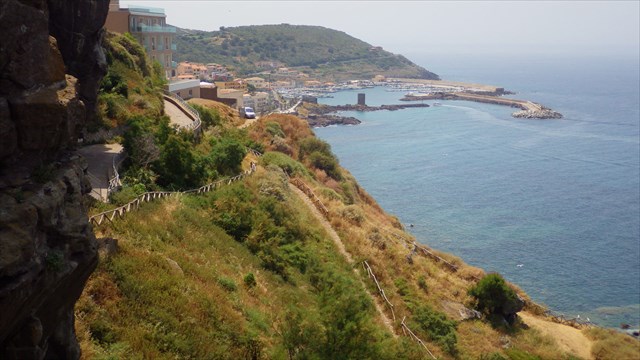
Per chi arriva da Porto Torres per la litoranea, si arriva, dopo una serie di curve, una prospettiva unica sul promontorio di Castelsardo e il ciclo del suo porto naturale. La torre di tredici metri di altezza serviva come avamposto difensivo del piccolo porto di Frigiano, sotto la città di Castelsardo.
Costruito nel XVI secolo dagli spagnoli, è stato utilizzato per controllare le insenature che si trovano sotto la fortezza per proteggersi dalle incursioni dei pirati saraceni e barbareschi che hanno devastato il paese durante la prima metà del XVI secolo. E 'stata trascurata dai piemontesi che non vedeva alcun valore difensivo per la città. La torre rimane un simbolo di uno dei suoi monumenti, sempre citati dai personaggi famosi che hanno visitato la città, come lo storico Giovanni Francesco Fara o viaggiatori del Grand Tour.
L'antico nome della città era Castelgenovese o Casteldoria, letteralmente "castello genovese", perché fondata da Genova e quindi di proprietà della famiglia Doria. Ci sono voluti solo il suo nome attuale 8 Maggio 1767 (diploma Carlo Emanuele III di Savoia rinominare Castel Sardo), con il Regno di Sardegna assegnato ai Savoia, aragonese aver ribattezzato nel frattempo Castillo Aragonés (Castello Aragonese).
La fondazione risale indietro al 1102 Castelsardo, ma è più probabile che il Doria si scioglie sotto il nome di Castel Genovese, nel XIII secolo. Il documento più antico attestata 26 agosto 1274 ed evoca un castello chiamato genovese. Fino 1272, il vicino porto di Frexanu (Frisgianu) dipendeva judicat del Logudoro (o Torres, intorno alla città di Torres vicino all'attuale Porto Torres), mentre nel 1274, è diventato un paese di Malaspina che la resa di Doria nel febbraio 1282. Hanno governato il castello fino al 1448, quando divenne aragonese, l'ultima città dell'isola che era ancora governato il Regno di Sardegna.(Google Translat)
Français
En arrivant de Porto Torres par la route côtière, on arrive, après une série de virages, à un point de vue exceptionnel sur le promontoire de Castelsardo et l'anse de son port naturel. La tour de treize mètres de hauteur servait d'avant-poste défensif du petit port de Frigiano, sous la ville de Castelsardo.
Construite au XVIe siècle par les Espagnols, elle servait à contrôler les criques situées en contrebas de la place forte, pour se protéger des incursions des Sarrasins et des pirates barbaresques qui avaient ravagé le territoire pendant toute la première moitié du XVIe siècle. Elle fut laissée à l’abandon par les Piémontais qui n’y voyait aucune valeur défensive pour la ville. La tour n'en reste pas moins l'un de ses monuments symbole, toujours mentionnées par les personnages illustres ayant visité la ville, comme l'historien Giovanni Francesco Fara ou les voyageurs du Grand Tour.
L'ancien nom de la ville était CastelGenovese ou CastelDoria, littéralement « château génois », car fondé par Gênes et appartenant alors à la famille Doria. Elle n'a pris son nom actuel que le 8 mai 1767 (diplôme de Charles-Emmanuel III de Savoie le rebaptisant Castel Sardo), avec le Royaume de Sardaigne attribué à la maison de Savoie, les Aragonais l'ayant rebaptisé entre-temps Castillo Aragonés (Chateau Aragonaise).
La fondation de Castelsardo remonterait à 1102 mais il est plus probable que les Doria ne le fonde, sous le nom de Castel Genovese, qu'au XIIIe siècle. Le plus ancien document attesté date du 26 août 1274 et évoque un château dit des Génois. Jusqu'en 1272, le port voisin de Frexanu (Frisgianu) dépendait du judicat de Logudoro (ou Torres, autour de la ville de Torres près de l'actuelle Porto Torres), alors qu'en 1274, il devient une terre des Malaspina qui le céderont aux Doria en février 1282. Ces derniers gouvernèrent le château jusqu'en 1448, date à laquelle il devient Aragonais, la dernière ville sur l'île qui était encore exclue du Royaume de Sardaigne.
English
Arriving from Porto Torres by the coastal road, we arrive, after a series of turns, a unique perspective on the promontory of Castelsardo and the loop of its natural harbor. The tower of thirteen meters in height served as defensive outpost of the small port of Frigiano, under the city of Castelsardo.
Built in the sixteenth century by the Spanish, it was used to control the creeks located below the fortress to protect themselves from the incursions of the Saracens and Barbary pirates that ravaged the country during the first half of the sixteenth century. She was neglected by the Piedmontese who saw no defensive value for the town. The tower remains a symbol of one of its monuments, always mentioned by the famous people who visited the city, as the historian Giovanni Francesco Fara or travelers of the Grand Tour.
The old name of the city was Castelgenovese or Casteldoria, literally "Genoese castle" because founded by Genoa and then owned by the Doria family. It only took its current name as May 8, 1767 (diploma Charles Emmanuel III of Savoy renaming Castel Sardo), with the Kingdom of Sardinia awarded to the Savoy, Aragonese having renamed meanwhile Castillo Aragonés (Aragonese Castle).
The foundation dates back to 1102 Castelsardo but it is more likely that the Doria melts under the name of Castel Genovese, in the thirteenth century. The oldest document attested August 26, 1274 and evokes a castle called Genoese. Until 1272, the nearby port of Frexanu (Frisgianu) depended judicat of Logudoro (or Torres, around the city of Torres near present Porto Torres), while in 1274 he became a land of Malaspina which the yield to Doria in February 1282. They ruled the castle until 1448, when he became Aragonese, the last town on the island which was still ruled the Kingdom of Sardinia. (Google Translat)