Okeechobee didn't have any letterboxes, so we decided to hide some. This is one of three insect themed letterbox hybrids. Please put everything back the way you found it, to protect it from muggles.
Ladybug – Coccinellidae are a family of small beetles, ranging from 0.8 to 18 mm (0.0315 to 0.708 inches).
Ladybugs are a very important part of our environment. They are very helpful bugs.
Many people are fond of ladybugs because of their colorful, spotted appearance. But farmers love them for their appetite. Most ladybugs voraciously consume plant-eating insects, such as aphids, and in doing so they help to protect crops. Ladybugs lay hundreds of eggs in the colonies of aphids and other plant-eating pests. When they hatch, the ladybug larvae immediately begin to feed.
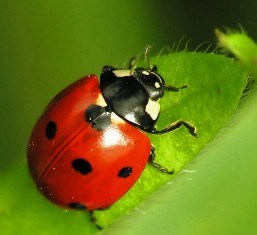
Ladybugs are also called lady beetles or, in Europe, ladybird beetles. There are about 5,000 different species of these insects.
Ladybugs appear as half-spheres, tiny, spotted, round or oval-shaped domes. They have short legs and antennae.
Their distinctive spots and attractive colors are meant to make them unappealing to predators. Ladybugs can secrete a fluid from joints in their legs which gives them a foul taste. Their coloring is likely a reminder to any animals that have tried to eat their kind before: "I taste awful." A threatened ladybug may both play dead and secrete the unappetizing substance to protect itself.
So, whenever you see a ladybug, or lots of them, remember, they are helping you by ridding your plants and flowers of the bad insects.