To log this Earthcache: please email yellowdogs the answers to the following questions:
1) What is another name for Sunfish Lake?
2) a. What type of lake is Sunfish Lake?
2) b. What evidence do you see to confirm your answer?
3) While looking at the surrounding shoreline, which direction do you believe the glacier receded?
Optional: post photo of yourself or your GPSr with the lake.
Glaciers significantly shaped Minnesota's landscape during the Pleistocene Epoch, also known as the Ice Age. As they advanced and retreated, the glaciers carved out valleys, deposited sediment, and created the numerous lakes and varied terrain that define the state. The last major glacial period, the Wisconsinan glaciation, left behind features like Glacial Lake Agassiz, which was larger than all the Great Lakes combined.
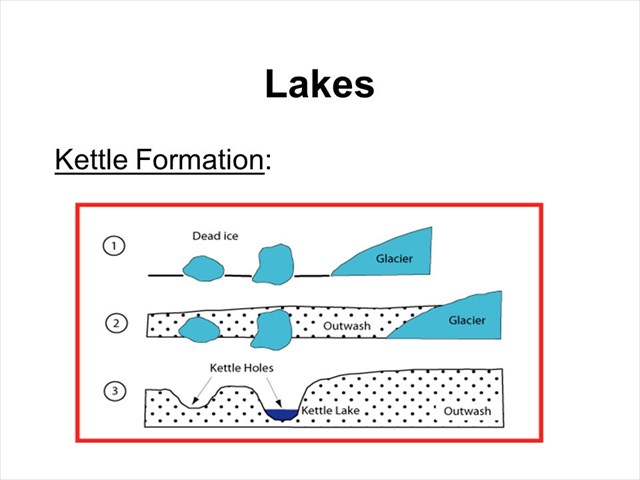
If Minnesota is the “land of 10,000 lakes,” at one time it was probably the land of thousands of chunks of ice. As glaciers moved across the land, they carried massive amounts of clay, sand, and gravel with them and left them behind. In some places this material, known as till, buried large chunks of ice broken off from the glacier. When the chunks of ice melted, the till settled, leaving depressions in the landscape. These pits then filled with water, creating many of the lakes we see around us today. Lakes formed in this way are known as kettle or ice-block lakes.
Most of Minnesota’s 11,842 lakes are kettle lakes. Minnesota's glaciers, which were part of the vast Laurentide Ice Sheet, receded generally in a northward direction. As glaciers advanced and retreated through Minnesota some 10,000 years ago, these giant sheets of ice moved and formed ridges of gravel, piles of rock or sand. Some of the ice became trapped in carved out depressions or holes caused by the moving glacier. The trapped ice finally melted to fill the depression or lake. These depressions or lakes are known as kettle or pothole lakes and they continued to maintain a water level with snow melt and rainwater. Since the late 1800's this lake has been called both Grass Lake and Sunfish Lake.