Tunel fosila - Tunnel of fossils - Fossilientunnel

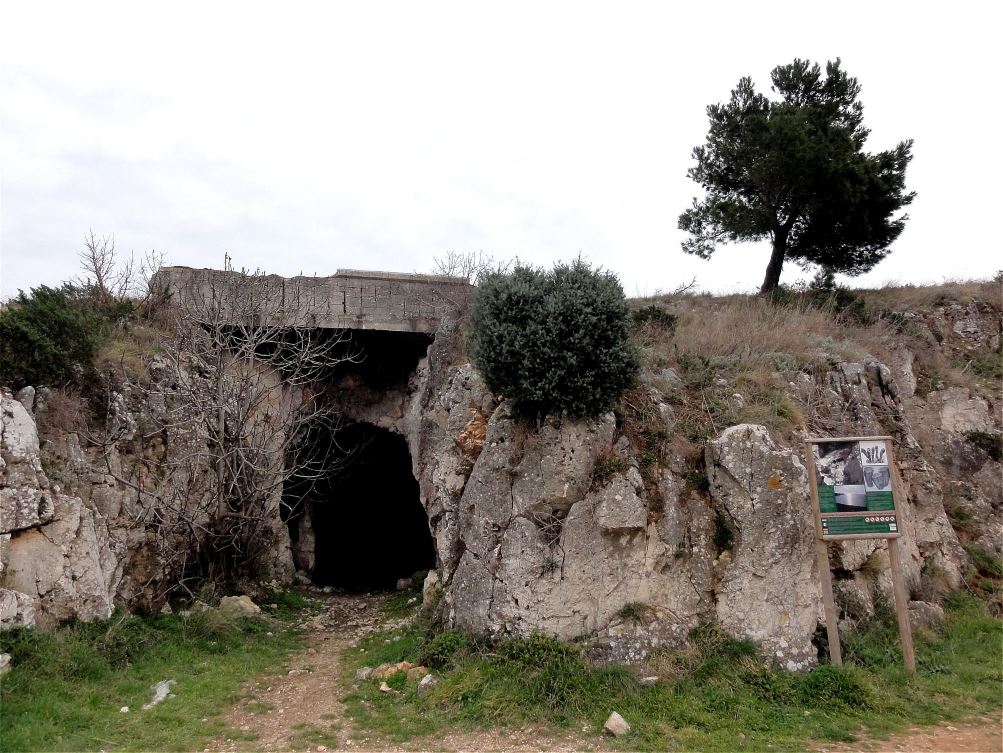
Tunel fosila
Kada je Austrija radila proboj osmatračkog tunela za navodenje topovske vatre, nije ni slutila da
će otkriti mnoštvo fosila koji se nalaze na vapnenačkim stijenama duž tunela i proboja.
Ukoliko pažljivije pogledate okomite stijene, uočit ćete mnoštvo fosila rudista.
Ali oni će također biti u mogućnosti vidjeti druge fosile.
Na primjer : Amoniti
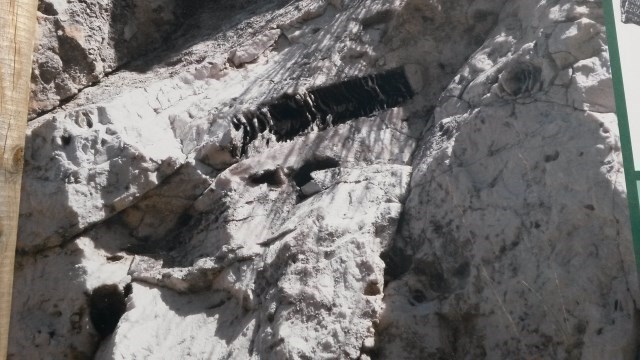
Fosila rudista
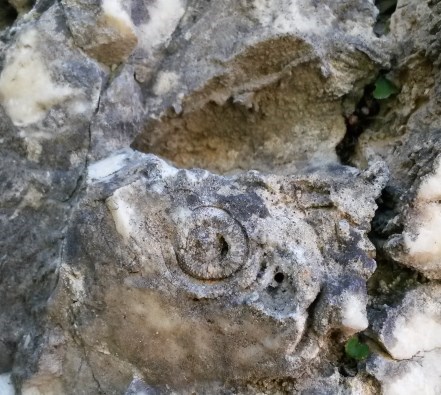
Fosila Amoniti
Rudisti su školjkaši koji su živjeli u skupinama, u toplim i plitkim morima.
Izumrli su zajedno s dinosaurima, u periodu Krede, prije 65 milijuna godina.
Vapnenac može nastati na dva načina:
1. Takozvanim biogenim procesom tj. nastao je taloženjem živih bića nakon njihove smrti. S obzirom na to biogenom vapnencu može se naći puno ostataka živih bića koja su formirala taj vapnenac.
Takav vapnenac je i porozan jer ima puno više šupljina.
2. Kemijskim procesima tj. ako karbonat dođe do zasićene otopine ili se suprotno smanjuje topivost vode, tada se kalcij karbonat taloži iz prekomjerno zasičene otopine.
To prije nije bio sastavni dio živih bića i zato se u njemu ne nalaze ili može biti samo neznatno ostataka ili fosila morskih školjki.
U razdoblju krede razina mora bila puno viša i uglavnom su rudisti formirali grebene.
Pri kraju razdoblja krede more se snizilo na današnju razinu i ostaju tadašnji grebeni koji formiraju ovaj krajolik.
Da bi prijavili ovaj earthcache trebate mi odgovorit na par pitanja i odgovore mi poslat na mail:
1. Kako je nastao ovaj vapnenac biogenim ili kemijskim procesom?
2. Na koja dva svojstva vapnenca možemo to prepoznati?
3. Jeli razina mora u razdoblju krede bila viša nego danas?
4. Koja je otprilike dužina fosilnog otiska rudista koji se nalazi na stijeni uz put pored spilje? (vidi sliku)
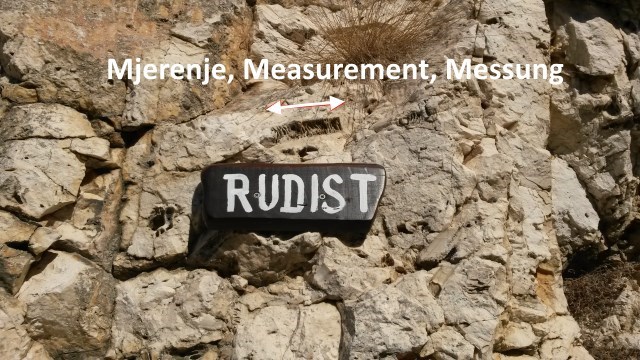
Želimo Vam puno zabave s našim earthcache-om. Fotografije su poželjne
hvala za prijevod za vontere

Tunnel of fossils
When the Austrian army was making the observation tunnel for directing cannon fire,
they had no idea that they would discover a multitude of fossils in the limestone rocks along the tunnel and the exvacations.
If you look exactly, you will see a multitude of rudist fossils.
But you can find other fossils too.
per example : Ammonoidea
Rudist fossil
Ammonoidea fossil
Rudists are shellfish, wich lived in groups in warm, shallow seas.
They became extinct along with the dinosaurs in the cretaceous period, 65 million years ago.
Limestone can arise in two ways:
1) by biogenic processes. If the limestone was formed by living organisms and deposited after their death.
In biogenic limestone are found accordingly also
many remains of living things that have formed these limestone.
This limestone also has significantly
more small cavities. He is more
porous.
2.) by chemical processes. If carbonate fed to saturation of the solution or decreases conversely, of solubility of the water, so calcium carbonate is precipitated from the supersaturated solution.
This was previously not part of living beings, and therefore you can found
no or
very few remnants or fossils of sea shells.
In the Cretaceous period, the sea level was much higher, and there were mostly the rudists which had formed these reefs.
At the end of the Cretaceous period, the sea level fell back down to the present height and the former reefs remained and formed the landscape here.
To log this cache, you have to answer a few questions and send it to me via email:
1.) Is this limestone formed by biogenic or by chemical processes.
2.) What 2 properties of limestone can prove this?
3.) Was the sea level in the Cretaceous higher than today?
4.) How long
approximately is this fossil in the wall of the
breakthrough beside the cave ?
we hope that you like our earthcache and have a little bit fun with it and fotos are very welcome.

Fossilientunnel
Als die österreichische Armee den Durchbruch des Aussichtstunnels zur Kanonenfeuer-Steuerung machte,
konnten sie nicht ahnen, dass sie eine vielzahl von Fossilien im Kalksteinfelsen, sowohl entlang der Tunnelwände,
als auch an den Wänden des Durchbruchs entdecken werden.
Wenn Sie genauer hinsehen, werden Sie eine Vielzahl von fossilen Rudisten entdecken.
Aber man kann auch noch andere Fossilien entdecken.
Zum Beispiel : Ammoniten
Fossil eines Rudist
Fossil eines Ammoniten
Rudisten sind Muscheln, welche in warmen und flachen Meeren zusammen in Gruppen gelebt haben.
Sie sind zusammen mit den Dinosauriern in der Kreidezeit vor 65 Millionen Jahren ausgestorben.
Das Gestein in dem die Fossilien hier zu finden sind, nennt man Kalkstein.
Kalkstein kann auf zwei Arten entstehen:
1.) Durch sogenannte biogene Prozesse. Das heißt, er wurde von Lebewesen gebildet und nach deren Sterben abgelagert.
In biogenem Kalkstein findet man dementsprechend auch
viele Überreste der Lebewesen, die diesen Kalkstein gebildet haben.
Dieser Kalkstein besitzt außerdem deutlich mehr kleine Hohlräume. Er ist also
poröser.
2.) Durch chemische Prozesse. Wird Carbonat bis zur Sättigung der Lösung zugeführt oder sinkt umgekehrt das Löslichkeitsvermögen des Wassers, so wird Calciumcarbonat aus der übersättigten Lösung ausgefällt.
Dieses war vorher
kein Bestandteil von Lebewesen und deshalb findet man darin auch
keine oder nur
sehr wenige Überreste oder Versteinerungen von Muscheln.
In der Kreidezeit war der Meeresspiegel sehr viel höher und es waren überwiegend die Rudisten, welche diese Riffe gebildet hatten.
Am Ende der Kreidezeit sank der Meeresspiegel wieder bis auf die heutige Höhe und die damaligen Riffe blieben zurück und bildeten hier die Landschaft.
Um diesen Earthcache loggen zu dürfen, müsst ihr ein paar Fragen beantworten und mir per E-Mail zusenden :
1.) Ist dieser Kalkstein durch biogene oder durch chemische Prozesse entstanden.
2.) An welchen 2 Eigenschaften des Kalksteins kann man das erkennen ?
3.) War der Meersspiegel in der Kreidezeit höher als heute ?
4.) Wie lang etwa ist der Fossilienabdruck des Rudisten an der Wand im Weg
neben der Höhle ?
Wir wünschen euch viel Spaß mit unserem Earthcache und Fotos werden immer gerne gesehen.