SLOVENSKI OPIS
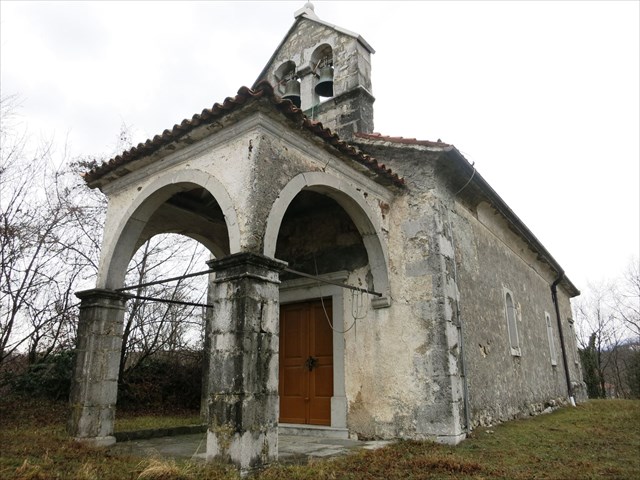
Na obrobju Krasa, ki meji na Vipavsko dolino in ga tu živeči prebivalci kličejo Švica je tudi vas Bogo (521 ndm. v.), nad katero stoji Cerkev sv. Katarine s srednjeveško osnovo. Okoli cerkve so še ostanki obzidja in stolpov protiturškega tabora. Cerkev ima, sodeč po letnici 1570 na jugovzhodnem vogalu, najstarejši prezbiterij na Vrhe-h. Takrat je bil verjetno sezidan ali dodatno utrjen tabor sam. Prezbiterij cerkve je bil prezidan na začetku 18. stoletja – takrat je bil okrašen s slavolokom iz klesanega kamna, datiranim z letnico 1703. Leta 1736 so cerkvi prizidali še vhodno lopo ali klonico. Leta 1848 je dobila nov portal. Pri cerkvi je lep razgled po celotnem krasu. Pot k tej cerkvi pelje mimo enega najstarejših, najlepših in najbolj zanimivih kamnitih križev na Primorskem. Leta 1676 ga je dal postaviti Janez Aleksander pl. Garzarolli iz Senožeč, ki je tudi podpisan na njegovem podstavku. Po stebru križa se vije latinski napis: PER SIGNVM CRVCIS DE INIMICIS NOSTRIS LIBERA NOS DEVS NOSTER, ali po slovensko: Po znamenju križa nas reši naših sovražnikov, naš Bog.
ENGLISH DESCRIPTION
On the periphery of Carst, which lies on the border of the Vipava valley, and that here living residents call ''Švica'' (Swiss in English) lies a village called Bogo (521 meters above sea level) above which lies the church of Saint Catherine with medieval origins. Around the church we can also find parts of the walls and towers which served as defence from the Turks. According to the engraving (1570), the south-east corner has the oldest presbytery on Vrhe. In that year they probably built or enforced the anti-Turkish camp itself. The Presbytery was rebuilt in the early 1700s, when the church was also decorated with the arch made out of carved stone dated to 1703. In 1736 they added the entrance, and in 1848 a new portal. Outside the church you can see a magnificent view of the whole Carst area. While you are driving to the church you can also see one of the most interesting and also the oldest stone crosses in Primorska. It was set there in 1676 by the order of Janez Aleksander pl. Garzarolli from Senožeče, who is also signed on the pedestal. On the pillar of the cross there is also an engraving: PER SIGNVM CRVCIS DE INIMCIS NOSTRIS LIBERA NOS DEVS NOSTER, or in English: By the sign of this cross save us from our enemies, our Lord.