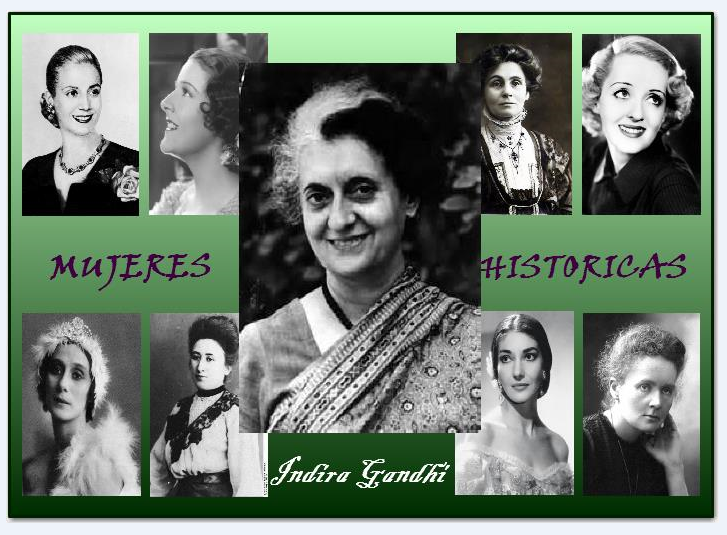
Mujeres para la Historia - IV - Indira Gandhi

Sinpsis
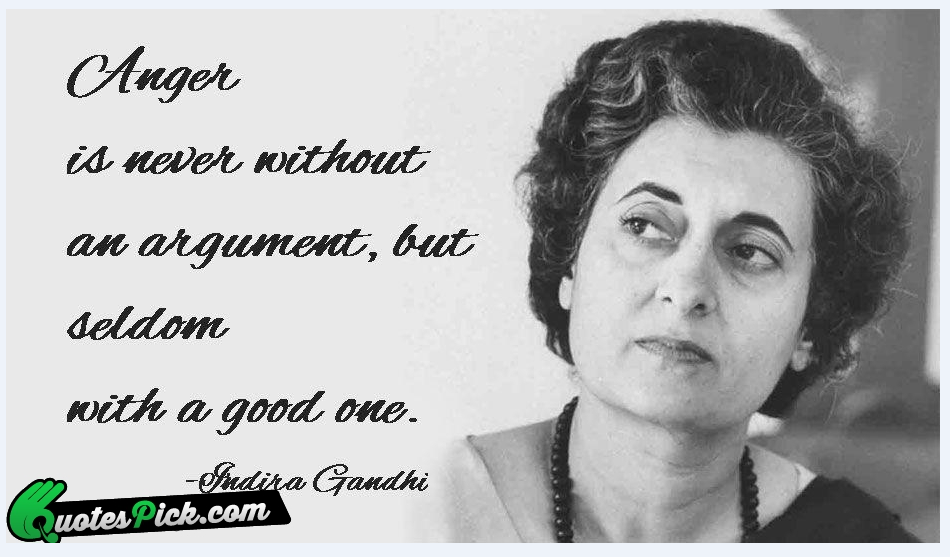
Indira Gandhi nació el 19 de noviembre de 1917, en Allahabad, India. Gandhi nació en el seno de la prominente familia Nehru; su padre, Jawaharlal Nehru, sirvió como primer ministro de la India. Gandhi sirvió tres mandatos consecutivos como primer ministro, entre 1966 y 1977, y otro período que se inicia en 1980. En 1984, Gandhi fue asesinada por sus guardaespaldas sij.
Vida temprana
Única hija de Jawaharlal Nehru, primer ministro de la India independiente, Indira Gandhi nació el 19 de noviembre de 1917. Una mujer joven obstinada y muy inteligente, que disfrutó de una excelente educación en las escuelas suizas y en el Somerville College, Oxford.
Después de que su madre murió, en 1936, Gandhi se convirtió en algo así como la anfitriona de su padre, y aprendió a navegar por las complejas relaciones de la diplomacia con algunos de los grandes líderes del mundo.
Carrera política
Gandhi fue elegida Presidenta del Congreso Nacional de la India en 1960. Después de la muerte de su padre, Gandhi fue nombrada ministra de la información y la radiodifusión. Cuando el sucesor de su padre, Lal Bahadur Shastri, murió repentinamente en 1966, el Congreso de la India la nombró para el cargo de primera ministra.
Sorprendió a viejos colegas de su padre cuando ella dirigió el pais con mano fuerte, defenestrando a algunos de los funcionarios de más alto rango. Esta actuación de Gandhi trajo como consecuencia un gran cambio en los programas agrícolas que disminuyeron la cantidad de pobres de su país. Durante un tiempo, fue aclamada como una heroína.
El éxito diplomático
Después de la guerra indo-paquistaní de 1971, en la que el ejército de Pakistán llevó a cabo actos violentos contra el pueblo de Pakistán Oriental, cerca de 10 millones de personas huyeron a la India. Tras la rendición de las fuerzas paquistaníes, Gandhi invitó al presidente de Pakistán a Shimla para una cumbre de una semana.
Los dos líderes finalmente firmaron el Acuerdo de Shimla, estando de acuerdo para resolver la disputa de Cachemira por medios pacíficos. Su trabajo condujo a la creación de la nueva e independiente nación de Bangladesh.
Gandhi también condujo un movimiento que se conoció como la Revolución Verde. En un esfuerzo para hacer frente a la escasez crónica de alimentos que afectaron principalmente a los agricultores sij extremadamente pobres de la región de Punjab, Gandhi decidió aumentar la diversificación de cultivos y exportaciones de alimentos como forma de salir del problema, la creación de nuevos puestos de trabajo, así como generar comida para sus compatriotas.
Decisiones autoritarias y encarcelamiento
A pesar de estos avances, Gandhi gobierna con mano autoritaria, y la corrupción hierve en su interior del Congreso y sus gobiernos nacional y regionales. En 1975, los tribunales superiores la encontraron culpable de una infracción menor durante las elecciones del año y sus oponentes exigieron su renuncia. Gandhi respondió declarando el estado de emergencia.
Gandhi perdió la siguiente elección y más tarde fue encarcelada. En 1980, el país respondió de manera diferente y ganó por una mayoría aplastante. Ese mismo año, su hijo Sanjay Gandhi (b. 1946), que había estado sirviendo como su principal asesor político, murió en un accidente aéreo en Nueva Delhi. Después de la muerte de Sanjay, Indira prepara su otro hijo, Rajiv (b. 1944), para el liderazgo.
Asesinato
Durante la década de 1980, un movimiento separatista sij desarrollado en la India, que Gandhi trató de reprimir llevaron a cabo una campaña en el interior del templo de oro, y Gandhi envió a unos 70.000 soldados para purgar el espacio sagrado. Más de 450 personas murieron.
El 31 de octubre de 1984, un guardaespaldas de confianza, que era un sij, sacó un revólver calibre 38 y disparó a quemarropa. Otro guardia, también un sij, luego sacó un arma automática y disparó 30 balas en su cuerpo. Gandhi murió de camino al hospital.
https://www.youtube.com/watch?v=mfV8FIP-Z8Y

Synopsis
Indira Gandhi was born on November 19, 1917, in Allahabad, India. Gandhi was born into the politically prominent Nehru family; her father, Jawaharlal Nehru, served as India’s first prime minister. Gandhi served three consecutive terms as prime minister, between 1966 and 1977, and another term beginning in 1980. In 1984, Gandhi was assassinated by her Sikh bodyguards.
Early Life
The only child of Jawaharlal Nehru and the first prime minister of independent India, Indira Gandhi was born on November 19, 1917. A stubborn and highly intelligent young woman, she enjoyed an excellent education in Swiss schools and at Somerville College, Oxford.
After her mother died, in 1936, Gandhi became something of her father's hostess, learning to navigate complex relationships of diplomacy with some of the great leaders of the world.
Political Career
Gandhi was elected president of the Indian National Congress in 1960. After her father’s death, Gandhi was appointed minister of information and broadcasting. When her father’s successor, Lal Bahadur Shastri, died abruptly in 1966, India’s congress appointed her to the post of prime minister.
She surprised her father’s old colleagues when she led with a strong hand, sacking some of highest-ranking officials. Gandhi subsequently brought about great change in agricultural programs that improved the lot of her country’s poor. For a time, she was hailed as a hero.
Diplomatic Success
Following the Indo-Pakistani War of 1971, in which the Pakistan army conducted violent acts against the people of East Pakistan, nearly 10 million people fled to India. Following the surrender of Pakistani forces, Gandhi invited the Pakistani president to Shimla for a weeklong summit.
The two leaders eventually signed the Shimla Agreement, agreeing to resolve the dispute of Kashmir by peaceful means. Her work eventually led to the creation of the new and independent nation of Bangladesh.
Gandhi also led a movement that became known as the Green Revolution. In an effort to address the chronic food shortages that mainly affected the extremely poor Sikh farmers of the Punjab region, Gandhi decided to increase crop diversification and food exports as a way out of the problem, creating new jobs as well as food for her countrymen.
Authoritarian Leanings and Imprisonment
Despite these advancements, Gandhi ruled with an authoritarian hand, and corruption boiled within her congress and her national and state governments. In 1975, the high courts found her guilty of a minor infraction during the year’s elections and her opponents called for her resignation. Gandhi responded by requesting that the president call for a state of emergency.
Gandhi lost the next election and was later imprisoned. In 1980, the country responded differently and she won by a landslide majority. That same year, her son Sanjay Gandhi (b. 1946), who had been serving as her chief political adviser, died in a plane crash in New Delhi. After Sanjay's death, Indira prepared her other son, Rajiv (b. 1944), for leadership.
Assassination
During the 1980s, a Sikh separatist movement developed in India, which Gandhi attempted to repress. Sikh extremists held a campaign inside the Golden Temple, and Gandhi ordered some 70,000 soldiers to purge the sacred space. More than 450 people died.
On October 31, 1984, a trusted bodyguard, who was a Sikh, pulled out a .38 revolver and shot her point-blank. Another bodyguard, also a Sikh, then took out an automatic weapon and shot 30 rounds into her body. Gandhi died on the way to the hospital.
https://www.youtube.com/watch?v=mfV8FIP-Z8Y