Where do we find fossils?
Most fossils are found in sedimentary rock, which is the most common type of rock on earth. Sedimentary rocks form when particles of sediment are deposited by water or wind, and then (in most cases) hardened or consolidated through time. Shale, sandstone, and limestone are types of sedimentary rocks that often contain fossils. Shale is a fine-grained rock formed from clay, and often separates into flakes or sheets. It is often grey, although it can be black, brown or red. Sandstone is a coarser- grained rock made of cemented sand grains, varying in color from cream to grey to rusty brown. Siltstone is composed of sediment particles intermediate in size between shale and sand-stone. Limestone is formed from calcium carbonate, which may precipitate chemically from water or derive from shell fragments of many tiny marine creatures. It is often beige or tan. An especially pure and soft form of limestone is known as chalk. Dolomite is similar to limestone, but with the calcium partially replaced by magnesium.
Belemnites
Belemnites are probably the most well known extinct cephalopod after the ammonites. They are quite common fossils and have a worldwide distribution. They are a very characteristic and easily recognisable fossil usually resembling a bullet in shape, although this only represents the extreme 'tail' of the animal.
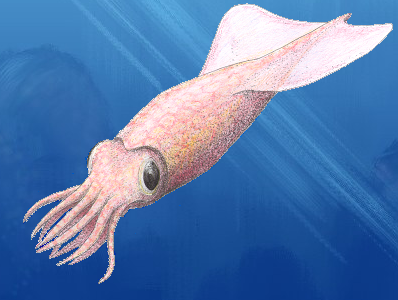
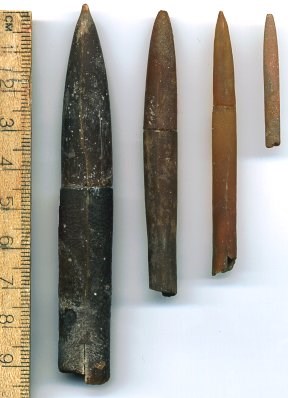 Belemnites are extinct cephalopods of the phyllum Mollusca. They differ from other cephalopods in that they have Internal Skeletons called Rostra (sing. Rostrum). These rostra were made of calcite which accounts for them being preserved as fossils in the Mesozoic ranging from Lower Jurassic right through to the Upper Cretaceous. The soft parts are not preserved normally. Belemnites lived in siimilar marine habitats to Ammonites and as such the fossils of both often occur together in the same rocks. They have an interesting characteristic shape which is like a bullet.
Ammonites
Ammonites are extinct cephalopods and are among the most abundant and beautiful of all fossils. Although not as glamorous as Tyrannosaurus rex or as dramatic as Velociraptor, these extinct creatures are nonetheless quite interesting animals.
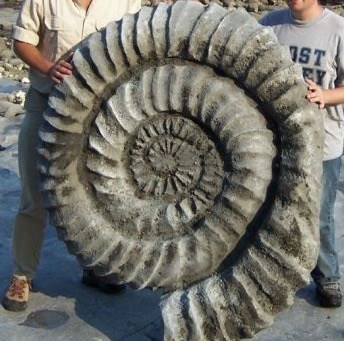
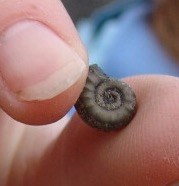
Ammonites are perhaps the most widely known fossil, possessing the typically ribbed spiral-form shell as pictured above. These creatures lived in the seas between 240 - 65 million years ago, when they became extinct along with the dinosaurs. The name 'ammonite' originates from the Greek Ram-horned god called Ammon. Ammonites belong to a group of predators known as cephalopods, which includes their living relatives the octopus, squid, cuttlefish and nautilus
To log this Earthcache
Send the answers to the following questions to me through my profile BEFORE you log the cache. If you feel,you have the answers correct please go ahead and log it, I will contact you if there is a problem.
1. Do you think this stone is shale, sandstone, limestone or dolomite, give your reasons.
2. Are the fossils within the stone predominantly Belamnites or Ammonites, why do you think this?
3. There is a good example of the predominant fossil type on the slab immediately above the silver grille on your right as you enter the shopping centre. Please describe it, size, colour, shape, texture.
4. Photos are welcome, but no spoilers please.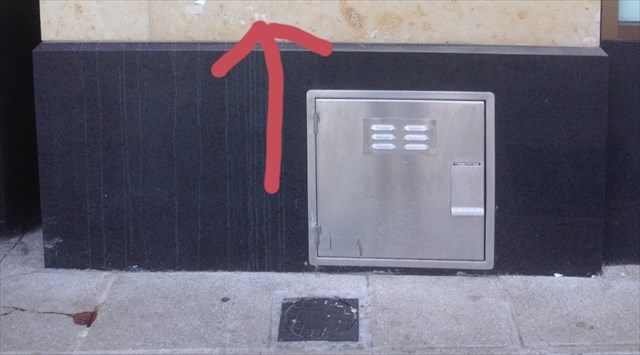
This block of stone