Those with children (young and old) may like to print the activity sheet before leaving home and bring a crayon and some tape with them to do bark rubbings and take a fallen leaf from the tree.
English Oak (Quercus robur)
The oak is a deciduous tree (looses its leaves in the winter) and is the most common native tree species in the UK. As oaks mature they form a broad and spreading crown with sturdy branches beneath. Their open canopy enables light to penetrate through to the woodland floor, allowing bluebells and primroses to grow below. Oak tree growth is particularly rapid in youth but gradually slows at around 120 years. Oaks even shorten with age in order to extend their lifespan and are known to live up to 1000 years. They do not produce acorns until they are at least 40 years old. A mature oak tree can absorb 50 gallons of water in a day.
Height 20m - 40m tall
Trunk circumference: 4m to 12m
Bark: The smooth and silvery brown bark becomes rugged and deeply fissured with age.
Leaves: They are around 10cm long with 4-5 deep lobes with smooth edges. Leaf-burst occurs mid-May and the leaves have almost no stem and grow in bunches.
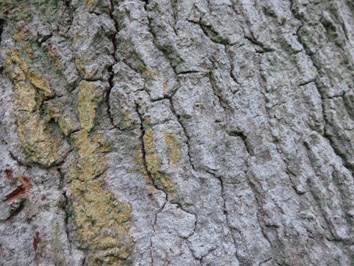
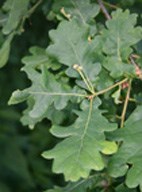
Oak forests such as that on Pen-y-pigyn provide a habitat rich in biodiversity. They support more life forms than any other native trees. They host hundreds of species of insect, supplying many British birds with an important food source. In autumn mammals such as badgers and deer take advantage of the falling acorns. The soft leaves of English oaks breakdown with ease in autumn and form a rich leaf mould beneath the tree, supporting invertebrates, such as the stag beetle, and numerous fungi, like the oakbug milkcap. Holes and crevices in the tree bark are perfect nesting spots for the pied flycatcher or marsh tit. Several British bat species may also roost in old woodpecker holes or under loose bark, as well as feeding on the rich supply of insects in the tree canopy.
The oak is held in high regard across most cultures in Europe. The oak was sacred to many gods including Zeus (Greek), Jupiter (Roman) and Dagda (Celtic). Each of these gods ruled over thunder and lightning, and oak trees are prone to lightning strikes as they are often the tallest living feature in the landscape.
Druids frequently practised and worshipped their rituals in oak groves and cherished the mistletoe that frequents oak tree branches. Royalty has had a long association with oak trees too; ancient kings adorned themselves with crowns of oak leaves, King Charles II hid from his pursuers in an oak tree at Boscobel House and Roman Emperors were presented with crowns of oak leaves during victory parades.
In England the oak has for centuries been a national symbol of strength and survival. It has played an important part in our culture – couples were wed under ancient oaks in Oliver Cromwell’s time, the festive Yule Log was traditionally cut from oak, it features on the 1987 pound coin and is the inspiration for the emblem of many environmentally focused organisations.