Cardamine diphylla (Broadleaf toothwort, Crinkle root, Crinkle-root, Crinkleroot, Pepper root, Twin-leaved Toothwort, Twoleaf toothwort, Toothwort; syn. Dentaria diphylla Michx., Dentaria incisa Small) is a plant native to North America.
C. diphylla is a spring woodland plant that is found in most of eastern North America.
Its habitat ranges from Georgia north to Ontario and from the Atlantic to Wisconsin. It is found in moist woodlands usually in edge habitats and blooms from April to June. A member of the mustard family, it is typified by a four petal flower which blooms in a cluster on a single stalk above a single pair of toothed stem leaves each divided into three broad leaflets. After flowering, narrow seedpods appear just below the flower cluster. It grows approximately 30 cm (12 in) tall.
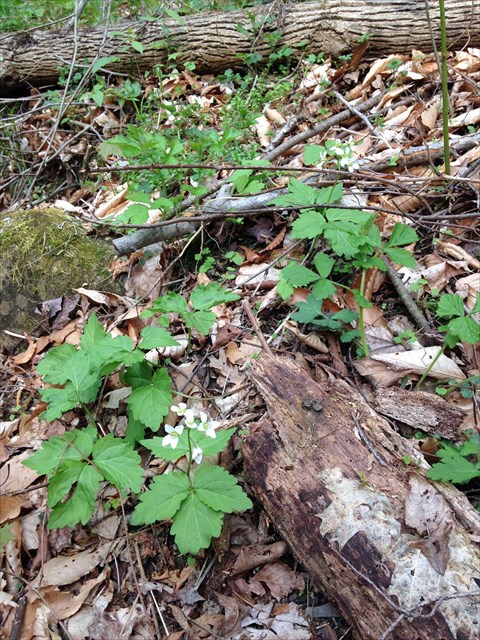
Native Americans aparently had many uses for this plant:
The ground root of which is mixed with vinegar by the Algonquin people of Quebec and used as a relish.[2] They also give an infusion to children to treat fevers, and use an infusion of the plant and sweet flag root to treat heart disease.[3] The Cherokee use a poultice of the root for headaches, chew the root for colds and gargle an infusion for sore throats.[4] The Lenape use the roots as a stomach medicine,[5] and use an infusion of the roots combined with other plants as a treatment for scrofula and venereal disease.[6] The Delaware Nation of Oklahoma use a compound containing the root as a stomach remedy, for scrofula, and for venereal disease.[7]
The Iroquois take an infusion of the whole plant to strengthen the breasts. They also chew the raw root for stomach gas, apply a poultice of roots to swellings, take a cold infusion of the plant for fever and for "summer complaint, drink a cold infusion of the roots for "when love is too strong", and use an infusion of the roots when "heart jumps and the head goes wrong." [9] They also use a compound for chest pains.[10] They also take an infusion of the plant at the beginning of tuberculosis.[11] The Malecite use an infusion of the roots as a tonic,[12] and chew green or dried roots for hoarseness.[13] The Micmac use the root as a sedative, to clear the throat and for hoarseness, and use the root as a tonic.[14]
The Abenaki use it as a condiment.[15] The Cherokee parboil and rinse the stems and leaves, add hot grease, salt & water & boiled them until they are soft as potherbs. They also use the leaves in salads,[16] and smoke the plant.[17] The Iroquois eat the roots raw with salt or boiled.[18] The Ojibwa also mix the roots with salt, vinegar, or sugar and use them as a condiment.
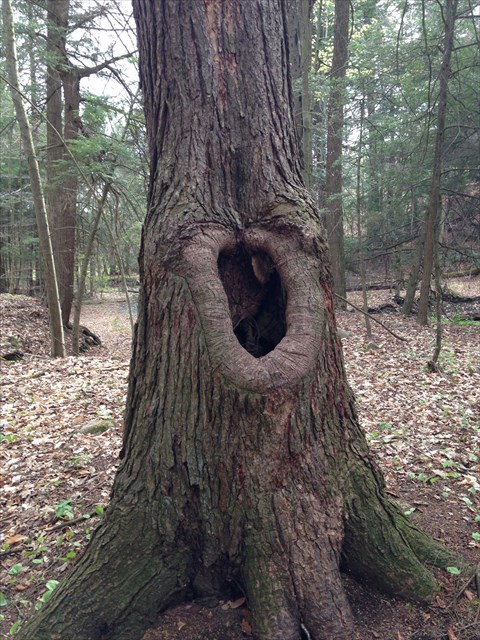
This is not the cache, but nearby. Isn't it great!
The cache is a big "micro" camoed pill bottle, the Push and Turn kind. It has only a rolled log with a rubber band, that fit in a small zip lock plastic bag. Please BYOP and keep the rubber band on your finger while you log. That way you may not lose it. No tweezers, please. FLLT permit: EH #02