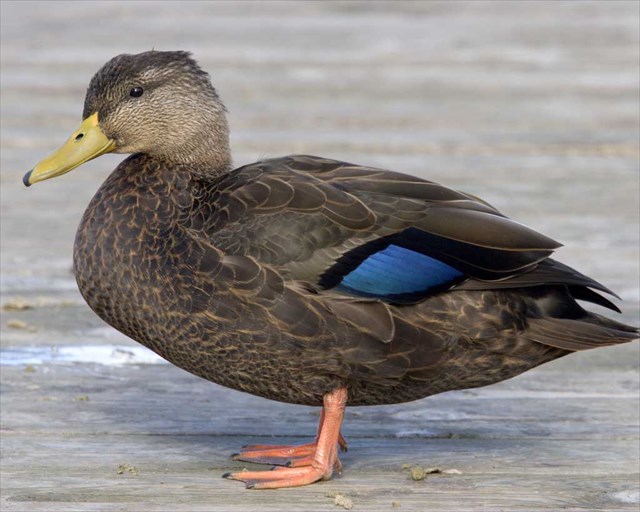
The American Black Duck (Anas rubripes) hides in plain sight in shallow wetlands of eastern North America. They often flock with the ubiquitous Mallard, where they look quite similar to female Mallards. But take a second look through a group of brown ducks to notice the dark chocolate-brown flanks, pale grayish face, and olive-yellow bill of an American Black Duck. They breed mostly in freshwater wetlands throughout northeastern North America, including beaver ponds, brooks lined by speckled alder, shallow lakes with reeds and sedges, bogs in boreal forests, and wooded swamps.
American Black Ducks eat mostly plant matter, with insects added during the breeding season. Plant foods include seeds, roots, tubers, stems and leaves of plants growing in moist soil and underwater. In the breeding season adults and ducklings eat a diet high in animal foods, including aquatic insects (larvae of mayflies, caddisflies, dragonflies, flies and midges, and beetles), crustaceans, mollusks, and sometimes fish. In shallow water they forage like typical “dabbling ducks” by submerging their heads, or tipping up to reach underwater food. In deeper water they may dive more than 12 feet deep for plant tubers and other food items.
The container is a camouflaged plastic jar with a log and some small trinkets, you will need your own scribing tool. The ground is pretty uneven, hence the higher terrain. When I placed the cache, I thought "this is a good spot", then the cache dropped all the way down to the ground. Even with my long arms I could barely reach it. I almost left the cache where it was to make for a higher difficulty, but changed my mind and made it more accessible. There is plenty of parking on the wide road shoulder. I'm starting it off with a TB to move.