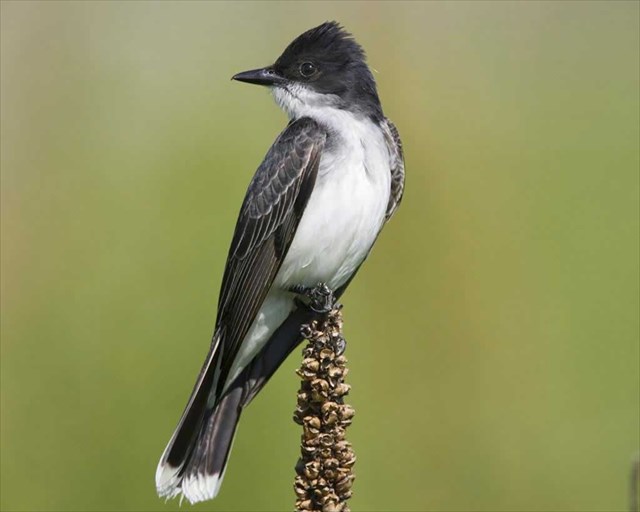
Eastern Kingbirds (Tyrannus tyrannus) breed in open habitats such as yards, fields, pastures, grasslands, or wetlands, and are especially abundant in open places along forest edges or water. They spend winters in forests of South America. They are blackish above and white below. The head is a darker black than the wings and back, and the black tail has a conspicuous white tip. Eastern Kingbirds often perch in the open atop trees or along utility lines or fences. They fly with very shallow, rowing wingbeats and a raised head, usually accompanied by metallic, sputtering calls. Eastern Kingbirds are visual hunters, sallying out from perches to snatch flying insects. The scientific name Tyrannus means “tyrant, despot, or king,” referring to the aggression kingbirds exhibit with each other and with other species. When defending their nests they will attack much larger predators like hawks, crows, herons, and squirrels. They have been known to knock unsuspecting Blue Jays out of trees.
When I stopped to place the cache, an Eastern Kingbird flew into the trees straight out in the marsh, so this cache named itself. The container is a fat pill bottle with a log and a few small trinkets. You will need to bring your own pen/pencil. There is plenty of parking on the wide road shoulder.