보령석탄박물관은 과거 7,80년대 우리 국민의 주된 연료이자 근대산업발전의 원동력이었던 석탄산업의 역사성을 보존하고 그 가치를 일깨우고자 석탄의 생성과정에서부터 탄광발달과정, 작업환경, 장비 등 다양한 석탄관련 자료들을 보존하고 전시하고 있습니다.
The coal was the main fuel in each family and also a driving force in development of modern industries of Korea in 70's and 80's. Boryung Coal museum was established to preserve the historicity of the coal industry and waken the related value. Various materials about the coal including the coal formation process, coal-mining industry development process, working environment, equipments and gears used is exhibited in the Museum
석탄의 생성과정
태고 때의 지각변동으로 식물이 흙과 모래더미와 함께 물밑에 가라앉아 그 위에 다시 퇴적층이 이루어지 면서 오랫동안 열과 압력을 받아 퇴적물이 변하면서 수소(H)와 산소(O)는 날아가 버리고 탄소(C)만 남아서 석탄이 되었다. 이 석탄층은 계속되는 지층의 압력과 열에 의하여 탄화작용이 진행(Carbonization) 되며 탄소의 량을 포함한 화학적 물리적 변화의 정도에 따라 석탄의 종류도 나뉘게 된다. 이론적으로 식물의 층은 석탄으로 변화되면서 원래의 두께에서 1/10 로 줄어들게 되는데 발견된 탄층의 두께가 5m라 면 그 당시 식물의 층 두께는 50m 이었다는 것이다.
우리나라 석탄의 생성시기
- 고생대→ 5억7천만~2억2천5백만년 전 (캄브리아기~페름기)
강원(삼척, 영월, 정선),충북(단양),경북(문경),전남(화순)
- 중생대→ 2억2천5백만~6천5백만년 전 (트라이아스기~백악기)
충남(대천, 남포), 경기(김포, 파주)
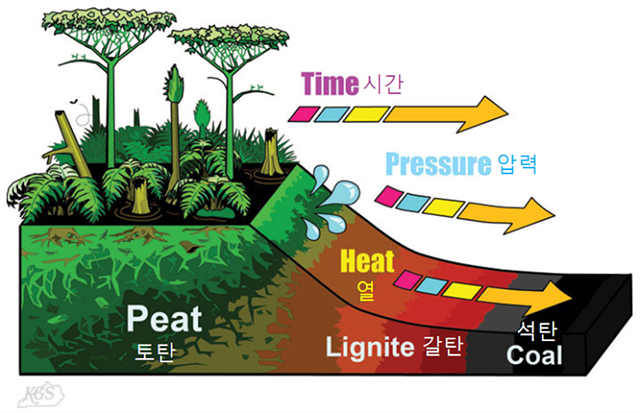
How is Coal Formed?
A diagram about how coal formed.
Coal is formed when peat is altered physically and chemically. This process is called "coalification." During coalification, peat undergoes several changes as a result of bacterial decay, compaction, heat, and time. Peat deposits are quite varied and contain everything from pristine plant parts (roots, bark, spores, etc.) to decayed plants, decay products, and even charcoal if the peat caught fire during accumulation. Peat deposits typically form in a waterlogged environment where plant debris accumulated; peat bogs and peat swamps are examples. In such an environment, the accumulation of plant debris exceeds the rate of bacterial decay of the debris. The bacterial decay rate is reduced because the available oxygen in organic-rich water is completely used up by the decaying process. Anaerobic (without oxygen) decay is much slower than aerobic decay.
For the peat to become coal, it must be buried by sediment. Burial compacts the peat and, consequently, much water is squeezed out during the first stages of burial. Continued burial and the addition of heat and time cause the complex hydrocarbon compounds in the peat to break down and alter in a variety of ways. The gaseous alteration products (methane is one) are typically expelled from the deposit, and the deposit becomes more and more carbon-rich as the other elements disperse. The stages of this trend proceed from plant debris through peat, lignite, sub-bituminous coal, bituminous coal, anthracite coal, to graphite (a pure carbon mineral).
Because of the amount of squeezing and water loss that accompanies the compaction of peat after burial, it is estimated that it took 10 vertical feet of original peat material to produce 1 vertical foot of bituminous coal. The peat to coal ratio is variable and dependent on the original type of peat the coal came from and the rank of the coal.
Coal formation in Korea
- The Paleozoic Era - 570~225 million years ago (Cambrian to Permian)
Gangwon-do(Samcheok, Youngwol, Jeongseon), Chungcheongbuk-do(Danyang),
Gyeongsangbuk-do(Munkyung), Jeollanam-do(Hwasun)
- The Mesozoic Era - 225~65 million years ago (Triassic to Cretaceous)
Chungcheongnam-do(Daecheon, Nampo), Gyeonggi-do(Gimpo, Paju)
석탄의 종류
1) 무연탄 (Anthracite)
석탄중 탄화작용이 가장 많이 이루어져 탄소분 91%이상, 금속광택이 있으며 불온물이 적어 태워도 연기가 나지 않는 것이 특징며 탄화가 더욱 진행되면 Meta-Anthracite, 흑연으로 변해간다.
연소시 유독한 CO가스가 발생되어 연탄가스 중독사고를 일으키기도 한다.
우리나라의 석탄은 대부분 무연탄으로 고생대 탄층이 주로 분포한다.
연료, 발전용으로 사용.
2) 역청탄 (Bituminous)
통상 무연탄외 유연탄을 가르킬 때 역청탄을 유연탄이라 칭한다.
무연탄보다 탄화가 덜 진행, 탄소분 50~91%, 착화가 쉽고 노란 불꽃을 내며 연기가 나고 화력이 강하며, 점결성이 양호한 고도역청탄과, 점결성이 미약한 저도 역청탄으로 분류할 수 있고 석탄중에 가장 용도가 많다.
산출지마다 생성시기가 다르며 우리나라에서는 북한의 일부지역에 신생대 제3기 탄층이 분포한다.
점결성(Coking)이 양호한 것이 제철용으로(코크스용) 그밖에 시멘트, 발전용, 연 료용으로 사용.
3) 아역청탄(Sub-bituminous)
탄화정도가 역청탄과 갈탄사이에 속하며 역청탄에 비하여 휘발분이 상대적으로 높고 발열량이 낮다(4,600~6,400 KCal/Kg). 저급 역청탄에 속함. 건 류 가스화, 발전용.
4) 갈탄 (Lignite)
토탄과 역청탄 중간에 속하고 탄화가 불충분, 탄소분 50%이하 수분이 많고 갈 색, 흑갈색을 띠며 발열량이 낮다. 점결성이 없고 연소속도가 빠르며 탈때 매연과 악취가 난다.
건조되면 덩어리가 부숴져 버리며 우리나라에는 일부 지역에 신생대 제3기층에 부존한다(남한: 북평,포항). 연료, 건류 가스화에 이용.
5) 토탄 (Peat)
땅속에 묻힌지 얼마되지 않아 식물의 형태가 보인다. 암갈색의 광택이 없고 토괴상의 발열량이 낮으며 우리나라 평야지대에서도 산출, 생성되고 있다.
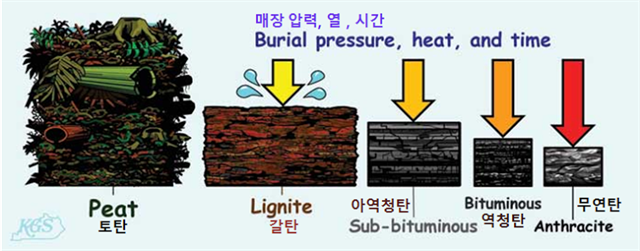
Classification and Rank of Coal
A diagram illustrates classification and rank of coal: Peat, Lignite, sub-bituminous, bituminous, anthracite based on burial pressure, heat and time
The kinds of coal, in increasing order of alteration, are lignite (brown coal--immature), sub-bituminous, bituminous, and anthracite (mature). Coal starts off as peat. After a considerable amount of time, heat, and burial pressure, it is metamorphosed from peat to lignite. Lignite is considered to be "immature" coal at this stage of development because it is still somewhat light in color and it remains soft. As time passes, lignite increases in maturity by becoming darker and harder and is then classified as sub-bituminous coal. As this process of burial and alteration continues, more chemical and physical changes occur and a the coal is classified as bituminous. At this point the coal is dark and hard. Anthracite is the last of the classifications, and this terminology is used when the coal has reached ultimate maturation. Anthracite coal is very hard and shiny.
The degree of alteration (or metamorphism) that occurs as a coal matures from peat to anthracite is referred to as the "rank" of the coal. Low-rank coals include lignite and sub-bituminous coals. These coals have a lower energy content because they have a low carbon content. They are lighter (earthier) and have higher moisture levels. As time, heat, and burial pressure all increase, the rank does as well. High-rank coals, including bituminous and anthracite coals, contain more carbon than lower-rank coals which results in a much higher energy content. They have a more vitreous (shiny) appearance and lower moisture content then lower-rank coals.
[로그하는 방법]
- 이지역은 고생대에 석탄이 생성되었다.(진실/오류)
- 이 지역에서 생산되던 석탄의 종류는?
- 석탄의 질에 영향을 주는 요소는 무엇인가요?
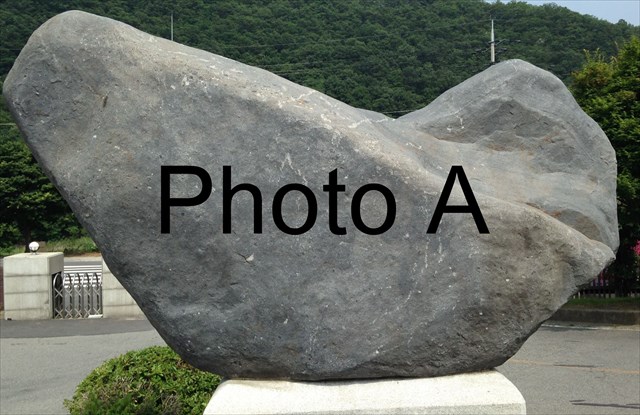
- 케시죤에는 사진 A과 같은 바위가 있습니다. (1) 이 바위의 표면에 있는 하얀색무늬중 사진 B에 보이는 것의 직경은 얼마입니까? (2) 그렇다면 이 바위의 종류는 다음 중 어느 것일까요? (a.화강암, b.사암, c.반려암)

- 보령석탄박물관을 배경으로 당신 또는 당신의 GPS를 찍은 사진을 로그에 올려주세요. (선택사항이지만 사진을 올려주시기를 부탁드립니다.)
- 답을 제 Profile에 있는 메시지창을 이용해 제게 보내주세요. 이제 로그하셔도 됩니다. 답에 문제가 있을 경우 제가 메시지를 드리겠습니다.
[How to log]
- The coal was formed during The Paleozoic Era in this area. (True/False)
- What kind of coal was producted in this area?
- What factors affect the coal quality?
- Go to cache zone and find a rock in photo A! (1) How big is the diameter of the particle shown in photo B? (2) Then what is this rock? (a. granite, b. sandstone, c. gabbro)
- Upload the photo of you or your GPS with Boryung Coal Museum in the background! (The task is optional but I would highly appreciate if you would do so.)
- Please send the answers to me by message on my profile! You may log as 'Found'. If the answer is not correct, I will contact you.
(개관 및 휴무안내)
- 하절기 (3월 ~ 10월) 09:00 ~ 18:00
- 동절기 (11월 ~ 2월) 09:00 ~ 17:00
매주 월요일,매년1월1일, 설날연휴, 추석연휴, 관공서의 공휴일 다음날은 휴관일 입니다.
(입장료)
매표시간 : 관람종료시간 30분전까지
관람소요시간 : 약 30분 ~ 1시간
- 어른개인 :1,500원
- 어른단체(20인 이상):1,200원
- 청소년, 군인 개인 : 800원
- 청소년, 군인 단체(20인 이상) : 600원
- 어린이 개인 : 500원
- 어린이 단체(20인 이상) : 400원
※무료 : 5세이하 65세이상, 국가유공자, 장애인
(Opening Hours)
- Mar. ~ Oct. : 09:30am ~ 6:00pm daily
- Nov. ~ Feb. : 09:30am ~ 5:00pm daily
- Closed : January 1st, every Monday, Seolnal holidays, Chuseok holidays
(However, the first weekday after the public holiday will be closed)
(Admission fee)
- Adult : 1,500won(About 1.3 US dollar)
- Adult group(more than 20 persons) : 1,200won
- Youth & serviceperson : 800won
- Youth & serviceperson group (more than 20 persons) : 600won
_ Children : 500won
- Children(more than 20 persons) : 400won
※Free : Under 5 years old, Senior citizens(Above 64 years old), Patriots and veterans and disabled
* Refer to : 보령석탄박물관, University of Kentucky