History & Construction
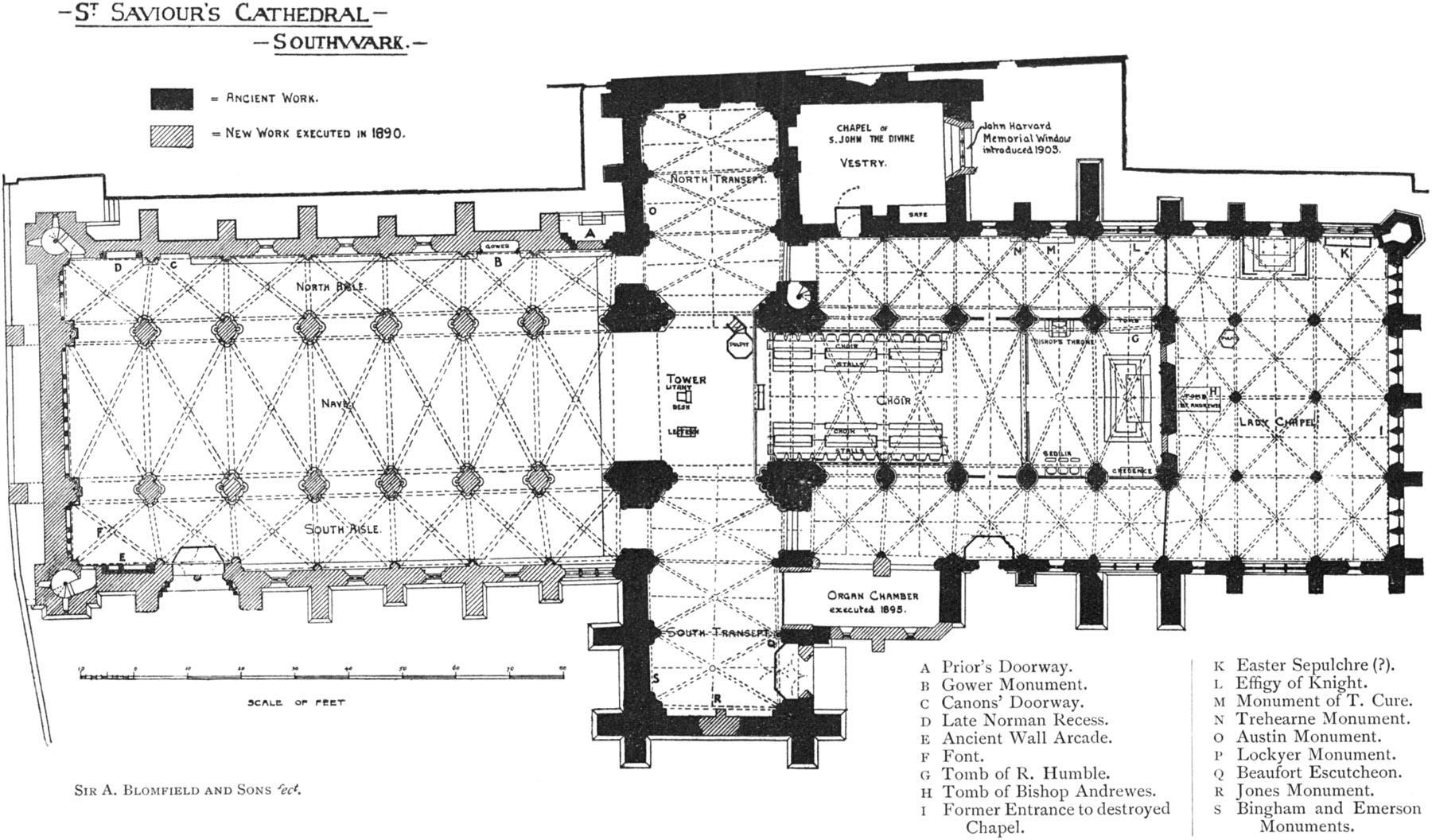
Southwark Cathedral is a gothic gem on the south bank of the Thames. It is recognised as oldest gothic building in London. The cathedral is a striking building built of dressed flint cobbles in dark mortar with pale stone quoins. A church has been on this site for more than 1000 years. Roman ruins have been found beneath the foundations. Construction of the building has occurred in many phases since a fire in 1212. Flint based construction of the eastern end of the cathedral dates from 1260. The western nave at the listed coordinates dates from 1890. A recent annex immediately to the north of the main building also uses flint as a building media. Flint cobbles are a common construction material used in areas where flint is available. The material is strong, hard and robust. Extensive flint deposits are sourced from the nearby chalk downs in Southern England.
Geology
Flint is a microcrystalline silicon based mineral known as silicide with the same chemical formula as opal (SiO2 • n H2O). Trace element contamination adds color to flint. A thin layer on the outside of flint nodules is usually different in colour. Flint is a fossil based stone. Flint nodules form in brackish shallow waters. The majority of silica found in flint nodules is biogenic material produced by living organisms or biological processes. Microscopic silica particles accumalate under sediment in the water. A complex poorly understood process converts the fine particles to nodules or cobbles of various sizes. The exact mode of formation of flint is not yet clear but it is thought that it occurs as a result of chemical changes in compressed sedimentary rock formations during a process of diagenesis. Flint nodules are accompanied by chalk formed from the calcium carbonate phase in the deposition process from seawater creatures. The external skin of the flint nodule is a transition zone with features of both chalk and flint.
Earthcache Tasks
- What size and shape are the flint nodules? Is the size and shape regular? Why do you think this has happened?
- What is the colour of the inside and outside of the flints? Why do you think the colours have formed.
- The surface of knapped flint is smooth. What property of the flint creates the smooth surface?