This Earthcache is in a Museum so the museum is open:
Opening hours:
01.01. - 18.06.: 08:00 - 16:00, closed on Saturdays and Sundays;
19.06. - 15.09.: 08:00 - 21:00, on Saturdays 08:00 - 12:00, 17:00 - 21:00, on Sundays and holidays 08:00 - 13:00;
16.09. - 31.12.: 08:00 - 16:00, closed on Saturdays and Sundays. .
Location of the EarthCache is in MMC "ULIKA" .
Price is Adults: 3 EUR
Pupils, students, pensioners: 2 EUR
Children up to 12 years old: free entry
THE DISCOVERY OF DINOSAURUS IN BALE/VALLE
Dinosaur fossils were discovered in teh seebad of Kolone/Colone Bay near Bale/Vale in 1992. Dario Boscarolli of Monfalcone (italy) discovered them while fishing underwater.
The fossils on exhibit are mostly those that Boscarolli himself discovered while diving. Over time, date mussels destroyed the limestone that had encased the fossil. As a result, a number of fossils were found simply lying freely in the seabed. Iti s interesting to note that the dana mussels were no table to damage the calcium phosphate bones themselves.
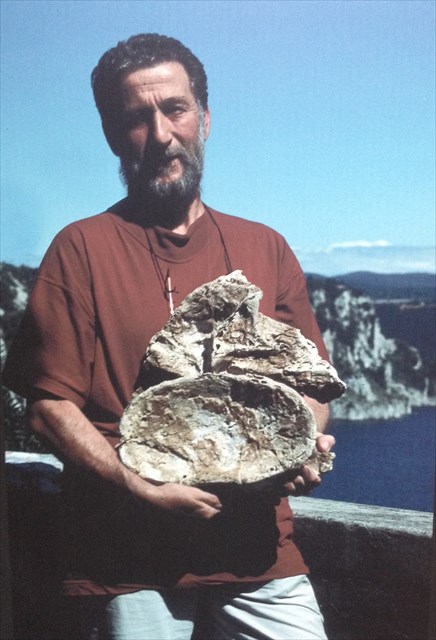
The Kolone/Colone Bay site has the potential to be one of the most important dinosaur fossil site sin Europe.
WHAT DINOSAURS WERE DISCOVERED AT BALE/VALLE? WHERE DID THEY LIVE?
Dinosaur fossils were discovered in rocks that were formed by carbonate mud that was deposited at the bottom of a coastal lake about 130 milion years ago during the Creataceous Period of the Mesozoic Era.
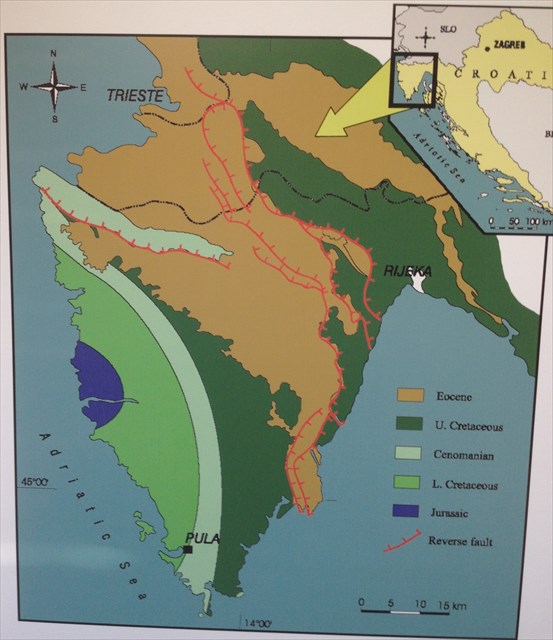
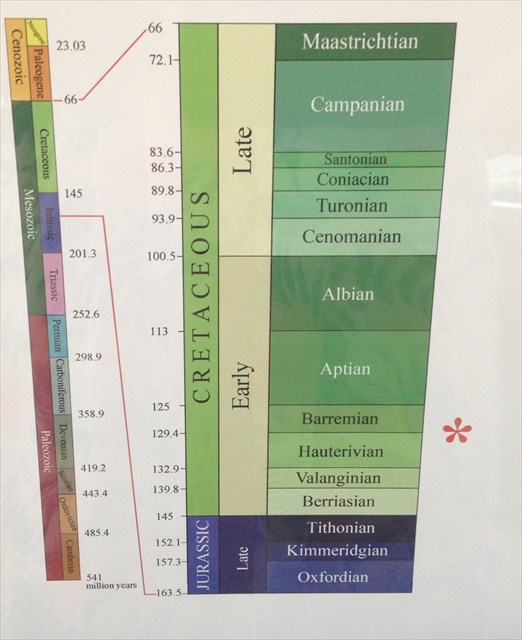
During this period the placement of the continents and oceans was very different from the one we are familiar with today. There were two separate supercontinents surrounded by oceans. Laurasia in the north and Gondwana in the south. Istria was located on the northern coast of Gondwana, at the very end of a promontory of the Afro-arabian continent, an area that, at the time, had tropical climate. Before the discovery of dinosaur fossils in Istria and other Mediterranean regions, scientists belived that this area was covered by a permanent, shallow tropical sea. However, the presence of large land animals proves that those regions were not submerged.
The fossil bones discovered belong to two species of large sauropod dinosaurus and two spacies of therapod dinosaurus, one large-sized and one much smaller. The sauropod bones belong to a number of individuals with varied body size.
In order to log this Earth Cache I will ask you several questions and you should send your answers to my e-mail. You don’t have to wait for my confirmation, feel free to log the find as son as you send your answers. If there are problems with your answers, I will contact you.
Locate the room with the dinosaurus bones and discovered it.
1. In Kolone/Colone Bay was found a new species of sauropodes, – what is his name (he named in honour of the region where the fossil bones were discovered and the person who discovered them) ? What bone we can se from him? What do you think when lived he?
2. In the fossil sample at Bale/Valle what theropods we can finde? What bone fregment we can see from a theropod dinosaur? What do you think if they were herbivores or carnivores?
3. Make a photo of yourself (photo showing a GPS/mobile phone, hand or leg do NOT fulfill the task and the log will be deleted) or paper with your nick with the dino who say hallo to you in front of the room with the boones at the location of the EC and put it to the log.
Enjoy and see the remains of these special creatures that once ruled the world!

Dieser Earthcache ist in einem Museum. Das Museum ist von geöffnet -
Öffnungszeit MMC Ulika: ;
01.01. - 18.06.: 08:00 - 16:00, samstags und sonntags geschlossen;
19.06. - 15.09.: 08:00 - 21:00, samstags 08:00 - 12:00, 17:00 - 21:00, sonntags und Feiertagen 08:00 - 13:00
16.09. - 31.12.: 08:00 - 16:00, samstags und sonntags geschlossen.
Ort wo der Earthcache ist in MMC "ULIKA".
Der Preis ist Eintrittskarten:
Erwachsene: 3 EUR
Schüler, Studenten, Pensionisten: 2 EUR
Kinder bis 12 Jahre: Eintritt frei.
DIE ENTDECKUNG DER DINOSAURIER IN BALE
Dinosaurier-Fossilien aus Bale/Valle wurden 1992. am Boden des Adria meeres in der Bucht Kolone entdeckt. Sie wurde von Dario Boscarolli aus Monfalcone (Italien) während dem tauchen nach Fischen entdeckt.
Die meisten der fossilen Knochen, die hier ausgestellt sind, hat Boscarolli beim Tauchen gesammelt. Einige der Knochen lagen frei auf dem Boden, weil die Steindatteln zerstörten den Kalkstein um sie herum, aber sie haben nicht die Knochen berührt, da die Steindattel nicht kann in den Calciumphosphat eindringen, aus denen die Knochen gebaut wurden.
Der fund Platz der Dinosaurier in der Bucht Colone ist möglicherweise einer der wichtigsten in Europa.
WELCHE DINOSAURIER SIND IN BALE ENTDECKT UND WO LEBTEN SIE?
Die Felsen in denen sich die Knochen der fossilen Dinosaurier befinden entstammen aus der Karbonat Schlamm ablagerung vom Boden des Küstensees vor etwa 130 Millionen Jahren, während der Periode (Mesozoikum).
Verteilung der Kontinente und Ozeane zu dieser Zeit war anders als heute. Die Kontinente wurden in zwei Super Kontinente gruppiert - Laurasia im Norden und Gondwana im Süden. Istrien befindet sich an der Spitze des afro-arabischen Kontinents am nördlichen Rand von Gondwana, in den tropischen geografischen Linien. Vor der Entdeckung der Dinosaurier in Istrien und anderen Mittelmeerregionen, glaubten Wissenschaftler, dass das Gebiet ständig mit flachen tropischen Meer bedeckt war. Allerdings erweist sich mit der Anwesenheit von großen Landtiere, dass die Mittelmeerregion nicht unter Wasser war.
Die entdeckten Knochen gehören zu zwei Gruppen von großen Sauropoden Dinosaurier und zwei Arten von kleinen Theropods Dinosaurier. Die erhaltenen Knochen waren mehrere Exemplare unterschiedlicher Körpergrößen .
Zum Logen dieses Earthcaches habe ich für Sie ein paar Fragen. Bitte die Antworten auf mein E-mail Adresse schicken. Sie müssen nicht auf meine Antwort warten, sondern können gleich Loggen, wenn was nicht korekt ist werde ich Sie kontaktieren.
Finden Sie das Zimmer mit den Knochen von Dinosauriern und erkunden sie sie um die Antworten zu finden.
1. In Kolone wurde eine neue Art von Sauropod gefunden – welchen Namen hat er bekommen (es wurde zu Ehren der Region erhalten, wo die Knochen gefunden sind und nach der Person die sie gefunden hat)? Welche seine Knochen können wir sehen? Was denken Sie, wenn hat er gelebt?
2. Die Knochen exemplare in Bale von welchen Theropoden können wir sehen? Welches Knochenfragment vom Theropoden Dinosaurier finden wir hier? Was denken Sie, ob sie Pflanzenfresser oder Fleischfresser waren?
3. Mache ein Foto von sich selbst (Foto das ein GPS/Handy, Hand oder Bein zeigt, erfüllen NICHT die Aufgabe und werden gelöscht) oder Papier mit Ihrem Nick mit dem Dino der dich am eingang zum Zimmer mit den Knochen begrüst an der Lokation des EC und bitte zum Log hohladen.
Genießen Sie und sehen Sie die Überreste dieser besonderen Kreaturen, die einst die Welt regierten!
Souvenir/Banner:
Code: <a href="https://coord.info/GC6NFR7" ><img src="https://s3.amazonaws.com/gs-geo-images/15187f9d-4664-4520-9e90-fed09cfd6a04.png" /></a>

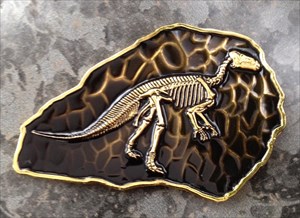
Posjetitelje ovog EC-a, nakon slanja odgovora za EC dobit će kod ovog geocoina da ga mogu discoverat.
Dosadašnji (s danom 08.10.2016.) posjetitelji ovog EC-a mogu mi poslat poruku ako ga žele discoverat.
Visitors to the EC, after sending the answers for this EC will recived code for this Geocoin that they can discovered it.
Previous GC (with the date 08.10.2016.) of the EC can send me a message that they want to discovered it.
Die Besucher dieses EC, nach senden der Antworten für diesen EC, werden erhalten den Code für diesen Geocoin dass Sie ihn discovern können.
Die bisherige (mit dem Tag 08.10.2016.) Besucher dieses EC können mir eine Nachricht senden, wenn Sie ihn discovern wollen.