The Location:
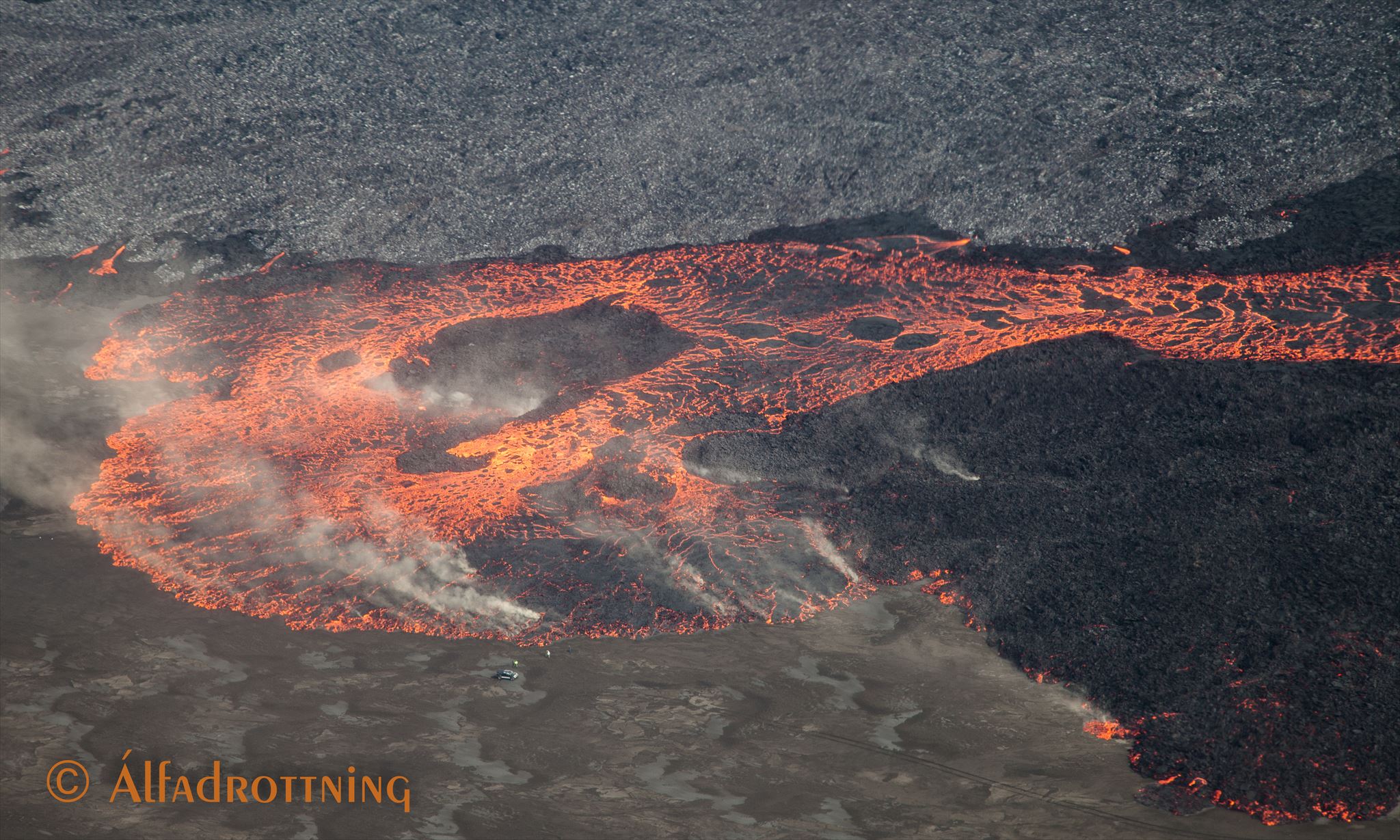
After a period of volcanic earthquakes, one of Iceland's largest volcanoes, Bárðabunga began to erupt in August 2014. Magma moved underground and finally reached the surface in an old erruptive fissure that was last active in 1797.
Luckily it happened at "the best place" north of the icecap of Vatnajökull in an area without anybody living in.
The eruption lasted for almost 6 months and became with the size of about 85 km2 Iceland's largest lava field for 230 years.
Just to imagine:
The volume of Holuhraun is about 1400 million cubic meters, it has the same size as Lake Þingvallavatn.
The basaltic lava has a density of 3 g/cm3 - the total weight is equivalent to a herd of 600 million elephants.
When the lava reached surface, the temperature was 1175-1180°C.
The river Jökulsá á Fjöllum cooled and slowed down the lava streams. The river system itself is still changing around the lava field.
The Cache:
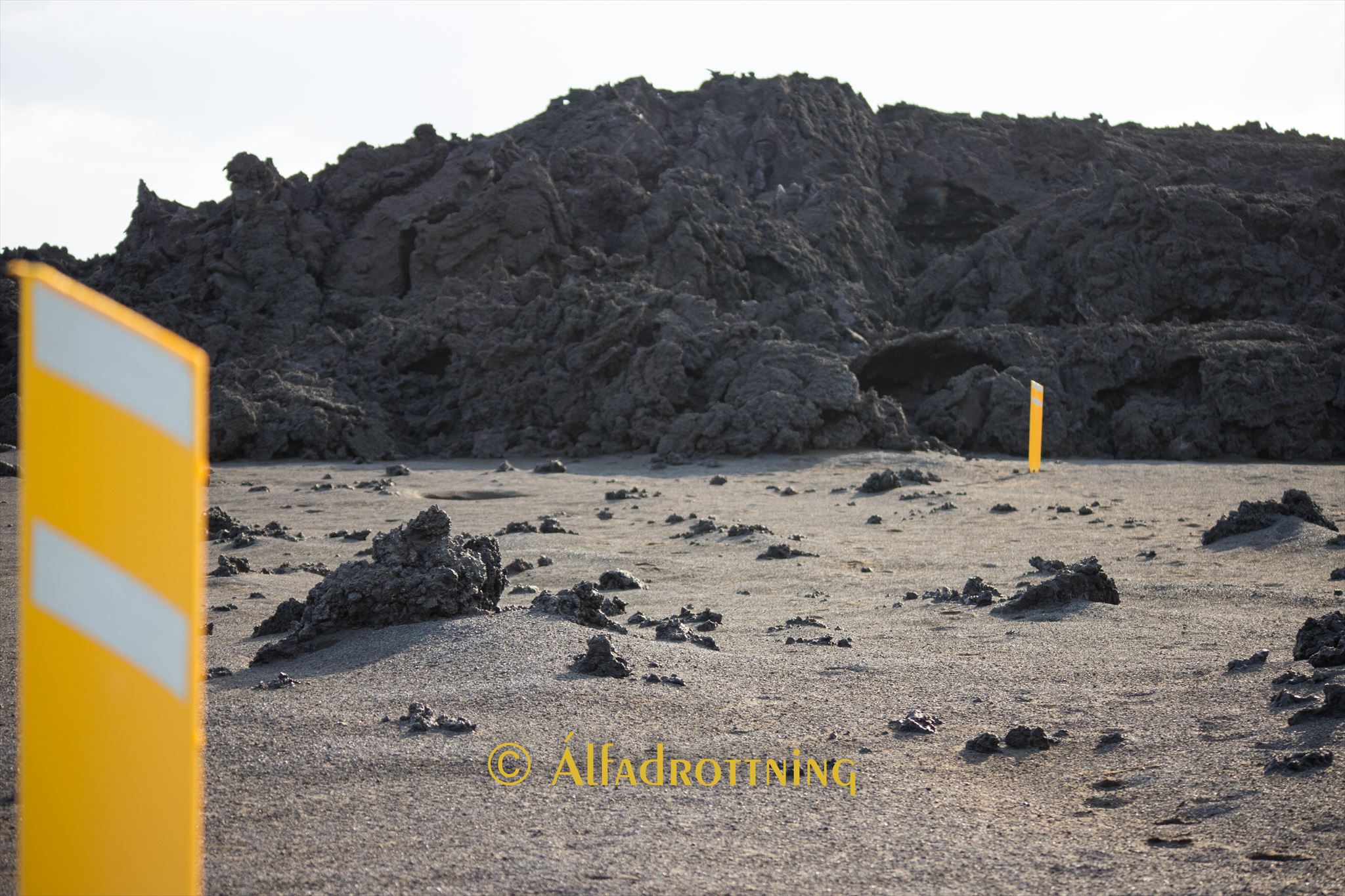
In September 2014, the new lava field reached the highland mountain track "Gæsavatnaleið" and even went over.
The cache is located next to this remarkable spot.
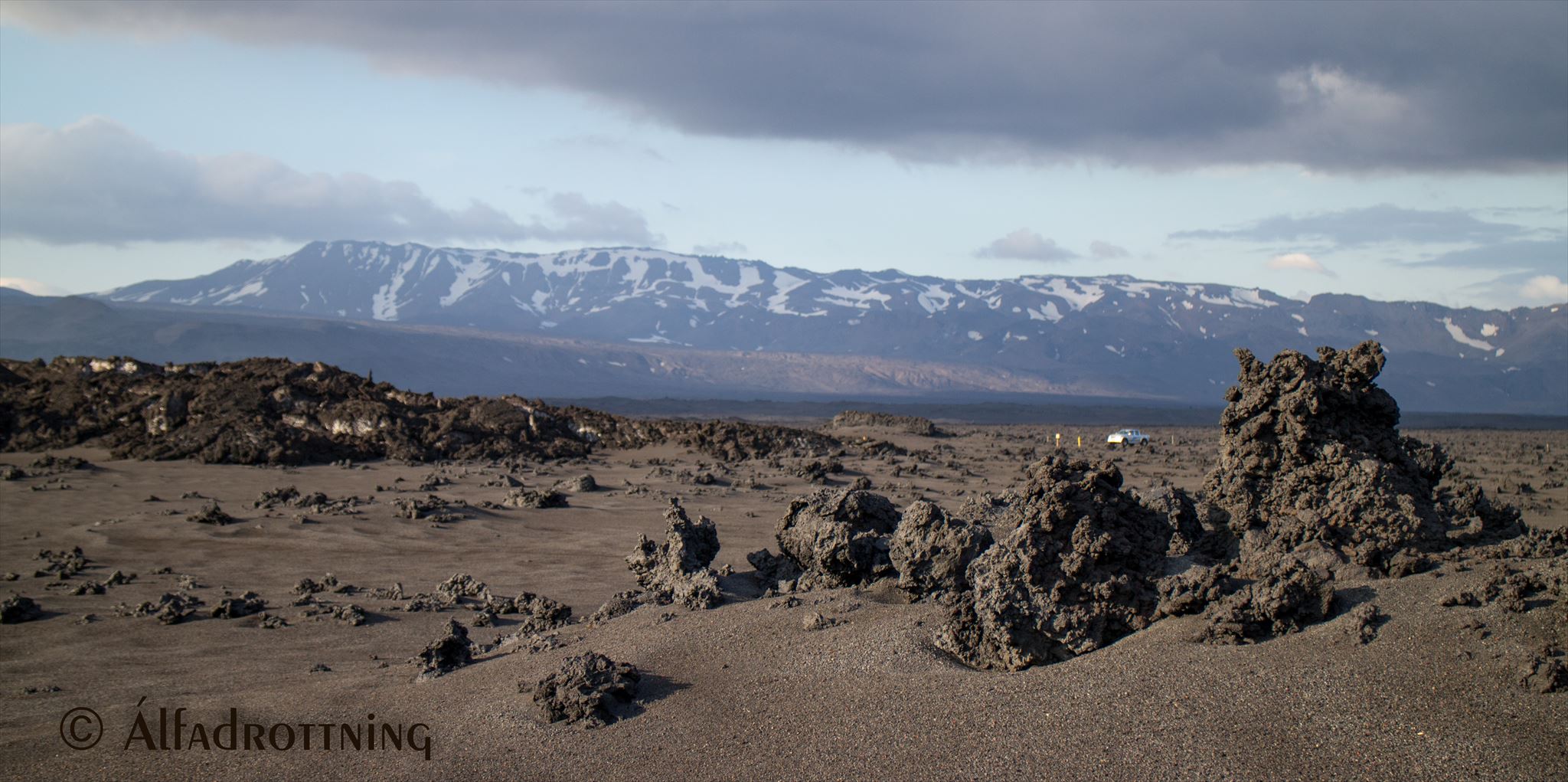
The coordinates lead you to a small hill with a prominent lava formation in the sand around Holuhraun.
 How to get there:
The area in the highlands is only accessible with a 4x4 jeep.
Don't hesitate to ask the rangers if the track is open and how the conditions are.
Please remember:
All off-track driving is strickly forbidden!
You can drive close, leave the car at the parking next to the track, enjoy the landscape and walk the last few meters.
Góða skemmtun!
Álfadrottning