The railroad faced a new competitor as the automobile made its appearance in the first decade of the Twentieth Century and grew steadily in popularity. As early as 1906, the automobile craze was hurting the railroad's business. By 1911, there were 80 automobiles in Newton and the number was growing all the time. On August 28, 1910, 132 automobiles were counted within twelve hours passing the Hotel Newton. Service garages and auto dealerships sprouted to accommodate the new-fangled, self-propelled conveyance. a mile of experimental concrete road was laid at New Village, warren County, in November 1912. With the spread of paved roads, the automobile achieved dominance over the railroad between 1920 and 1940.
In 1944, the Lackawanna first proposed a reduction in service to Newton. Construction of the 75-mile Interstate 80 corridor from Manhattan to the Poconos between 1959 and 1973, combined with the dualization of Route 15 in 1967-69, brought commuters within range of city workplaces. The first garden apartments were built in Newton to accommodate the influx of residents.
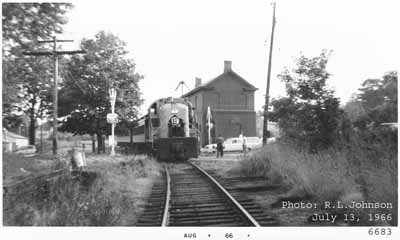 "The last passenger train "
Train service on the Sussex Branch of the Lackawanna from Branchville to Andover Junction ended on July 13, 1966. The Newton Passenger Depot was torn down in November 1970. The remaining 7.5 miles of track between Netcong and Andover Junction were abandoned in July 1973. Creameries dependent on the railroad also closed. As Sussex dairy herds dwindled and quiet pastures vanished, Sussex County was steadily transformed into a “bedroom community.”