It begins in the sky
The formation of a solution cave begins in Earth's atmosphere. As precipitation (mainly rain) falls to the planet's surface, the water (H 2 O) reacts with carbon dioxide (CO 2 ) in the atmosphere to form weak carbonic acid (H 2 CO 3 ). This is the same acid found in soda pop that produces its "fizz." Once this water and carbonic acid solution reaches Earth's surface and begins to percolate down through the soil, it reacts with carbon dioxide given off by decaying plants and animal matter to form even more carbonic acid solution.
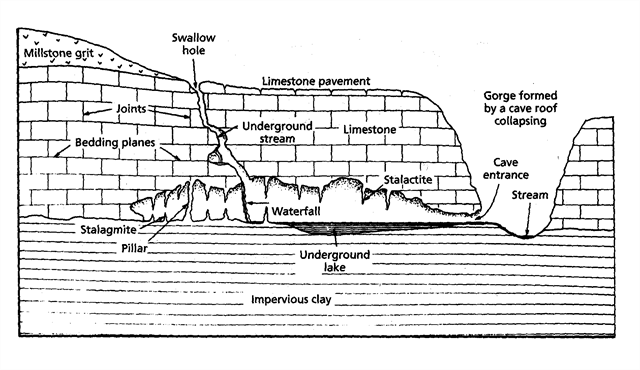
The main mineral in limestone is calcite (calcium carbonate). Most seashells are made of this mineral. Limestone is almost insoluble (unable to be dissolved) in water. Carbonic acid, however, dissolves calcite from limestone. Over hundreds of thousands to millions of years, as carbonic acid moves downward through cracks and fractures in limestone, it dissolves the rock and forms crevices. Over time, these crevices widen to become passages and caverns.
Drip by drip

The air-filled sections of the cave provide the perfect environment for the development of speleothems. Even though the water table may have dropped, water weaving its way downward from Earth's surface still enters a cave through cracks and crevices in its ceiling and walls. When this water and carbonic acid solution enters the cave, some of the carbon dioxide in the solution escapes into the air (much like a soda pop that loses carbon dioxide and goes "flat" when left uncovered). This changes the chemical structure of the solution, and it can no longer hold the dissolved calcite. The calcite is then deposited in crystallised form as a speleothem. Its shape depends on where and how quickly water enters the cave. Though growth rates of speleothems vary from cave to cave, it may take 120 years or longer for 1 cubic inch (16.4 cubic centimetres) of calcite to be deposited on a cave formation.

Solutional caves are the most frequently occurring caves and such caves form in rock that is soluble, such as limestone, but can also form in other rocks, including chalk, dolomite, marble, salt, and gypsum. Rock is dissolved by natural acid in groundwater that seeps through bedding planes, faults, joints, and comparable features. Over geological epochs cracks expand to become caves and cave systems.
The largest and most abundant solutional caves are located in limestone. Limestone dissolves under the action of rainwater and groundwater charged with H2CO3 (carbonic acid) and naturally occurring organic acids. The dissolution process produces a distinctive landform known as karst, characterised by sinkholes and underground drainage. Limestone caves are often adorned with calcium carbonate formations produced through slow precipitation. These include flowstones, stalactites, stalagmites, helictites, soda straws and columns. These secondary mineral deposits in caves are called speleothems.
The portions of a solutional cave that are below the water table or the local level of the groundwater will be flooded.
There is a small entry fee (per person) to enter the cave. A torch is required to complete this earthcache. A phone torch will light the way to navigate the darker areas. Mind your step, may be slippery under foot.
To claim this find, please email your answers to the following questions.
Q1: How many openings in the roof do you see?
Q2: As you walk towards the rear of the cave, approx halfway in - left side, there is something distinct hanging from the cave ceiling. What is hanging down from this cave ceiling?
Q3: As you make your way to the rear of the cave did you find and any Speleothems, Stalactites or Stalagmites? Were these at the entrance, half way, rear of the cave or everywhere?
Q4: What other rocks can solution caves form in?
Q5: When you reach the far end, slightly left you will find what looks like a rock shelf. What do you see on the shelf or hanging around it? (Q5 optional)
"Found it" logs for which answers have not been sent will have the log discreetly deleted.