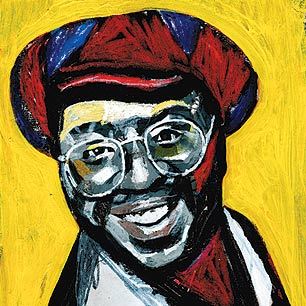
If, in the late Fifties and early Sixties, you were drawn to that place on the AM radio dial where the rhythms, the grooves and the beautiful sounds of African-American soul were playing, you would have found Curtis Mayfield. Many of us first heard him as backing vocalist in the Impressions behind Jerry Butler, singing "For Your Precious Love." But he really came into focus in Butler's next big hit, "He Will Break Your Heart," which was written by Mayfield and features his strumming electric guitar to a saucy tango beat that you can hear echoing in Ben E. King's "Spanish Harlem."
After that he was front and center, singing the lead about a "Gypsy Woman" in an exotic brew of castanets and dark minor chords. At one point, after the lyric "She danced around and round to a guitar melody," he fired off an accent on his guitar that resonated for years for many of us who tried to emulate him — she cast her spell and he followed, with the rest of us close behind. You can clearly hear his influence in the monumental "Little Wing," by Jimi Hendrix.
But it was his voice that reached the higher ground. It burned with the abandon of the blues singer and an almost feminine longing, at once powerful and deeply personal. Women responded overwhelmingly to his profoundly respectful and sensitive approach. When he sang "The Wonder of You," the vulnerability and passion got in real close. They knew he knew.
At first, he made a gospel-like call to rise up, get on board, get ready. "I know you can make it," he exhorted to soul-stirring harmonizing. He later took the voice of activism, calling out diseases of urban America and challenging people to see what was going on, a plea Marvin Gaye would take up, too. The full range of his powers can be heard in the soundtrack to Superfly. It hits you in waves: driving rhythms with brass and strings countered by down-in-the-alley funk.
He was a dynamic performer right up until he was disabled in an accident onstage in New York in 1990. I only met him once, after a show in San Francisco. He was funny, gracious to all, had a beautiful smile and a genuine way about him — a gentle and humble man at heart.