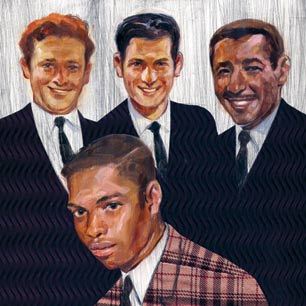
Booker T. and the MGs had that Southern funk flavor. Motown took care of the North with their polished sound, but the MGs were gritty and raw, and they could really groove. You can hear their sound reverberating throughout the whole industry today — especially since hip-hop guys sample so much of what they did back then. They were an integrated band — half white, half black. There was a "cotton curtain" back in the Sixties: Bands were all segregated in Memphis. But the MGs were like a family. That integration was a sign of things to come. The MGs made a name for themselves with all those great instrumentals, like "Green Onions," but they were the house band at Stax/Volt, so they had real adaptive ability. Otis Redding had his sound, Sam and Dave had theirs, Albert King had his own thing. But it was always Booker T. and the MGs playing. When I did my first sessions at Stax, I learned everything about record production from those guys.
In the MGs, Steve Cropper and Donald "Duck" Dunn were the rock & rollers, but they also had the country thing covered, as well as the blues. Most guitar players like to go crazy, but Steve picked his spots, and when he spoke, it was profound. Duck was a great bass player, and very funny — one of them good old Southern beer-drinking boys.
Al Jackson's father was a drummer, so Al had a background of rhythm. Al had a little jazz flavor along with those R&B grooves. You know when I did "Shaft," with those 16th notes on the high-hat? That was actually a break Al played on Otis Redding's "Try a Little Tenderness." That stuck with me.
Booker T. pioneered a lot of sounds on the organ. When you heard him play, you knew it couldn't be anyone else. I remember one time, Booker accidentally had two dates booked at the same time, so he took some other band and went somewhere in Kansas, and I went with the MGs to Harrisburg, Pennsylvania, where I had to go pose as Booker T. Halfway through, some guy yells out, "Hey, man, that guy ain't no Booker T.! He ain't got no hair!" We said, "Oh, carp." But the groove took over, and that calmed them down.