
Geocache Identification Permit Approval Number: AMSP20191028174
Permit Expires on:10/28/22
The Morris Canal series of caches are placed along the canal towpath in partnership with the Waterloo Village Historic Site and the Canal Society of New Jersey to showcase the important early transportation across New Jersey. The Morris Canal connected the Delaware and Hudson Rivers and facilitated development of cities and industry in New York and New Jersey.
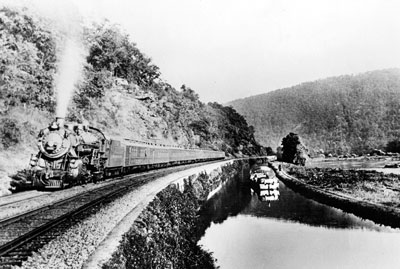 Railroad Train vs. Canal Boat
The rapid advance of railroad technology after 1850 resulted in the decline of the anthracite canals for many reasons:
- One freight train could carry thousands of tons of coal across New Jersey in a few hours. The smaller canal boats needed several days to take up to 100 tons the same distance.
- Rail routes were more direct. Canals usually were built to follow river valleys and land contours to avoid the need for a large number of locks.
- Rail routes were more flexible because they did not have to depend on a water supply and could more easily travel over difficult terrain.
- Railroads were not restricted by such time-consuming obstacles such as locks or inclined planes which caused long delays for canal boats.
- Railroads could be used all year, while canals were frozen over in the winter months.
- Bulk rail freight could often be unloaded by gravity into ships and storage yards from trestles. Canal boats had to be unloaded manually using shovels, scoops, and derricks.