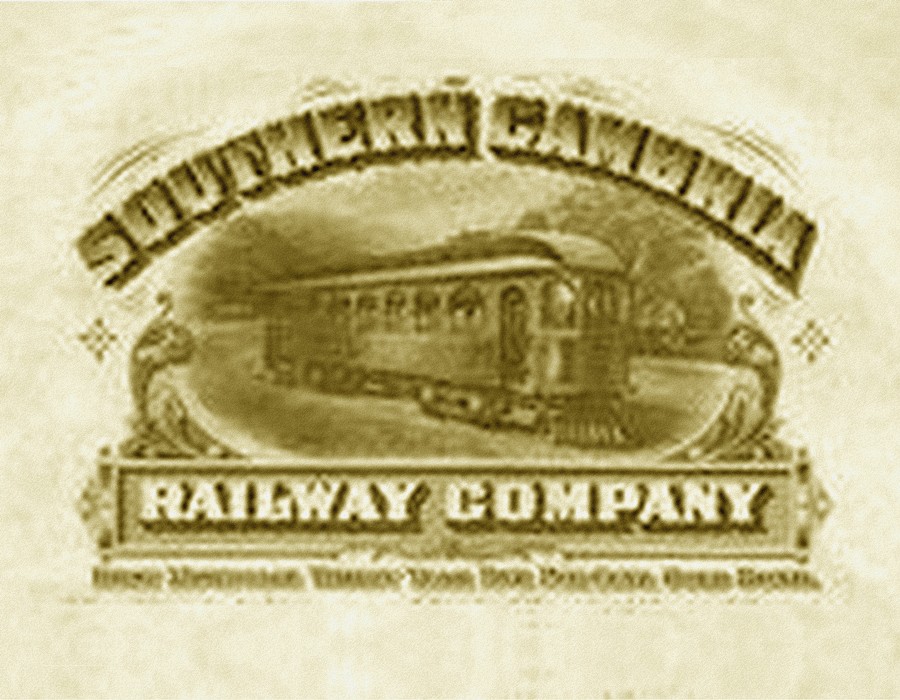
The Southern Cambria Railway was an electric powered interurban public transportation system that operated from about 1910 until 1926 between Ebensburg (The County Seat of Cambria County), Nanty-Glo (A Borough in the center of the County and the center of the County’s vital coal industry) and Johnstown (the largest City in the County).
The transportation boom of the early to mid 1800s saw construction of the Pennsylvania Canal and the Pennsylvania Railroad leave Cambria’s county seat and main energy production center effectively cut off from Johnstown, the County’s largest population and manufacturing center. Moving the county seat to Johnstown was even debated, but, as this would mean a journey of nearly 50 miles for many residents to reach the county seat at the County’s southern extreme, that plan was not at all practical for its time.
By 1908, with Johnstown still booming, quick transportation to Ebensburg was seen as a necessity. This was the time the electric interurban car, a heavier than normal "streetcar" designed to operate mostly on its own right of way, came into vogue. Electric interurbans had two huge advantages over steam locomotives: First, the electric drive could transmit more power to the wheels, thus accelerating faster than a steam locomotive. This allowed more frequent stops and faster speeds over the region’s hills and mountains. And second, the electric drive did not need the almost perfect track a steam locomotive needed. That allowed track to be laid faster and at much lower cost than for a heavy steam powered railroad.
With its low implementation cost and the hostility people had to the transportation monopoly of the large railroads at that time, many local municipalities became willing to help set up an electric interurban line and so the Southern Cambria Railway Company was born.
Because the Pennsylvania Railroad already owned the land along the River, the Southern Cambria was built hugging the hillsides overlooking the valley of the Little Conemaugh, partially on path you’re walking today. While early 20th century travel along your current route was very fast for its time, it was not a particularly enjoyable trip – hopefully your travel over its route will be slow for our time so you can enjoy the scenery and the history here.
CONGRATS to LT Silverfox ... First To Find!