
Ovaj earth cache dovest će vas do kamene arkade Šuplja draga, koji je najveća takva prirodna ljepota u Hrvatskoj, a nalazi se uz Jadransku magistralu.
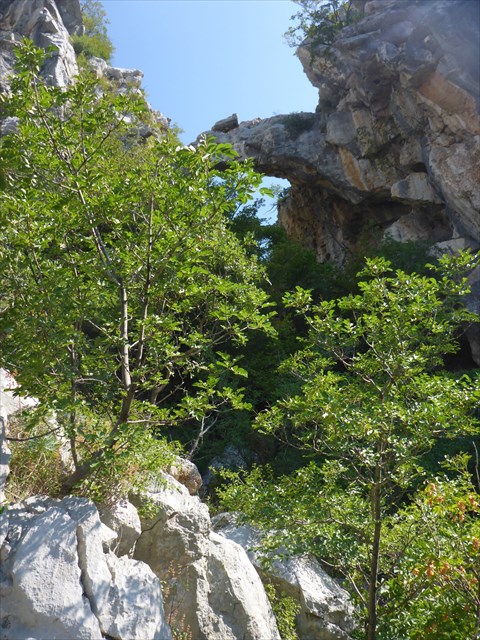
Prirodni lukovi ili mostovi su mostovi ili tupe probijene formacije stijena koje su nastale erozijom. Ovisno o veličini, obliku, nastajanju i okruženju imaju drugačije nazive kao kameni most, kameni luk, prirodni most ili obalna vrata. Otvor je okružen stijenama, debljina probijene kamene formacije je otprilike iste veličine kao i širina i visina. Ove erozijske oblike možemo naći u različitim veličinama od rupe veličine palca do otvora veličine više stotina metara.
U engleskom jeziku se takvi erozijski oblici nazivaju Natural Arch ili Natural Bridge. Prema podjeli Natural Arch and Bridge Society nastaje Natural Arch (prirodni svod) bez utjecaja tekuće vode. Takvi oblici su česti na zapadu SAD-a gdje su oblikovani uglavnom od pješčenjaka. Natural Bridge (prirodni most) nastaje pod utjecajem tekuće vode i u mnogim slučajevima protječe stalno ili povremeno potok ili rijeka. Daljnja pod podjela ove glavne grupe može biti prema oblicima ili prema nastajanju.
Erozijski oblici mogu nastati u svim vrstama stijena. Kratkog su vijeka na direktno erodirajućim stijenama ili okruženju sa visokom erozijskom energijom, kao što su obalne zone sa strmim hridima. Trajni veliki oblici često nastaju u pješčenjaku i vapnencu, pošto su to otporne stijene osjetljive na otapanje vodom i trošenje.
Prirodni luk nastaje samo pod posebnim uvjetima. Svaki proces je relevantan za formiranje prirodnog luka što uključuje djelovanje vode, gravitacija, promjene temperature ili tektonski pritisci na stijenu. Vjetar nije značajan čimbenik u oblikovanju prirodnog luka, on samo djeluje kako bi raščistio rastresita zrna I time doveo do mikroskopske erozije. Pješčane oluje mogu izribati ili izpolirat već postojeće lukova.
Prirodni lukovi ili mostovi mogu nastati:
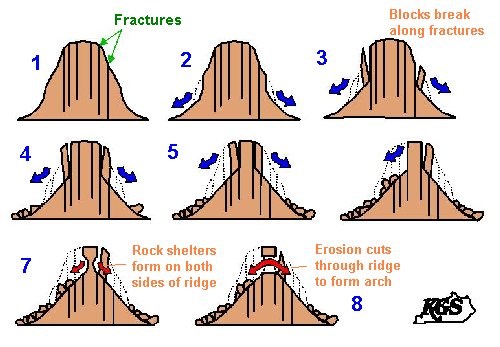
1. Erozijom

2. Raspadanjem stijena, te se nakon pada oslanjaju jedne na druge

3. Mehaničkom erozijom (vodeni tok):

Da bi mogli logirat Earthcache postavit ću Vam nekoliko pitanja, a Vi mi pošaljite odgovore na mail, ne morate čekat moj odgovor već slobodno logirajte, ako nešto nije u redu kontaktirat ću Vas.
1. Promotrite EC što mislite koja djelovanja su uključena u njegovo formiranje? Objasnite svojim riječima.
2. Promotrite ovaj earthcachea. Dali on spada pod prirodne lukove (Natural Arch) ili prirodni most (Natural Bridge)? Objasnite svoje zapažanje.
3. Procijenite visinu i raspon „arkade“'.
4. Napravite fotografiju sebe (fotografijom na kojima je gps/mobitel, ruka ili noga NE ispunjavate zadatak i log će biti obrisan) ili papira s vašim nikom sa lokacije EC-a te ju stavite u svoj log.
Uživajte u ovoj prirodnoj ljepoti!

Diese Erde Cache führt Sie zur Steinarkaden Šuplja greda, die die größte derartige natürliche Schönheit in Kroatien ist, und sie befindet sich an der Hauptstraße (Jadranska magistrala) .
Felsentore, auch als Bogenfelsen oder Brandungstore bezeichnet, sind brücken- oder fensterartig durchbrochene Gesteinsformationen, die durch Erosion entstehen. Je nach Größe, Form, Entstehung und Umgebung kommen andere Bezeichnungen zum Tragen, etwa Felsbrücke, Stein- oder Felsbogen,Naturbrücke oder Brandungstor. Ihre Öffnung ist vollständig von Gestein umgeben, und die Dicke der durchbrochenen Gesteinsformation ist von etwa gleicher Größenordnung wie die Breite und Höhe. Diese Erosionsformen gibt es in sehr unterschiedlichen Größen, vom kaum daumendicken Loch bis zu mehr als hundert Meter messenden Öffnungen, die von Felsen überwölbt sind.
Im englischen werden solche Erosionsformen Natural Arch oder Natural Bridge genannt. Nach der Einteilung der Natural Arch and Bridge Society entsteht ein Natural Arch ohne Beteiligung von fließendem Wasser. Solche Formen sind im Westen der USA häufig und entstehen dort hauptsächlich in Sandstein. Die Natural Bridge entsteht dagegen durch die Wirkung fließenden Wassers und wird in vielen Fällen ständig oder zeitweilig von einem Bach oder Fluss durchflossen. Eine weitere Unterteilung dieser Hauptgruppen ist unter anderem über die Form oder die Entstehung möglich.
Die genannten Erosionsformen können in allen Gesteinsarten entstehen. Sie sind kurzlebig in direkt erodierbaren Gesteinen oder in Umgebungen mit hoher Erosionsenergie, so etwa der Brandungszone von Steilküsten. Dauerhafte große Formen bilden sich besonders häufig in Sand- und Kalkstein, da diese widerständigen Gesteine für Lösung durch Wasser und Verwitterung anfällig sind.
Felsentore bilden sich nur unter besonderen Bedingungen. Entscheidend sind die Art des Gesteins oder der beteiligen Gesteine, die Form der Felsformation und die Kombination von Erosionsvorgängen, die auf diese einwirken. Ursächlich für die Bildung sind die Wirkung von Wasser, Temperaturänderungen, Schwerkraft oder tektonischen Kräften. Wind spielt meist keine direkte Rolle bei der Entstehung, er kann jedoch ein wichtiger Faktor bei der weiteren Gestaltung sein, zum Beispiel durch die schleifende Wirkung von mitgeführten Sandkörnern
Felsentore können entstehen:
1. Durch Erosion
2. Zerfall von Felsenblöcken und anschließende Anlehnung aneinander
3. Durch mechanische Erosion (Wasserfluss):
Zum Logen dieses Earthcaches habe ich für Sie ein paar Fragen. Bitte die Antworten auf mein E-mail Adresse schicken. Sie müssen nicht auf meine Antwort warten, sondern können gleich Loggen, wenn was nicht korekt ist werde ich Sie kontaktieren.
1. Betrachte den EC, was denkst Du welche Aktionen beteiligt sind, um es zu bilden? Erklären es mit eigenen Worten.
2. Betrachte diesen Earthcache. Ist er ein Natural Arch oder Natural Bridge? Erkläre deine Beobachtung.
3. Schätze die Höhe und die Spannweite der "arkade"..
4. Mache ein Foto von sich selbst (Foto das ein GPS/Handy, Hand oder Bein zeigt, erfüllen NICHT die Aufgabe und werden gelöscht) oder Papier mit Ihrem Nick an der Lokation des EC und bitte zum Log hohladen.
Genieße Sie diese natürliche Schönheit!

This earth cache will lead you to the stone arcades Šuplja draga, and such beauty is the largest one in Croatia, and it is located on the main road (Jadranska magistrala).
A natural arch, natural bridge or, less commonly, a rock arch is a natural rock formation where a rock arch forms, with an opening underneath. Most natural arches form as a narrow bridge, walled by cliffs, become narrower from erosion, with a softer rock stratum under the cliff-forming stratum gradually eroding out until the rock shelters thus formed meet underneath the ridge, thus forming the arch. Natural arches commonly form where cliffs are subject to erosion from the sea, rivers or weathering (subaerial processes); the processes "find" weaknesses in rocks and work on them, making them larger until they break through.
The choice between bridge and arch is somewhat arbitrary. The Natural Arch and Bridge Society identifies a bridge as a subtype of arch that is primarily water-formed. By contrast, the Dictionary of Geological Terms defines a natural bridge as a "natural arch that spans a valley of erosion."
The erosion forms can occur in all rock types. They are short-lived in directly erodible rocks or in environments with high erosion energy, such as the surf zone on cliffs. Permanent large shapes more often form in sandstone and limestone, as this resistive rocks are susceptible to solution by water and weathering.
Natural Arch formed only under special conditions. Every single process relevant to natural arch formation involves the action of water, gravity, temperature variation, or tectonic pressure on rock. Wind is not a significant agent in natural arch formation. Wind does act to disperse the loose grains that result from microscopic erosion. Further, sandstorms can scour or polish already existing arches.
Natural arch can be formed:
1. By erosion
2. Disintegration of rock blocks and subsequent lean on each other
3. By mechanical erosion (Water cours):
In order to log this EarthCache I will ask you several questions and you should send your answers to my e-mail. You don’t have to wait for my confirmation, feel free to log the find as soon as you send your answers. If there are problems with your answers, I will contact you.
1. When you observe this EC what do you think what action are involved to formed it? Explain it with you one words.
2. Explore this EarthCache. Is it a Natural Arch or Natural Bridge? Explain why.
3. Estimate the height and the span of the „arkade“?
4. Make a photo of yourself (photo showing a GPS/mobile phone, hand or leg do NOT fulfill the task and the log will be deleted) or paper with your nick from the location of the EC and put it to the log.
Enjoy this natural beauty!
Izvor:
Wikipedia
naturalarches.org
uky.edu
photo by Asterix
Veliko hvala Asterix. na pronalasku ove posebne i najveće prirodne "građevine" u Hrvatskoj !
Souvenir/Banner:
Code: <a href="https://coord.info/GC6RNB9" ><img src="https://s3.amazonaws.com/gs-geo-images/118bf089-9fc5-4f3e-806f-2bd8e85fdbfe.png" /></a>
