Shale Formation
Shale rocks are those that are made of clay-sized particles and are have a laminated appearance. Shales are usually found in areas where gentle waters have deposited sediments that become compacted together. The compressed clay and silt become shale over time. Shale is a sedimentary rock.
Shale starts with bits of rock that erode off of larger rocks from contact with moving water and the weather. Very fine particles of feldspar, quartz, mica, pyrite and other minerals settle to the bottom of still bodies of water, such as swamplands, deep parts of the ocean and deep, still lakes. Other constituents might include organic particles, carbonate minerals, iron oxide minerals, sulfide minerals, and heavy mineral grains. These "other constituents" in the rock are often determined by the shale's environment of deposition, and they often determine the color of the rock.
The fine rock particles mix with decaying organic matter into a mud. Because weathering is a continual process, new layers are always building up. The top layers press on the bottom layers with more and more pressure. When enough pressure builds up, the bottom layers become rock through a process called lithification. Lithification causes the thin layers that are characteristic of shale.
Shale is a soft rock that breaks easily. The color varies depending on the exact minerals that formed the shale. Red, green and black are some color variations. Geologists classify shale as a claystone due to the small size of the particles that form the rock. Shale is a common rock that makes up much of Earth's crust.
Colours of Shale
Like most rocks, the color of shale is often determined by the presence of specific materials in minor amounts. Just a few percent of organic materials or iron can significantly alter the color of a rock.
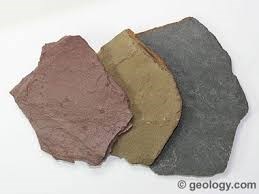
Shales’ colour is determined primarily by composition. In general, the higher the organic content of a shale, the darker its colour. The presence of hematite and limonite (hydrated ferric oxide) gives rise to reddish and purple colouring, while mineral components rich in ferrous iron impart blue, green, and black hues. Calcareous shales (those having a large percentage of calcite), on the other hand, are light gray or yellowish.
Black and Gray Shale
A black color in sedimentary rocks almost always indicates the presence of organic materials. Just one or two percent organic materials can impart a dark gray or black color to the rock. The presence of organic debris in black shales makes them the candidates for oil and gas generation. If the organic material is preserved and properly heated after burial, oil and natural gas might be produced.
Gray shales sometimes contain a small amount of organic matter. However, gray shales can also be rocks that contain calcareous materials or simply clay minerals that result in a gray color
Red, Brown, and Yellow Shale
Shales that are deposited in oxygen-rich environments often contain tiny particles of iron oxide or iron hydroxide minerals such as hematite, goethite, or limonite. Just a few percent of these minerals distributed through the rock can produce the red, brown, or yellow colors. The presence of hematite can produce a red shale. The presence of limonite or goethite can produce a yellow or brown shale.
Green Shale
Green shales are also found. Mineral components rich in ferrous iron impart blue, green, and black hues. Micas that make up much of the volume of these rocks are typically a greenish color, giving layers a greenish hue. Green shale constitutes about 5 to 25% of most Queenston Shale Formations

To claim this EarthCache, you must e-mail the CO through the cache page the answers to the following questions. Please remember the intent of an EarthCache is to increase your awareness of the Natural Geological Environment. I hope this cache does that.
Questions:
1) Standing on the beach, facing the Shale wall. What types of Shales can be found in this rock face?
2) How many distinctive layers of each Shale type can you see here?
3) Take a look at the rocks below your feet. What do you notice about them?
4) Compare the beach here, to the beach at Waypoint 2. How are the rocks the same, how are they different?
5) Estimate the height of the exposed shale wall here, then estimate the height of the overburden and soils above them.
6) On the beach you will find examples of the shale types found at this location. Examine these rocks, what do you notice? Which type of shale is the strongest, and the least brittle? Which one is crumbly?
7) Based on your reading of the cache page, would this be a good place to look for oil and gas? Why or why not?
Photos are optional, but always add to the overall experience. Please post.