Corso Vittorio Emanuele II, già corsia dei Servi, è una delle strade più importanti del centro di Milano.
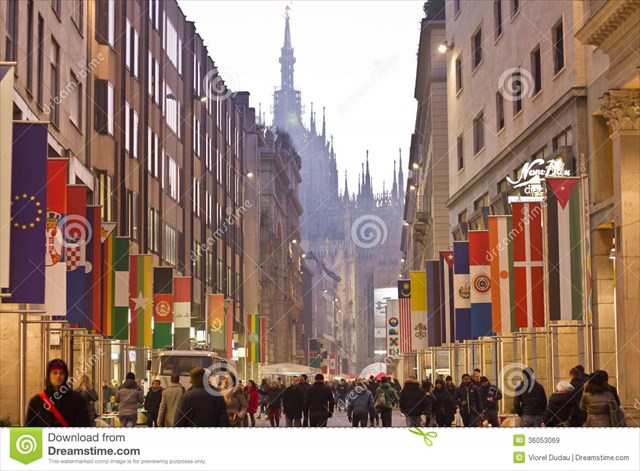
Collega piazza del Duomo a piazza San Babila. È parte di un'ampia zona pedonale (che comprende anche piazza Mercanti e via Dante).
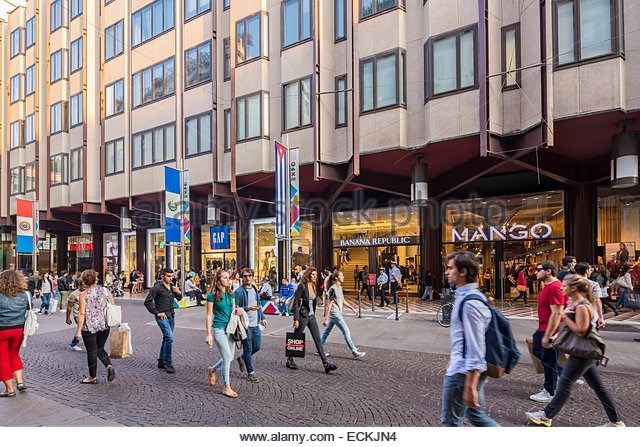
Vi si aprono numerosi negozi (soprattutto di abbigliamento) che lo rendono uno dei principali centri di acquisti cittadino.
Storia
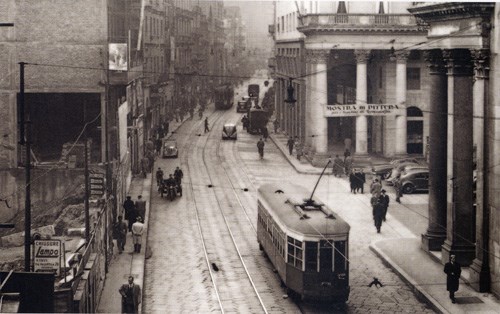
La strada ha origine molto antica: nell'epoca romana era l'arteria che portava verso nord-est, successivamente prese il nome di corsia dei Servi (secoli XVII e XVIII) ed era il primo tratto della strada che a Milano congiungeva piazza Duomo alla Porta orientale. Prendeva il nome dal convento dei servi di Maria, che officiavano la chiesa di Santa Maria. Alessandro Manzoni, nei Promessi sposi, sulla base dei fatti storici a cui si è ispirato, pone in corsia dei Servi il "forno delle Grucce" assaltato dal popolo in rivolta.
L'antica corsia dei Servi fu regolarizzata ed ampliata negli anni venti e trenta del XIX secolo: le vecchie case di origine medievale furono sostituite da palazzi di maggior prestigio in stile neoclassico. A metà del corso sorse appunto, attorno al 1830, l'edificio più monumentale: la chiesa di San Carlo al Corso.
Dopo i lavori, la strada prese il nome di corso Francesco, in onore dell'imperatore e re Lombardo-Veneto e, con l'unità d'Italia, divenne corso Vittorio Emanuele II, nome rimasto anche sotto la repubblica. Gli edifici, in gran parte bombardati, furono ricostruiti spesso integralmente modificati, ricavando una doppia fila di portici. Fu inoltre la prima strada di Milano ad essere pedonalizzata, a metà degli anni ottanta. In quegli stessi anni perse, però, una delle sue caratteristiche: quella della concentrazione dei cinematografi di prima visione. Molti di essi sono stati oggi rimpiazzati da grandi marchi della moda.
Alla metà circa del corso, sotto i portici del lato nord, si trova una scultura in marmo di epoca imperiale, detta Scior Carera, sulla quale nei secoli passati vi era l'usanza di affiggere satire e invettive nei confronti dei personaggi in vista, come accadeva per il più celebre Pasquino a Roma.
La Chiesa di San Carlo
Presso la chiesa di San Carlo nacque l'attività del centro culturale "la Corsia dei Servi" intorno a figure dotate di un forte carisma come padre David Maria Turoldo e Camillo De Piaz, che erano stati il punto di riferimento per i cattolici che parteciparono alla Resistenza. Lo stesso impegno caratterizzò l'attività del dopoguerra, con l'appoggio alle iniziative di don Zeno Saltini, il fondatore di Nomadelfia, a cui parteciparono sette frati distaccati dal convento di San Carlo. La Chiesa tuttavia intervenne pesantemente, costringendo al rientro i frati. Sotto la guida di padre Camillo De Piaz si continuò brevemente l'attività, ma successivamente proseguì come semplice associazione privata trasferita di sede e con il nome di "Nuova Corsia dei Servi". Il vecchio nome è stato poi ripreso per indicare le attività culturali cattoliche svolte presso il convento dei Servi.
Homeless
Oramai da tempo ogni sera il mio amico Goran, un Homess della Serbia, dorme nel suo cartone a fianco del cache. I geocacher lo conoscono perchè indica a loro dove si trova la cache. Ho cominciato a parlarci sapendo di questa storia. Goran è scappato probabilmente alla fine della guerra e nei suoi occhi probabilmente ci sono cose che non vuole ricordare. Gl ho detto se ha bisogno di qualcosa.. perchè è diventato il mio guardiano personale. Mi ha detto "un euro per un caffè" o per navigare in internet con il suo palmare. Gli ho detto che lascierò un caffè pagato, usanza tipica di Napoli che purtroppo a Milano non esiste.. o che gli porterò un coupon per il MC Donalds. Se passate salutatemelo.
La cache
Vista l'alta densità di babbani, gente che vende caldarroste.. etc.. e di poliziotti la cache è una semplice scatoletta magnetica
Posizione originale sotto la cabina telefonica (ma sarà smontata). Se la cabina è smontata andate nel BOX e vedete nel retro una scatoletta di caramelle.
[ENG]
Corso Vittorio Emanuele II, formerly lane of the Servants, is one of the most important streets in the center of Milan.
Connects Piazza del Duomo to Piazza San Babila. It is part of a large pedestrian area (which includes Piazza Mercanti and Via Dante).
There you will find several shops (especially clothing) making it one of the main city shopping centers.
The Story
The road has very ancient origins: in Roman times was the artery leading to the northeast, later became known as the Servants lane (XVII and XVIII) and was the first stretch of the road to Piazza Duomo in Milan conjoined eastern gate. It took its name from the convent of the Servants of Mary, who officiated the church of Santa Maria. Alessandro Manzoni in The Betrothed, based on historical facts on which it is inspired, put in the ward of the Servants "furnace of Crutches" attacked by the people in revolt.
The ancient lane of the Servants was regularized and expanded in the twenties and thirties of the nineteenth century: the old houses of medieval origin were replaced by the most prestigious buildings in the neoclassical style. In the middle of the course was built precisely around 1830, the most monumental building: the church of San Carlo al Corso.
After the work, the street was named Francesco course, in honor of the King and Lombardo-Veneto and with the unification of Italy, became Corso Vittorio Emanuele II, the name remained even under the republic. The buildings, mostly bombed, often were rebuilt fully modified, obtaining a double row of arcades. Milan was also the first road to be pedestrianized, in the mid-eighties. In those same years he lost, however, one of its features: that of the concentration of first-run cinemas. Many of them have now been replaced by major fashion brands.
About half of the course, under the arcades of the north side, is a marble sculpture of the imperial era, known Scior Carera, on which in past centuries it was the custom to post satire and invective against the characters in sight, as He happened to the most famous Pasquino in Rome.
San Carlo Church
At the church of San Carlo it was born the activities of the cultural center "of the Servants lane" around the figures with a strong charisma as Father David Maria Turoldo and Camillo De Piaz, who had been the point of reference for Catholics who participated in the Resistance. The same commitment characterized the activities of the post-war period, with the support to the initiatives of Don Saltini Zeno, the founder of Nomadelfia, attended by seven monks detached from the convent of San Carlo. However the Church intervened heavily, forcing the brothers to return. Under the guidance of Father Camillo De Piaz he is briefly continued the activity, but later continued as a simple private association transferred the headquarters and with the name of "New Servi Lane." The old name was then taken to indicate the Catholic cultural activities at the Convent of the Servants.
Homeless
Long ago every night my friend Goran, a Homess from Serbia, sleeps in his cardboard next to the cache. Geocachers know this because it tells them where the cache is located. I started talking to each other about this story. Goran probably ran away at the end of the war and there are probably things in his eyes that he does not want to remember. I said if he needs anything .. because he has become my personal guardian. He told me "one euro for a coffee" or to surf the internet with his PDA. I told him that I would leave a paid coffee, a typical custom of Naples that unfortunately does not exist in Milan .. or that I will bring a cupon for the MC Donalds. If you pass, say hello to me.
The cache
Due to the high density of Muggles, people selling roasted chestnuts .. etc .. and policemen the cache is a simple magnetic box
Original location under the telephone box (but will be dismantled). If the cabin is dismantled, go to the BOX and see a box of candies in the back.