[ENG] GIT KEŞFET by the Monument of the Republic (Taksim)
We are meeting in front of the Republic Monument in the heart of İstanbul, where everyone who visits İstanbul definitely visits, where Nakiye Teacher organized the first Children's Rights meeting in the world, and where many events have occurred.
aka Taksim Monument.
We have GIT KEŞFET events at various historical places of Istanbul and we discover different places each time. We are expecting everyone that wants to be informed about Geocaching, chat or share their experiences with us.
Our event will start at the open area in front of the Monument of the Republic, at 19:30 and will last 30 minutes. We will take photos together and share trackables. It will end at 20:00.
We will continue chatting and sharing our experiences in a nearby place with those who want to join us. We advise you to read the event page carefully before coming to the event and if possible, examine the monument before the event. You will be notified of the place where we will continue the event according to the weather conditions on or before the event day. You can sign the log at the event time in front of the monument or at the cafe afterwards.
Coordinates: N 41° 02.218 E 028° 59.107
Date/Time: 27.09.2017/ Between 19:30-20:00
Taksim-The Monument of the Republic
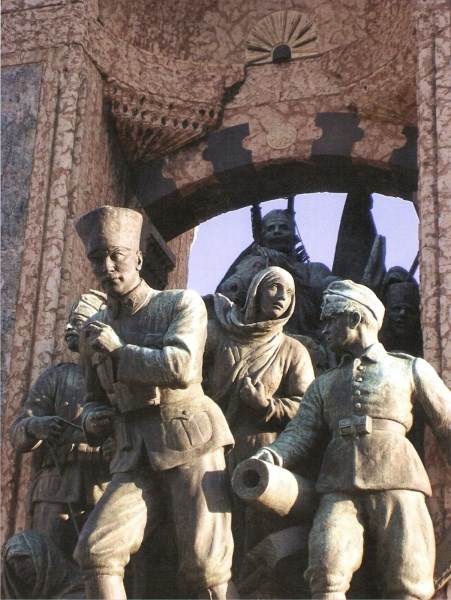
Although its main name is the Monument of the Republic, it is generally known as the Taksim Monument. Made by the Italian sculptor Pietro Canonica (Kanonika) and opened on August 8, 1928, the monuments pedestal and the perimeter was built by architect Giulio Mongeri. One side of the monument represents the War of Independence and the other side represents the modern Republic of Turkey. On both sides, there are soldiers and women faces, representing victory (independence).
In 1925 a commission formed under the presidential of the Istanbul deputy, Şinasi Pasha, contacted Canonica and ordered a monument. An agreement has been made with Canonica for the construction of the statue on the payment of £ 16500. Stone and bronze were used in the construction of the monument, which was more than two years old. Donations have been collected from the people for financial resources. The monument, which weighs 84 tons, was brought from Rome to Istanbul by ship.
According to Sunay Akın: A world-class competition will be held for the construction of monuments in Taksim Square, which is selected as the new demonstration area of the Republic. Sculptors participate in the competition with the models they have built and Pietro Canonica wins the competition. Donations are collected from the people for the construction of the monument. At the same time, a competition will be held at Mimar Sinan University and the person who becomes first will be sent to Italy to work on the construction of the monument to Canonica's workshop, and the expenses are to be charged by the state. Sabiha Ziya, who won this contest, is sent to Italy by the support of Mustafa Necati, the Minister of National Education, although she is not required to go abroad according to some people because she is a single woman at the age of 21. Sunay Akın says that the female portraits on the side of the monument are not on the model winning the contest and that these figures have been added by Canonica after Mrs. Sabiha went to Rome.
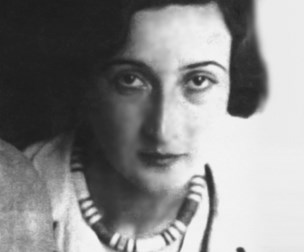
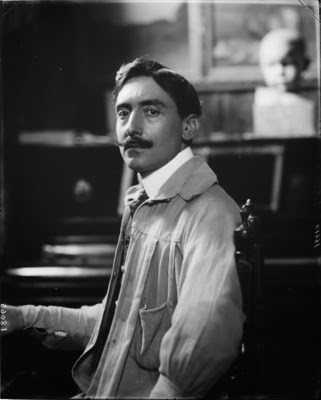
Sabiha Ziya (On the left)- Pietro Canonica (On the right)
Mustafa Necati particularly wants Sabiha Ziyan to work in the construction of this monument. The contribution she gave to the making of this monument is just as embodied in the emancipation of women in the establishment of the Republic. In addition to its other meanings, the monument is a symbol of the support given by women in the establishment of the Republic and of the Republic's importance to women.
The monument's production committee requests the famous geologist Malik Bey to examine the material that the monument was made of. Malik Bey says that the rocks coming from Italy used in the construction of the monument can not stand for a long time in a place like Istanbul in an open air and will deform. Although Canonica opposes these words, years justify Malik Bey. As you can see from the rough surface of the monument, calcareous rocks used in the construction of the monument have deformed over time.

Canonica plans the monument to be in the middle of a pool when he finds out that the place where the memorial will be placed (Taksim) is the place where the waters brought to Istanbul are distributed, and even the name is taken from here. Pool details around the monument could not be completed due to incomplete payments due to financial impossibilities. But still monumental faucets and troughs can be seen around. Considering the missing parts, the monument is still not completed. Although the monument wanted to be completed by the Istanbul City Hall in the following years, it could not be completed due to financial problems.
Numerous protests, demonstrations, celebrations, etc. were held around the Monument of the Republic. It is one of the meeting points of people of Istanbul.
Who are the people at the monument?
Atatürk, İnönü, Fevzi Çakmak, 2 Russian generals, Sabiha Ziya Hanim(the first female sculptor of Turkey), and Italian sculptor Pietro Canonica who made the sculptures on the monument(Just behind Atatürk), are located in the Republic Monument, which has become the symbol of Taksim since the first years of the Republic.
Canonica decides to add something that reminds him of the revolution about women and makes a woman face on either side of the monument. One of the two women on the two sides of the monument, which had soldiers with flags to symbolize independence, was veiled(the woman of the era before Republic), and the other was not veiled (the woman of the Republican era). These two women's faces belong to the same person, Sabiha Ziya Bengütaş, the first female sculptor of Turkey.
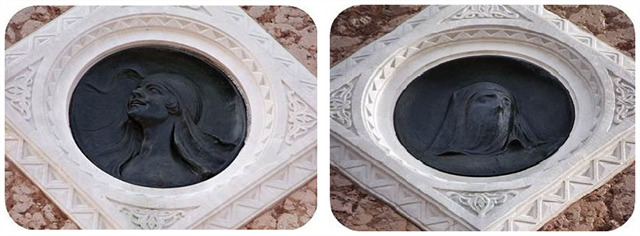 Sabiha Ziya Bengütaş (On the sides of the Taksim Monument)
Canonica, who prepared the Republic Monument in 2.5 years, placed a lot of figures on 2 faces of the 4 faceted monument. Among these figures are two Russian generals. The 11-meter monument was built in the shape of two crown doors. These two arched doors have war on one side and victory on the other. When you look at the first gate, you will see the War of Independence. At the head of the battlefield, Besides Mustafa Kemal Pasha, the commander-in-chief and the artillery and cavalry soldiers, a female sculpture with a child in her lap, and all the Anatolian people are struggling to save the country on the front. Looking from the second door, victory is seen at the end of the war. Now the Republic was established. In his civilian outfit, President Atatürk, with prime minister İnönü on the right, chief of staff Fevzi Çakmak on the left, Russian generals named Frunze and Vorosilov, and Canonica's own sculpture can be seen. Like many painters and sculptors, Canonica has given himself a place among the sculptures. Just behind İnönü, the sculpture with a strange hat, is Canonica.
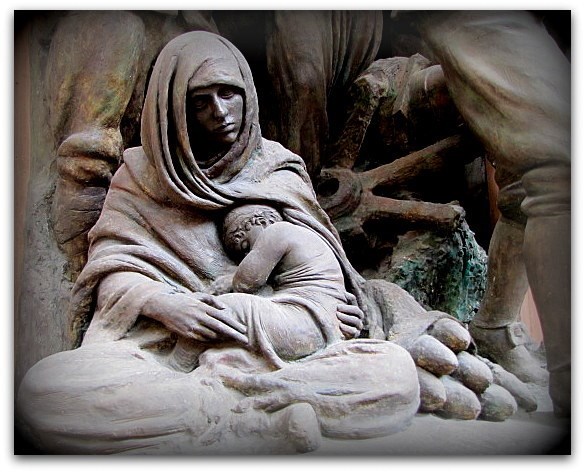 Have you ever noticed this woman on the monument?
The sculptures of two Russian generals, named Frunze and Vorosilov, had been added to the monument in the days of close relations with Russia. The Moscow Contract was also made in 1921, when these bilateral relations were intensive.
Mikhail Vasilievich Frunze of the Theoreticians of the Red Army was a Russian general who wandered around Turkey during the War of Independence (1921) and tried to show that Bolshevik Russia was beside Turkey. The Red Army commander was brought to the Eastern Front Command by Trotsky. He was president of the Soviet revolutionary military council when he died at the age of 40. His sculpture in Taksim Republic Monument is located just behind İnönü. Younger than Vorosilova, the statue, which holds the hat in the center of his chest, belongs to General Frunze.
Kliment Yefromovich Vorosilov defended Leningrad in the Second World War, preventing Germany from taking over the city. He died at the age of 88. He was in the 10th anniversary of the Republic and was an important general of the Red Army. The sculpture on the Taksim Monument stands just behind Atatürk, and hands are tied in front.
=====================================
=====================================
=====================================
[TR] GIT KEŞFET Cumhuriyet Anıtı (Taksim) Buluşması
İstanbul’un kalbi niteliğindeki, İstanbulu ziyaret eden herkesin mutlaka ziyaret ettiği, birçok olaya ev sahipliği yapmış olan, önünde Nakiye Öğretmenin Dünyanın ilk Çocuk hakları Mitingini düzenlendiği Cumhuriyet anıtının önünde buluşuyoruz.
Namıdiğer Taksim Anıtı.
İstanbul’un tarihi mekanlarında yaptığımız ve her seferinde yeni bir mekanı-yapıyı keşfettiğimiz GIT KEŞFET etkinliklerimize amacı Geocaching hakkında bilgi almak-sohbet etmek ve/veya tecrübelerini paylaşmak isteyen herkesi bekleriz.
Etkinliğimiz saat 19:30'da Cumhuriyet Anıtı önündeki açık alanda, dışarda başlayacak ve havaların çok soğuk olduğu için 30 dakika sürecektir. Birlikte fotoğraflar çektirip, trackableları paylaşacağız. Saat 20:00'da etkinlik bitecektir. Katılmak isteyenlerle beraber muhabbet etmek ve tecrübelerimizi paylaşmak amacıyla yakınlardaki bir mekanda oturarak etkinliğe devam edeceğiz. Etkinliğe gelmeden etkinlik sayfasında yazılanları dikkatle okumanızı ve mümkünse etkinlik öncesinde anıtı incelemenizi tavsiye ederiz. Etkinlik gününde veya öncesinde hava durumuna göre etkinliğe devam edeceğimiz mekan duyuru olarak sizlere bildirilecektir. Etkinlik saatinde Anıt önünde veya sonrasında kafeye gelerek log kağıdını imzalayabilirsiniz. İsteyenler civarda bolca bulunan kutuları aramaya devam edebilirler.
Koordinatlar: N 41° 02.218 E 028° 59.107
Tarih/Saat: 27.09.2017/ 19:30-20:00 Arası
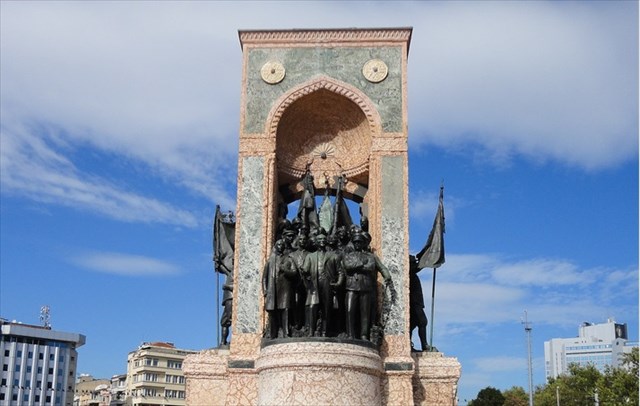
Taksim-Cumhuriyet Anıtı
Esas adı Cumhuriyet anıtı olmasını rağmen genelde Taksim anıtı olarak bilinir. İtalyan heykeltraş Pietro Canonica'ya (Kanonika) yaptırılan ve 8 Ağustos 1928'de açılan anıtın, kaide ve çevre düzeni mimar Giulio Mongeri tarafından yapılmıştır. Anıtın bir yüzü Kurtuluş Savaşını diğer yüzü ise modern Türkiye Cumhuriyetini temsil eder. Yan yüzlerindeyse zaferi (bağımsızlığı) simgeleyen askerler ve kadın yüzleri bulunmaktadır.
1925'te dönemin İstanbul milletvekili Hakkı Şinasi Paşa'nın başkanlığında oluşturulan bir komisyon tarafından Canonica ile bağlantı kurulmuş ve anıt sipariş edilmiştir. Heykelin yapımı için Canonica ile 16500 sterlin ödeme üzerinden anlaşma yapılmıştır. İki yıldan fazla süren anıtın yapımında taş ve bronz kullanılmış, mali kaynak için halktan bağış toplanmıştır. Ağırlığı 84 tonu bulan anıt Roma'dan İstanbul'a gemi ile getirilmiştir.
Sunay Akın’a göre: Cumhuriyetin yeni gösteri alanı olarak seçilen Taksim Meydanına anıt yapılması için dünya çapında bir yarışma düzenlenir. Heykeltıraşlar yaptıkları maketlerle yarışmaya katılırlar ve yarışmayı Pietro Canonica kazanır. Anıtın yapımı için halktan bağış toplanır. Aynı zamanda şimdiki adıyla Mimar Sinan Üniversitesinde bir yarışma düzenlenir ve birinci olan kişi, tüm masrafları devlet tarafından karışlanmak üzere İtalya'ya Canonica'nın atölyesine anıtın yapımında çalışmak üzere gönderilir. Bu yarışmayı kazanan Sabiha Ziya, 21 yaşında bekar bir kadın olmasından dolayı bazı çevreler tarafından yurtdışına gitmesi istenmese de, milli eğitim bakanı Mustafa Necati desteği ile İtalya'ya gönderilir. Sunay Akın, anıtın yan yüzlerinde olan kadın portrelerinin, yarışmayı kazanan maket üzerinde olmadığını, Sabiha hanımın Roma'ya gitmesinden sonra Canonica tarafından bu figürlerin eklendiğini söyler.
Sabiha Ziya (Solda)- Pietro Canonica (Sağda)
Mustafa Necati, Sabiha Ziyanın bu anıtın yapımında çalışmasını özellikle ister. Bu anıtın yapılmasına vermiş olduğu katkı adeta Cumhuriyetin kurulmasında kadınların vemiş oldukları emeğin somutlaşmış halidir. Anıt taşıdığı diğer anlamların yanında Cumhuriyetin kurulmasında kadınların vermiş olduğu desteğin ve Cumhuriyetin kadınlara verdiği öneminde bir simgesidir.
Anıtın yapım heyeti dönemin ünlü Jeologu Malik Bey’den anıtın yapılmış olduğu malzemeyi incelemesini ister. Malik Bey anıtın yapımında kullanılan ve İtalyadan gelen kayaçların İstanbul gibi biryerde açık havada uzun süre dayanamayıp deforme olacağını söyler. Her ne kadar Canonica bu sözlere karşı çıksa da yıllar Malik Beyi haklı çıkartır. Anıtın pürüzlü yüzeyinden de göreceğiniz üzere anıtın yapımında kullanılan kalkerli kayaçlar zaman içerisinde deforme olmuştur.
Canonica anıtın konulacağı yerin (Taksim) İstanbula getirilen suların dağıtıldığı (taksim edildiği) yer olduğunu, hatta adını dahi buradan aldığını öğrenince anıtı bir havuzun ortasında olacak şekilde planlar. Maddi imkansızlıklardan dolayı tamamlanamayan ödemeler sebebiyle anıtın çevresindeki havuz detayı tamamlanamaz. Fakat halen daha anıttaki musluk yerleri ve çevresindeki yalaklar görülebilir. Eksik kısımları göz önüne alındığında anıt halen daha tamamlanmamıştır. Anıt ilerleyen yıllarda İstanbul Belediyesi tarafından tamamlanmak istense de maddi sorunlar sebebiyle tamamlanamamıştır.
Cumhuriyet anıtı etrafında sayısız protesto, gösteri, kutlama vb yapılmıştır. İstanbulluların buluşma noktalarından birisidir.
Anıttaki insanlar kimlerdir?
Cumhuriyetin ilk yıllarından beri Taksim’in simgesi haline gelmiş Cumhuriyet Anıtı’nda Atatürk, İnönü, Fevzi Çakmak, 2 Rus general, Türkiye’nin ilk kadın heykeltıraşı Sabiha Ziya Hanım ve anıttaki heykelleri yapan İtalyan Heykeltraş Pietro Canonica bulunmaktadır. (Atatürk’ün hemen arkasında)
Kanonika, yaptığı anıta, kadınlarla ilgili devrimi hatırlatan bir şey daha ilave etmeye karar verir ve anıtın iki tarafına birer kadın yüzü yapar. Anıtın, bağımsızlığı simgelemek için bayrak açmıs askerlerin bulunduğu iki tarafında bulunan bu iki kadın yüzünden biri peçeli, (Cumhuriyet öncesi kadını simgeler) diğeri peçesizdir (Cumhuriyet dönemi kadınını simgeler). Bu iki kadın yüzü de aynı kişiye, Türkiye’nin ilk kadın heykeltıraşı Sabiha Ziya Bengütaş’a aittir.
Sabiha Ziya Bengütaş (Taksim anıtının yan yüzlerinde)
Cumhuriyet Anıtını 2,5 yılda hazırlayan Canonica, 4 yüzlü anıtın 2 yüzüne fazlaca figür yerleştirmiştir. O kadar ki bu figürler arasında 2 Rus general de vardır. 11 metrelik anıt, 2 taç kapı şeklinde yapılmıştır. Bu iki kemerli kapıdan birinde savaş, diğerinde zafer işlenmiştir. Birinci kapıdan bakıldığında Kurtuluş savaşı görülür. Başında kalpağıyla Başkomutan Mustafa Kemal Paşa, topçu ve süvari askerlerden başka, kucağında çocuğuyla bir kadın heykeli, tüm Anadolu halkı cephede vatanı kurtarmak için mücadele içinde. İkinci kapıdan bakıldığında ise savaşın sonunda kazanılan zafer görülür. Artık Cumhuriyet kurulmuştur. Sivil kıyafetiyle Cumhurbaşkanı Atatürk, sağında başbakan İnönü, solunda Genelkurmaybaskani Fevzi Çakmak, arkalarında Türk halkı, Frunze ve Vorosilov isimli Rus generaller ve Kanonika’nin kendi heykeli. Birçok ressam ve heykeltıraş gibi Kanonika da imkan bulunca kendisine yer vermiş heykellerin arasında. inönü’nün tam arkasında, garip şapkalı heykel, Kanonikadır.
Heykelde bulunan bu kadını hiç farketmişmiydiniz?
Frunze ve Vorosilov isimli iki Rus generalinin heykeli, Rusya ile sıkı lişkiler olduğu günlerde ilave edilmişti anıta. Moskova Antlaşması da bu ikili ilişkilerin yoğun olduğu 1921 yılında yapılmıştı.
Kızılordu’nun Teorisyenlerinden Mihail Vasilyeviç Frunze, Kurtuluş savaşı yıllarında (1921) Türkiye’yi karış karış gezmiş ve Bolşevik Rusya’nın Türkiye’nin yanında olduğunu göstermeye çalışmış bir Rus generaliydi. Kızılordu komutanı Troçki tarafından Doğu Cephesi Komutanlığına getirilmişti. 40 yaşında öldüğünde Sovyet devrimci askeri konsey başkanıydı. Taksim Cumhuriyet Anıtıdaki heykeli, İnönü’nün hemen arkasında yer alıyor. Vorosilova nazaran daha genç, şapkasını göğsünün hizasında tutan heykel, General Frunze’ye âit.
Kliment Yefromoviç Vorosilov ise, 2. Dünya savasinda Leningrad savunmasını yaparak, Almanyanın kenti ele geçirmesini önledi. 88 yaşında öldü. Cumhuriyetin 10. yıl kutlamalarında bulunmuş yine Kızılordu’nun önemli bir generaliydi. Taksim Anıtı’ndaki heykeli, Atatürk’ün tam arkasında, ellerini önünde bağlamış vaziyette duruyor.


