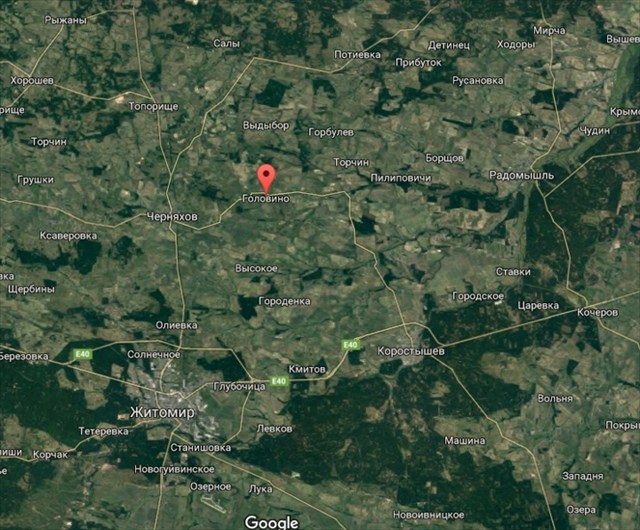
UA: Селище Головине знаходиться в Черняхівському районі Житомирської області України на березі річки Бистріївка.
EN: The Golovino village is located in Chernyakhovsky district, Zhytomyr region of Ukraine on the bank of the river Bystreevka.
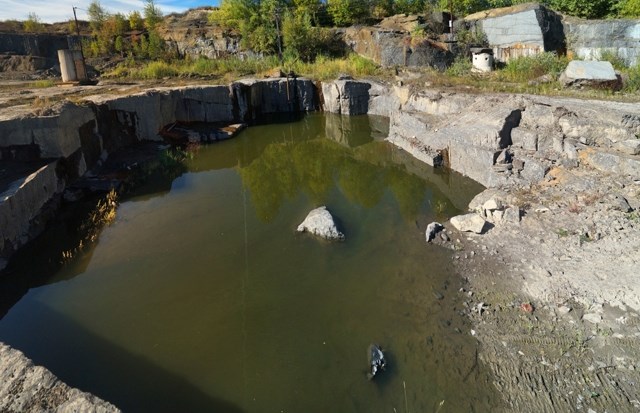
UA: За легендою, дивовижний камінь з райдужним блиском на Головинських землях підняв чи то орач, чи то погонич. Він був зачарований дивним блиском каменю і відніс свою знахідку місцевому землевласнику Салісу С.М. Той відправив цю знахідку в Російське географічне товариство в Санкт-Петербурзі. Незабаром звідти надійшла відповідь про те які казкові багатства бережуть головинські землі. Так тут було відкрито родовище лабрадориту.
Промислову розробку лабрадориту з власних родовищ поблизу села Головине компанія "Душинський і Саліс" почала в 1894 році. Фабрика з виробництва виробів з лабрадора на високотехнічній основі тут була заснована ще в 1898 році.
Більш докладно історію дивись тут.
EN: According to the legend, amazing and and iridescent stone was found by the local farmer over Golovinsky land. The farmer was fascinated by the strange radiance of stone and took his finding to the local landowner S. Salis. Landowner sent this finding to the Russian Geographical Society in St. Petersburg. The reply from St. Petersburg came soon, it was about the fabulous wealth inside the Golovinsky land. So, Golovinsky labradorite has been found. "Duschinsky and Salis" company starts іndustrial development of labradorite near the Golovino village in 1894. Highly technical manufacture of labradorit was established here in 1898.
UA: Мінерал лабрадорит (лабрадор) був "відкритий" відносно недавно, у другій половині XVIII століття англійськими місіонерами на півострові Лабрадор у Північній Америці (Канада). Однак цей мінерал був відомий і застосовувався задовго до цього часу. Його використовували загадкові "люди червоної охри" на початку II тисячоліття до н.е., які населяли сучасний штат Мен (США), а давньоримський учений Пліній Старший детально описав цей мінерал в своїх працях.
В Україні цей камінь був добре відомий ще за часів Київської Русі під назвами "Павиче око" або "Око Жар - птиці", або "Диво - камінь". У IX - XII столітті. його почали застосовувати при будівництві, облицюванні і обробці храмів. Його використовували в мозаїці вівтаря Десятинної церкви (X століття), з нього була виготовлена гробниця київського князя Мстислава Володимировича (сина Володимира Мономаха, XII століття).
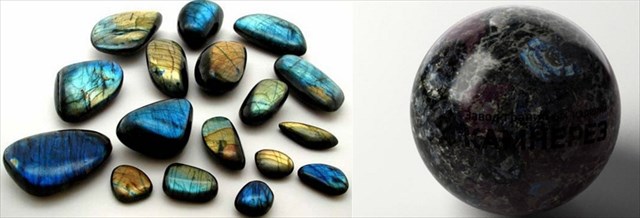
Лабрадор - це каркасний алюмосілікат кальцію і натрію сімейства польового шпату (плагіоклазів). Мінерал має ефект ірізації (від грецького «Iris» - веселка) - внутрішнім кольоровим мерехтінням, що виявляється при повороті каменю. Ірізація може бути синьою, зеленою, рідше червоною або жовтою та металевих відтінків. Причиною мерехтіння є явище інтерференції світла на спарених пластинках зерен каменю. Сам же мінерал зазвичай сірий або коричневий, майже чорний, але може бути безбарвним, червоним або зеленим.
Мінеральний склад мінералу (%):
Піроксен 3
Плагіоклаз (лабрадор) 85
Кварц 7
Біотит 1
Калієвий польовий шпат 3
Інші 1
Лабрадорит застосовується як високоякісний облицювальний камінь в монументальній архітектурі. Деякі зразки з яскравою блакитною і зеленою ірізацією використовуються як декоративні - виробні камені. Завдяки низькому вмісту кварцу лабрадорит екологічно безпечний і може застосовуватися для внутрішніх робіт.
EN: The mineral labradorite was "discovered" recently, in the second half of the XVIII century by British missionaries in Labrador in North America (Canada). However, this mineral has been known and used long before that time. It was used by the mysterious "red ocher people" at the beginning of the II millennium BC, which was inhabited by the modern State of Maine (USA), and the Roman scholar Pliny the Elder described this mineral in detail in their writings.
In Ukraine, the stone was well known in the times of Kievan Rus' as "Peacock Eye" or "Eyes Glow - bird" or "Wonder - stone". Since IX - XII century labradorite was used in the construction, cladding and decoration of churches. It was used in the mosaic of the altar of the Church of the Tithes (X century). Also labradorite was used for decoration of tomb of the Prince of Kiev Mstislav Vladimirovich (son of Vladimir Monomakh, XII century).
Labrador - a skeleton of calcium aluminum silicate and sodium family feldspars (plagioclase). The mineral has the effect of iridescence (from the Greek "Iris" - rainbow) - internal color shimmer, is shown at the stone turn. Iridescence may be blue, greenish, rarely red or yellow, metallic shades. The reason of the flicker is the phenomenon of interference of light on the paired plates of the grains. The mineral itself is usually gray or brown, almost black, but it can be colorless, red or green.
Mineral composition (%):
Pyroxene 3
Plagioclase (labrador) 85
Quartz 7
Biotite 1
Potassium feldspar 3
Other 1
Labradorite is used as a high quality facing stone in monumental architecture. Some samples with bright blue and green iridescence used as decorative and ornamental stones. Due to the low content of quartz labradorite is environmentally friendly and can be used for interior applications.
*******************************************************************************
UA: Для пошуку цього схову Вам потрібно відвідати дві дуже відомих будівлі в історичному центрі міста Києва і виявити в обробці цих будівель головинський лабрадорит. Потім Вам необхідно надіслати відповіді на мої запитання за допомогою сервісу порталу geocaching.com.
Ви можете почати екскурсію від координат, які вказані в заголовку схованки поблизу верхнього виходу станції метро «Хрещатик».
Крок 1: Відома будівля на вулиці Інститутська.
Крок 2: Не менш відома та, навіть, монументальна будівля на вулиці Садова.
Обов'язкові завдання:
1. Якого кольору лабрадорит використано в оздобленні цих будівель?
2. Якого кольору ірізацією зерен володіє цей мінерал на будівлях?
3. Назвіть обидві будівлі, в оформленні яких використаний лабрадорит.
4. Які елементи будівлі виконані з лабрадориту?
Не обов'язкові завдання:
1. Ви можете зробити фотографію на тлі будівель з лабрадоритом
2. Надсилайте мені координати інших пам'яток міста Києва, в оформленні яких використаний лабрадорит. По мірі накопичення цих даних, я буду додавати мітки на карті нижче.
EN: To find this cache you need to visit two very well-known building in the historic center of Kyiv, and found in the decoration of these buildings Golovinsky labradorite. Then you need to send the answers of the my questions by using the service of the portal geocaching.com.
You can start a tour from the coordinates specified in the cache header near the upper exit of the metro station "Khreshchatyk".
Stage 1: The well-known building on the Institutska street.
Stage 2: The well-known and even a monumental building on Sadova street.
Required tasks:
1. What color labradorite used in the decoration of these buildings?
2. What color iridescence has this mineral?
3. Name the two buildings, which are used of labradorite in the finishing.
4. What are the elements of the building are made of labradorite?
Not mandatory tasks:
1. You can take photos on the background of buildings with labradorite.
2. Please send me the coordinates of the other attractions of the Kyiv city, which is used of labradorite in the finishing. I will accumulate of such data and add the tags on the map below.
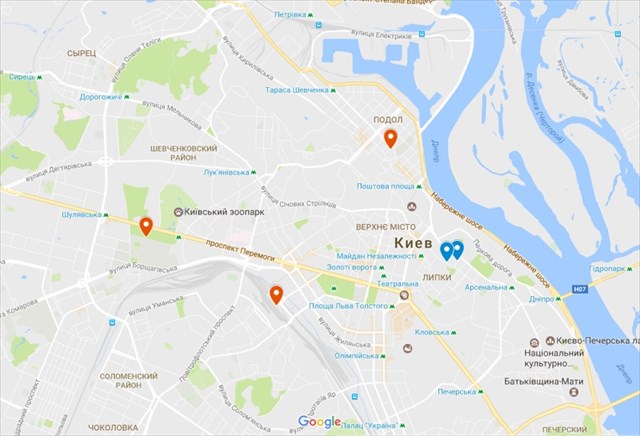
Click on image for Google map visualisation...