Moore was born in Pinner, Middlesex on 4 March 1923 He developed an interest in astronomy at the age of six and joined the British Astronomical Association at the age of eleven.He was invited to run a small observatory in East Grinstead at the age of 14, after his mentor – who ran the observatory – was killed in a road accident.
During World War II, Moore joined the Home Guard in East Grinstead where his father had been elected platoon commander. Despite recounting in his autobiography that he had lied about his age to join the Royal Air Force in 1940 at age 16, records show that he enlisted in the Royal Air Force Volunteer Reserve in December 1941 at age 18 and was not called up for service until July 1942 as an Aircraftman, 2nd Class.After basic training at various RAF bases in England, he went to Canada under the British Commonwealth Air Training Plan and completed training at RAF Moncton in New Brunswick as a navigator and pilot. During his time in Canada, he met Albert Einstein and Orville Wright while on leave in New York. Returning to England in June 1944, he was commissioned as a Pilot officer and was posted to RAF Millom in Cumbria, where he was a navigator in the crew of a Vickers Wellington bomber, engaged in maritime patrolling and bombing missions to mainland Europe. After the end of hostilities, Moore became an adjutant and then an Area Meteorological Officer, finally demobilized in October 1945 with the rank of Flying officer.
The war had a significant influence on Moore's life - he said his only romance ended when his fiancée Lorna, a nurse, was killed in London in 1943 by a bomb which struck her ambulance. Moore subsequently remarked that he never married because "there was no one else for me ... second best is no good for me ... I would have liked a wife and family, but it was not to be." In his autobiography he said that after sixty years he still thought about her.
His first television appearance was in a debate about the existence of flying saucers following a spate of reported sightings in the 1950s; Moore argued against Lord Dowding and other UFO proponents. He was invited to present a live astronomy programme and said the greatest difficulty was finding an appropriate theme tune; the opening of Jean Sibelius's Pelléas et Mélisande was chosen and used throughout the programme's existence. The programme was originally named Star Map before The Sky at Night was chosen in the Radio Times. On 24 April 1957, at 10:30 pm, Moore presented the first episode about the Comet Arend–Roland. The programme was pitched to casual viewers up to professional astronomers, in a format which remained consistent from its inception. Moore presented every monthly episode except for one in July 2004 when he suffered a near-fatal bout of food poisoning caused by eating a contaminated goose egg and was replaced for that episode by Chris Lintott. Moore appears in the Guinness World Records book as the world's longest-serving TV presenter having presented the programme since 1957. From 2004 to 2012, the programme was broadcast from Moore's home, when arthritis prevented him from travelling to the studios. Over the years he received many lucrative offers to take his programme onto other networks, but rejected them because he held a 'gentlemen's agreement' with the BBC.
A highlight of the series in 1959 was when the Russians allowed Moore to be the first Westerner to see the photographic results of the Luna 3 probe, and to show them live on air. Less successful was the transmission of the Luna 4 probe, which ran into technical difficulties and around this time Moore famously swallowed a large fly; both episodes were live and Moore had to continue regardless. He was invited to visit the Soviet Union, where he met Yuri Gagarin, the first man to journey into outer space. For the fiftieth episode of The Sky at Night, in September 1961, Moore's attempt to be the first to broadcast a live direct telescopic view of a planet resulted in another unintended 'comedy episode', as cloud obscured the sky.
In 1965, he was appointed director of the newly constructed Armagh Planetarium in Northern Ireland, a post he held until 1968.
The Puzzle
A. The Spindle Galaxy

B. The Blue Snowball

C. The Bubble Nebula

D Bow Tie nebula

E Eskimo Nebula
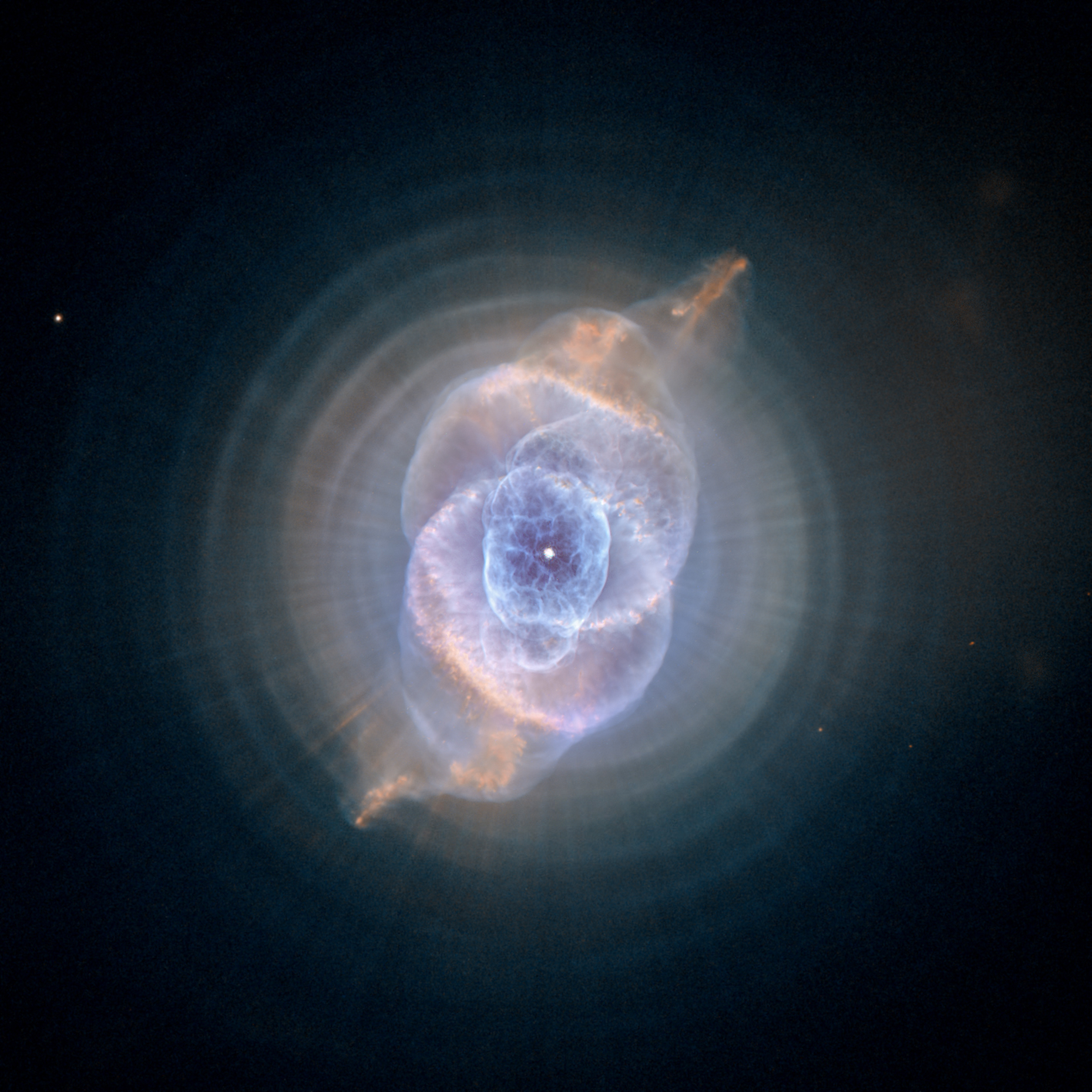
 F.Cat Eye nebula
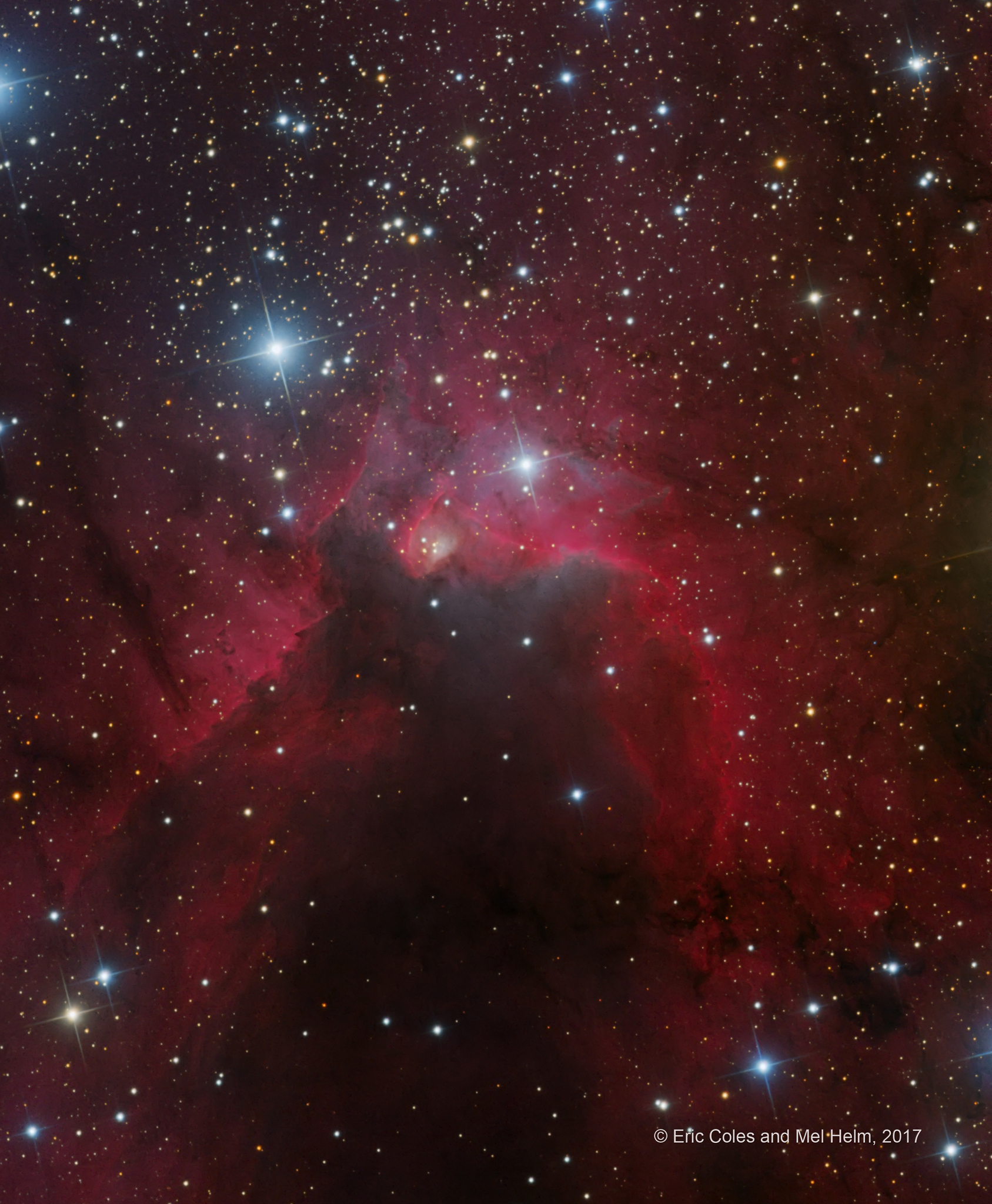
G Cave Nebula
Formula
N(A) . (B).(C-D)(G+5)
W (F). ((F-6)G).(D-2)(E+3)

Well done to Arinagour for Ftf