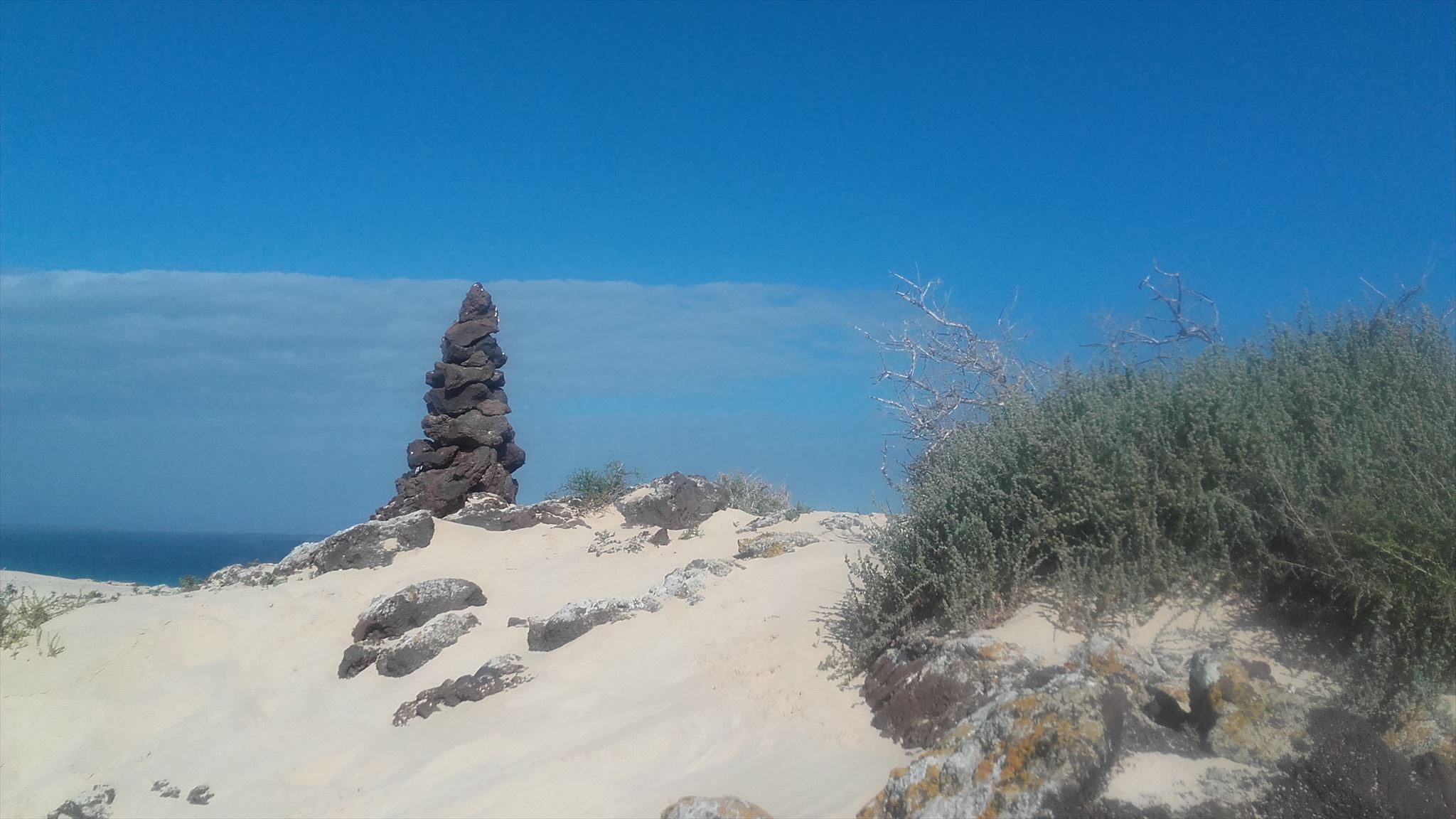
Procesos y mecanismos de conducción dinámica natural de la dunas
La duna de arena costera son formas de relieve eólicas ,se encuentran a lo largo de la mayoría de la costa mundial. Estos ecosistemas localizados en la transición espacial entre el medio ambiente terrestre y marino . Se puede encontrar en zonas costeras donde el suministro de material de la cantidad de arena ,dentro del rango de tamaño ( 0.2 a 2.00 mm) es transportada por los vientos.
El sistema de dunas costeras está compuesto por 3 componentes:
1) La playa sumergida,
2) La playa emergida,
3) La duna.
Estos 3 componentes están bajo permanente intercambio ,debe considerarse como un todo (Figura 1).
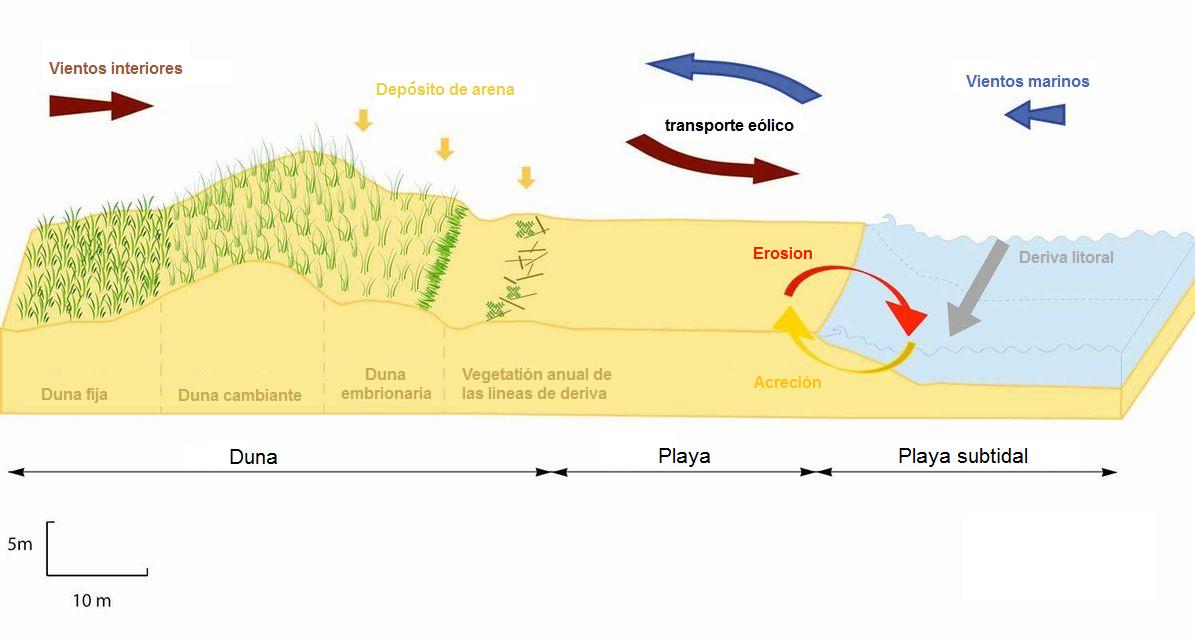
La variedad morfodinámica costera es causada por una variedad de factores que van desde el clima y la variabilidad del clima ,relativo nivel del mar ,suministros de sedimentos ,vegetación y dinámica costera a escala global ,regional y local. Debido a estos factores la zona costera es un entorno altamente dinámico a escalas temporales que van desde ráfagas de viento y la rotura de olas(segundos a minutos ) a tormentas y variabilidad estacional creciente (días a estaciones)a la variabilidad interanual del clima y fluctuaciones del nivel del mar (años a siglos,etc ).
La génesis de la duna eólica está dividida en 3 etapas:
1) Formación del campo de dunas,
2) Acumulación de sedimentos depositados,
3) Preservación de los sedimentos depositados.
Para que comience la formación de la duna costera ,debe de haber una disponibilidad adecuada de sedimentos y suficiente energía eólica capaz de transportar esta tierra arenosa . Después de la formación inicial de los depósitos del campo de dunas ,acumulación de arena ocurre la afluencia de sedimentos es mayor que las perdidas creando un presupuesto de sedimentos positivos . Finalmente la tercera fase de preservación de sedimentos ocurre cuando el sistema de la duna está estabilizado por el aumento de la capa freática o el crecimiento de la vegetación o un cambio en otros factores clímaticos .La vegetación es necesaria para atrapar la arena con el fin de hacer crecer las dunas ,pero también para estabilizar el suelo .Las especies pioneras por esta acción ,facilitarán el establecimiento de las otras especies (menos tolerantes a la salinidad ,viento......),aumentando la riqueza de la biodiversidad (Flora y fauna).
Una variedad de factores afectan la disponibilidad de sedimentos para la formación de las dunas ,incluyendo los cambios del nivel del mar ,cambios en el transporte de sedimentos de fuentes continentales y oceánicas ,la presencia de vegetación ,así como el impacto de la actividad humana .En adicción, la variabilidad del viento ,tanto en la dirección como en la magnitud ,puede jugar un papel importante en la mobilización y transporte terrestre de sedimentos .La interacción entre todos estos factores de fuerza producen una variedad de ambientes diferentes en los puede ocurrir la formación de dunas.
Dunas del Corralejo
Las Dunas del Corralejo están localizadas al norte de la isla, en el municipio de La Oliva. Son uno de los principales atractivos turísticos de la isla, después de las playas de arena blanca. Son las dunas más grandes de las Islas Canarias. Es un área protegida - Parque natural del Corralejo.
Estas grandes dunas tienen un origen orgánico ya que provienen de la desintegración y pulverización de conchas de moluscos y otros organismos marinos de esqueleto externo. La arena viene a Fuerteventura desde África, desde el desierto de Sahara. La distancia que las arenas africanas es de 100 km. Es realmente mágico - arena blanca entere montañas de lava negra. La arena es transportada desde África por el océano y los vientos.
En las dunas ,hay dunas de arena pura y dunas cubiertas de muchos arbustos . Podrá ver allí algunas plantas y un montón de pistas de animales y si tiene suerte podrá ver a un Bustard Houbara ,el pájaro de las dunas.
Fuente:
http://www.vliz.be/wiki/Dynamics,_threats_and_management_of_dunes
TAREAS
Go to the the specified coordinates and answer the following questions
(1) Cuál es el origen de las dunas de arenas blancas en Fuerteventura?
(2) Cuáles son los dos principales factores que causan este fenómeno en la isla?
(3) Qué tipo de dunas se encuentran en coordenadas, dunas de arena blanca pura o dunas cubiertas por arbustos?
(4) Tome un poco de arena en sus manos. Describa si es gruesa o fina?
Por favor, envieme las respuestas a mis preguntas. Puede log immidiatamente. Le contactaré cuando algo este mal.
Processes and mechanisms driving natural dynamics of dunas
Coastal sand dunes are aeolian landforms, found along the majority of the world’s coast. This ecosystem located at the spatial transition between terrestrial and marine environments, can be found in coastal areas where a supply of sand‐sized material (within the size range 0.2-2.0 mm) is available to be transported by winds.
The coastal dune system is composed of the 3 compartments:
1) the submerged beach,
2) the emerged beach,
3) the dune.
These 3 compartments, under permanent exchanges, must be considered as a whole (Figure 1).
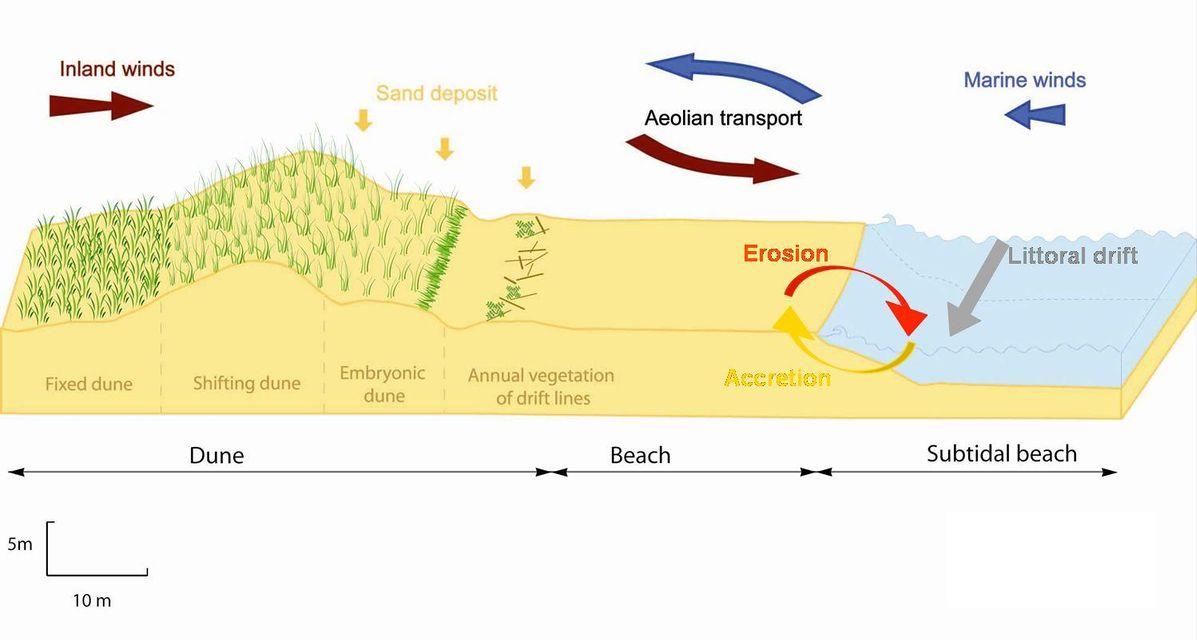
Coastal morphodynamic variability is caused by a variety of factors ranging from climate and climate variability, relative sea level, sediment supply, vegetation, and coastal dynamics at global, regional, and local scales. Due to these factors, the coastal zone is a highly dynamic environment at temporal scales ranging from wind bursts and wave breaking (seconds to minutes), to storm and growing seasonal variability (days to seasons), to interannual climate variability and sea level fluctuations (years to centuries, etc).
The genesis of an aeolian dune is divided in three stages:
1) dune field formation,
2) accumulation of sediment deposits,
3) preservation of the deposited sediments.
In order for coastal dune formation to begin, there must be both adequate sediment availability and sufficient wind energy capable of transporting this sand landward. After the initial formation of the dune field deposits, accumulation of sand occurs when the influx of sediment is greater than the losses, creating a positive sediment budget. Finally, the third phase of preservation of sediments occurs when the dune system is stabilized either by the ground‐water table rising or the growth of vegetation, or a change in other climatic factors. Vegetation is necessary to trap the sand in order to make for dune growing, but also to stabilize the ground. The pioneer species, by this action, will facilitate the establishment of other species (less tolerant of salinity, wind…), increasing biodiversity richness (flora and fauna).
A variety of factors affect the availability of sediment for dune formation, including changes in sea level, changes in sediment transport from continental and oceanic sources, and the presence of vegetation, as well as the impacts of human activities. In addition, the variability of the wind, both in the direction and magnitude, can play an important role in the mobilization and landward transport of sediment. The interactions between all of these forcing factors produce a variety of different environments in which dune formation may occur.
Dunes of Corralejo
The Dunes of Corralejo are located to the north of the island, in the municipality of La Oliva. They are the one of the main tourist attractions of the island, after its beaches of white sand. They are the largest dunes of the Canary Islands. It is protected area – Parque natural de Corralejo.
These large dunes have an organic origin since they come from the disintegration and pulverization of shells of molluscs and other marine organisms with external skeleton. The sand comes to Fuerteventura from Africa, from Sahara desert. The distnace which african sand must travel is 100 km. It is really magic – white sand among black lava mountains. The sand is transported from Africa by the ocean and the winds.
On the dunas there are pure sandy dunes and dunes covered in more shrubbery. You can see there some plants and plenty of animal tracks and if you are lucky you will catch sight of a Houbara Bustard, the bird of the dunes.
Source:
http://www.vliz.be/wiki/Dynamics,_threats_and_management_of_dunes
TASKS
Go to the the specified coordinates and answer the following questions
(1) What is the origin of white sanded dunas on Fueteventura?
(2) What are the two main factors that cause this phenomenon on the island?
(3) What kind of dunes you meet at coords – pure white sand dunes or dunes covered by shrubbery
(4) Take a little sand in your hand. Describe whether it is coarse or fine?
Please mail me the answers to my questions. You can login immediately. I'll contact you, when something is wrong.